
India’s maritime sector stands at an inflection point. With a fleet of around 1,600 vessels and 14 million gross tonnages, the country controls barely 7% of its EXIM trade — a paradox for a nation with a vast coastline, strategic location, and rapidly expanding trade base. As global shipping majors begin reflagging vessels to India, the time is ripe for a bold policy shift that aligns national interest with shipowner incentive.
1. Defining the Principle: A Win-Win for Flag State and Shipowners
Tonnage augmentation succeeds only when policies deliver mutual value. For the flag state, the reward lies in enhanced trade security, employment, and economic activity. For shipowners, it must translate into tax efficiency, ease of operation, and credibility. The foundation of growth must rest on this symbiotic equation — national interest coupled with commercial viability.
2. Learning from Global Models: Open, International, and Hybrid Registries
Open registries such as Panama, Liberia, and the Marshall Islands thrive on simplicity — low or no taxes, flexible crewing rules, and global management freedom. For these nations, ship registration revenues significantly boost GDP, making them global leaders in tonnage.
Hybrid or international registries, like the Norwegian International Register, strike a balance between national control and commercial freedom. They retain national tonnage by offering operational flexibility and fiscal benefits comparable to open registries, while maintaining high standards and credibility.
Asian hubs such as Singapore and Hong Kong present a nuanced approach — requiring local office presence to generate employment and support services, while still ensuring low tax burdens and high regulatory credibility. This ensures mutual economic benefit and enhances their global influence.
India can draw from each model to design a tiered, competitive registry framework.
3. The Case for Indian Tonnage Growth: Strategic and Economic Rationale
India’s tonnage expansion isn’t just an economic aspiration — it’s a strategic imperative. Greater control over EXIM carriage enhances:
- Trade and energy security, reducing dependence on foreign fleets.
- Employment generation, both onboard and across ancillary sectors — shipbuilding, ship repair, ship management, broking, and marine insurance.
- Foreign exchange savings, as Indian-flagged ships retain freight earnings domestically.
- Export competitiveness, through rationalized freight and reduced logistics cost.
- Geopolitical influence, positioning India as a maritime power in the Indo-Pacific.
An initial goal of 40% share in EXIM trade (from 7% today) would mirror global norms of balanced cargo participation (40:40:20 among exporting, importing, and third-party carriers).
With EXIM trade estimated at USD 1,000 billion and average freight at 5%, Indian-flagged vessels could potentially capture USD 20 billion in freight revenue — a sixfold increase over current levels — resulting in foreign exchange savings of USD 16.5 billion annually.
4. Financing Growth: From Subsidies to Smart Tax Incentives
Traditional subsidy models for shipbuilding and fleet expansion are unreliable, as ship ordering cycles fluctuate and fiscal space remains limited. Instead, India should pivot toward long-term tax exemptions and subventions:
- Zero or minimal taxation on ship earnings and imports.
- Duty and GST exemptions for ship spares, bunkers, and related services.
- Tax holidays for shipowners establishing management or crewing offices in India.
Since the current revenue from Indian shipping is negligible, such “losses” would be notional — yet they could unleash exponential future gains in tonnage, trade, and employment.
5. Building Confidence through Long-Term Contracts and Financing Support
Long-term charter contracts, ideally for the vessel’s life cycle, provide revenue predictability, which comforts financiers and attracts investment. Linking charter hire to regional freight indices ensures fairness for both shipowners and cargo interests.
India should also strengthen ship financing through domestic banks, insurance companies, and leasing mechanisms, backed by policy assurance.
6. Leveraging Bareboat-Cum-Demise (BBCD) Registrations
The BBCD model can rapidly expand the Indian fleet by allowing chartered vessels to temporarily fly the Indian flag with cargo preference benefits. This mechanism requires minimal upfront capital, offering a bridge to full ownership while immediately boosting national tonnage and employment.
7. Creating an Indian International Register (IIR)
An Indian International Register could attract Persons of Indian Origin (PIOs) and Indian-controlled foreign fleets. Offering tax parity with open registries, operational freedom, and partial cargo preference, such a register would channel national capital back under the Indian flag — much like Singapore’s early model.
8. Linking Incentives to National Interest
Tax reliefs, cargo preferences, and other benefits should be gradually conditioned on domestic linkages — for instance:
- Ships built or repaired in India.
- Employment of Indian crew.
- Financing through Indian banks.
- Insurance via Indian underwriters.
- Management and chartering through India-based entities.
This will build a self-reinforcing maritime ecosystem that supports the shipbuilding, repair, finance, and insurance industries.
9. Reforming the Flag Administration
Even the best fiscal incentives will falter without administrative efficiency. India must streamline registry procedures, digitize approvals, delegate or outsource routine functions, and benchmark services against global standards. Efficiency and credibility are the true magnets for tonnage.
10. Toward a Maritime Renaissance
China’s state-owned tonnage model demonstrates how fleet capacity drives industrial, strategic, and employment growth. For India, a well-calibrated mix of policy incentives, fiscal reform, administrative modernization, and strategic partnerships can yield similar dividends.
A stronger Indian flag would not only reduce dependence on foreign carriers but also generate vast economic multipliers — from shipyards and insurers to training institutes and brokers.
As India’s blue economy expands and global shipping realigns amid geopolitical shifts, the nation’s ability to carry its own trade will define its true maritime power.
In essence, tonnage growth is not merely about more ships — it’s about building national capability, resilience, and pride on the high seas.
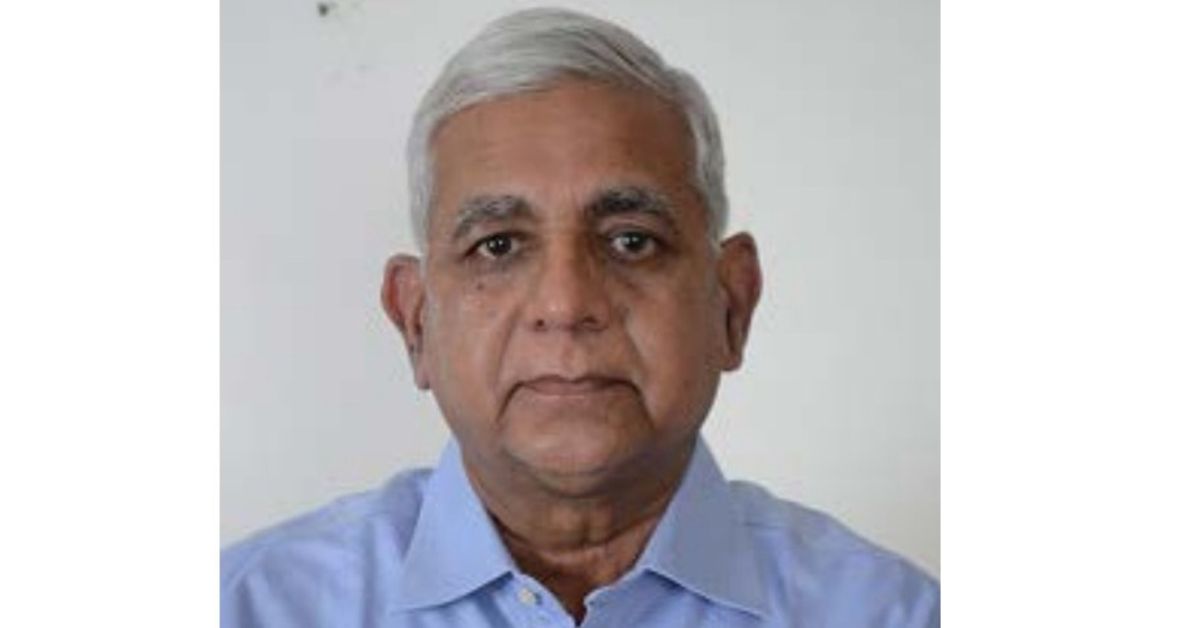
(The author is a former Nautical Advisor to Govt of India, Past Independent director Shreya Shipping and Logistics, Member Governing Board, Academic Council and BAR – IMU, Ex Trustee Mumbai, Kandla & JNPT.)
 Join our WhatsApp channel for more updates:
 Subscribe to our YouTube channel for more updates: