



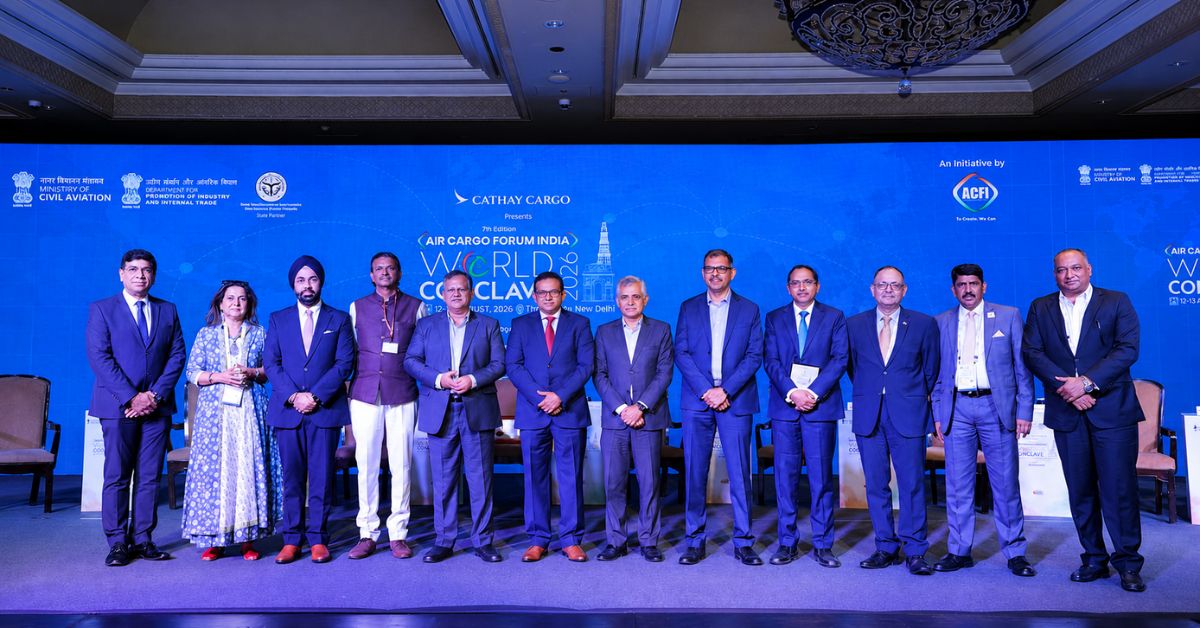

Air Cargo Forum India (ACFI), the national association representing stakeholders across the air cargo logistics industry, held its 7th annual conclave in New Delhi last week. The event brought together leaders from air cargo, logistics, policymaking and supply chain management under the theme “Reimagining Global Trade: India at the Forefront of Developing Resilient Supply Chains.”
Karanjit Singh Wadhwa, Chairman, ACFI Event Task Pillar, and Director, Grace Group, said in his welcome address that the conclave arrived at a defining moment for global trade, with supply chains evolving, technology transforming operations and resilience becoming the foundation of every successful supply chain.
Sanjiv Edward, President, ACFI, and Chief Executive Officer, Cargo & Logistics, GMR Group, said the world wanted to engage with India as a trusted partner, adding that expectations from the country’s logistics ecosystem had never been higher.
Pradeep Panicker, Chief Executive Officer, Delhi International Airport Ltd, noted that India’s total air cargo volume remained under 4 million tonnes, behind global hubs such as Hong Kong, but said growth would be driven by expanding manufacturing, rising domestic consumption and emerging transhipment hubs.
Manoj Kumar Singh, Chief Executive Officer, State Transformation Commission, Uttar Pradesh, outlined reforms needed to reach India’s 10-million-tonne air cargo target, including single-window transhipment clearances and standardised, paperless procedures to cut logistics costs. Atish Kumar Singh, Additional Secretary, Logistics, DPIIT, said trade would drive higher income growth, with logistics a critical enabler, and called for the next generation of reforms. Keku Gazder, Board Member and Chair, Knowledge, Innovation and Research Pillar, announced the launch of the India Intelligence Monitor, a quarterly report developed with partners to consolidate fragmented air cargo data in India.
The first business session, “India Rising: The New Map of Global Trade,” moderated by Suvendu Choudhary of FedEx India, examined how India can leverage shifting global supply chains, digitisation and manufacturing growth to emerge as a premier trade and transhipment hub. Panellists included Reshma Zaheer of TT Logistics & Cargo, Kiran Jain of Noida International Airport, Prof. (Dr.) Manoj Choudhary of Gati Shakti Vishwavidyalaya, and Sagar Rameshrao Kadu of DPIIT.
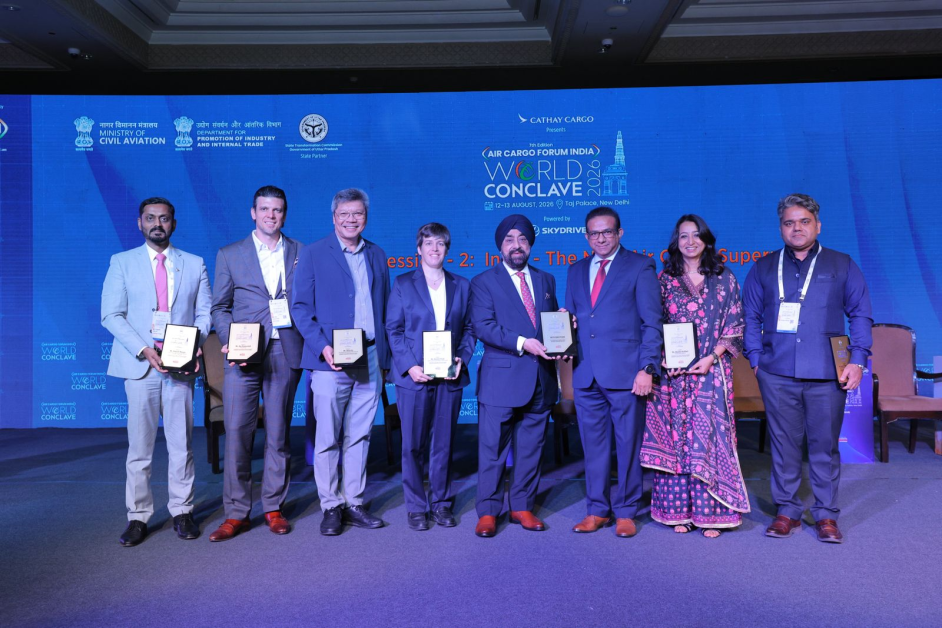
The second session, “The Next Air Cargo Superpower,” moderated by Sanjiv Edward, assessed India’s path to becoming a dominant global air cargo hub. Panellists, including Rajesh Menon of Cathay Pacific, Raveesh Mohan Vashistha of Adani Airports, Bob Chi of SATS, Kai Domscheit of Chi Deutschland Cargo Handling, and Nomita Kothari of New Globe Logistik, flagged persistent challenges such as high dwell and waiting times, prolonged ground handling and continued reliance on paper documentation. Civil Aviation Secretary Samir Kumar Sinha said supply chain resilience had become a business necessity rather than an option, and that India was well positioned as global firms diversified their sourcing. The Government of Telangana and ACFI signed an MoU at the conclave to strengthen air cargo infrastructure and connectivity.
The third session, “From MSME to Global Markets,” moderated by Satish Lakkaraju of Nexgen Logistics, found that while MSMEs contribute 48.6% of India’s total exports, only 10% of Indian MSMEs currently export. Panellists, including Nitesh Garg of Amazon, Prashant Seth of FIEO, Halit Tuncer of Turkish Airlines, Chaitaly Mehta of EKF Global Logistics, and Monish Nandi of FedEx Express, cited high compliance costs, limited access to gateway hubs from Tier-2 and Tier-3 cities, and confusion over trade terminology as key barriers, and pointed to e-commerce, pharmaceuticals and electronics as future growth drivers.
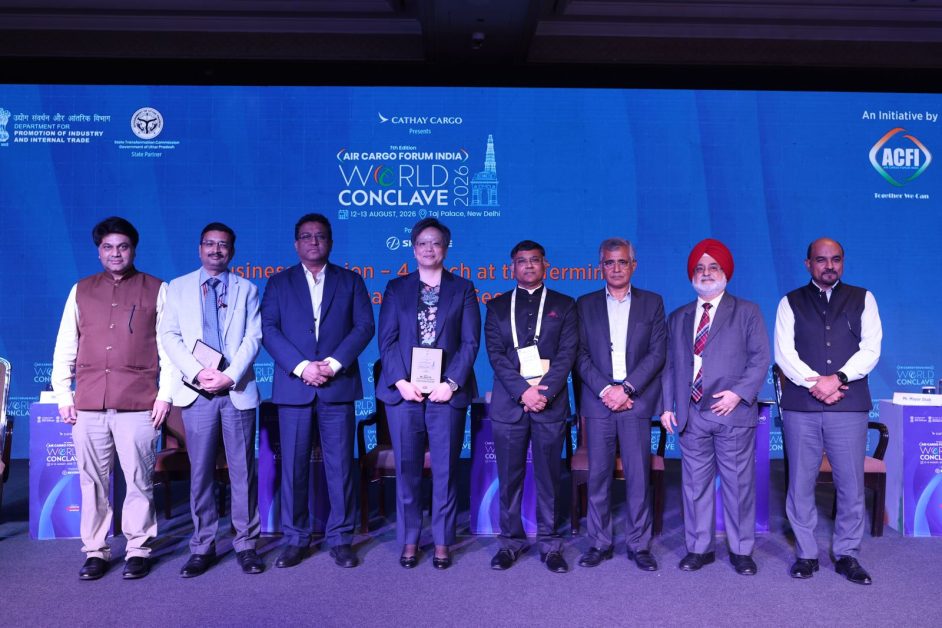
The fourth session, “Tech at the Terminal: AI and Smart Cargo Security,” moderated by Amar More of Kale Logistics Solutions, discussed how artificial intelligence can address bottlenecks such as unpredictable truck arrivals, with panellists, including L.K. Dash of the Department of Posts, Joyce Tai of Freightos, Parvinder Singh of Hans Informatics, Mayur Shah of Suzuki R&D Centre India, and Kaushik Das of Gati Shakti University, agreeing that AI’s effectiveness depends on clean, standardised data and human oversight.
In a fireside chat titled “Beyond Runways: VTOL, Drones & the Next Era,” Tomohiro Fukuzawa, Founder and CEO of SkyDrive, and Mayur Shah of Suzuki R&D Centre India, in conversation with moderator Ramesh Mamidala of Air India, discussed how vertical take-off and landing aircraft, which are unmanned, runway-free, silent and emission-free, could redefine last-mile transport of critical cargo such as live organs and reshape the definition of express cargo.
The event closed with an address by Rajiv Bansal, former Secretary, Ministry of Civil Aviation, and former CMD, Air India, who reflected on the turbulent history of India’s private airlines, including consolidation and decline, the emergence of IndiGo and Akasa Air, and how the disinvestment of Air India has levelled the playing field among carriers.
 Join our WhatsApp channel for more updates:
 Subscribe to our YouTube channel for more updates: