



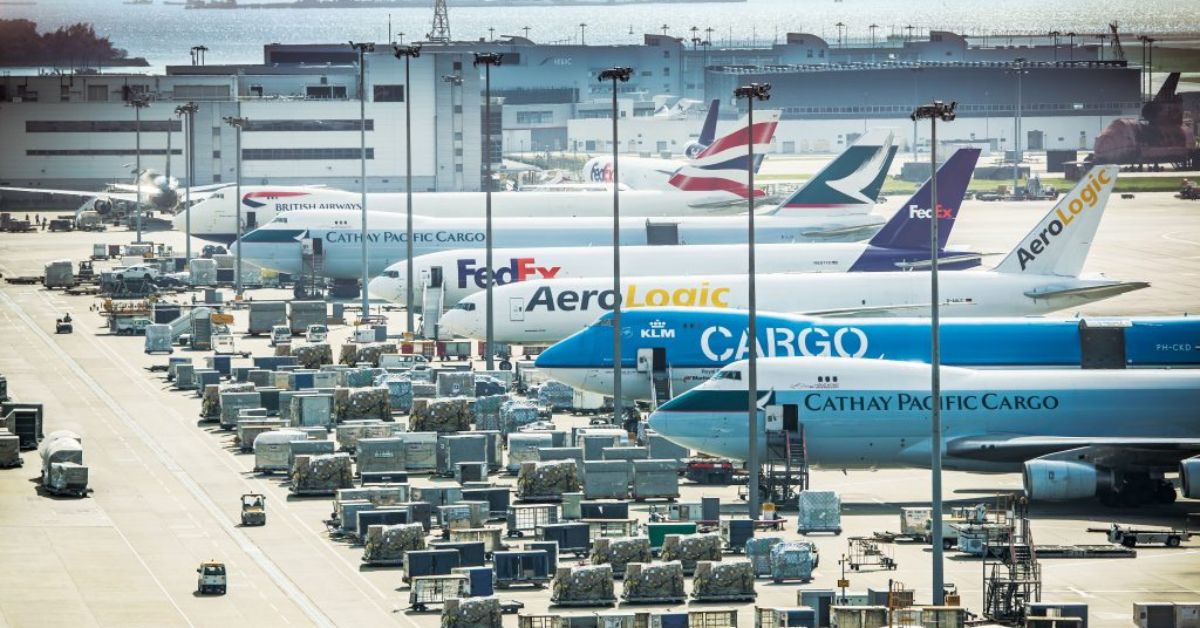

Air freight markets are expected to see some relief in rates following the US–Iran ceasefire, but analysts and industry executives warn that a full return to pre-conflict capacity and pricing levels on key Middle East-linked corridors could take one to two months. The conflict had prompted airspace restrictions and flight cancellations across the Gulf region, forcing airlines to ground aircraft, divert routes and cut belly and freighter capacity on lanes connecting South Asia and Southeast Asia to Europe and beyond.
According to rate benchmarking platform Xeneta, the ceasefire should gradually ease operational constraints as airlines begin to restore services that were curtailed during the height of the crisis. Falling jet fuel prices are also expected to exert downward pressure on air freight rates, which had spiked when capacity tightened and carriers passed on higher operating costs. However, Xeneta’s analysts caution that carriers will be reluctant to cut prices quickly given the temporary nature of the truce and lingering uncertainty over the geopolitical outlook.
Restoring air cargo capacity is not simply a matter of reopening airspace; airlines must redeploy aircraft, re-establish schedules, and rebuild demand on disrupted routes. As one expert notes, even when it is deemed safe to fly, “setting up the infrastructure again takes time” and customers need to “find you again and trust you again.” Insurance considerations also remain in play, with some insurers likely to maintain cautious stances on flights transiting certain hubs or air corridors despite the ceasefire.
Shippers, for their part, are expected to move carefully rather than immediately reconfiguring supply chains based on a fragile two-week truce. Many logistics managers may prefer to maintain contingency routings and built-in buffers until there is greater clarity on whether the ceasefire will be extended or solidified into a more durable peace. As a result, spot rates on major trades touching the Middle East are unlikely to fall as rapidly as they rose, even though the peak of the disruption may have passed.
The dynamic in air cargo mirrors broader trends in travel and aviation, where the ceasefire is seen as a positive step but not a complete reset. Passenger traffic and belly cargo capacity additions are expected to proceed cautiously, with airlines phasing in flights based on demand signals, security assessments and profitability considerations. For exporters who relied on emergency airlift to circumvent maritime disruptions in the Strait of Hormuz and Red Sea, the coming weeks will be a period of recalibration, as they reassess the mix between sea and air and monitor rate movements closely.
 Join our WhatsApp channel for more updates:
 Subscribe to our YouTube channel for more updates: