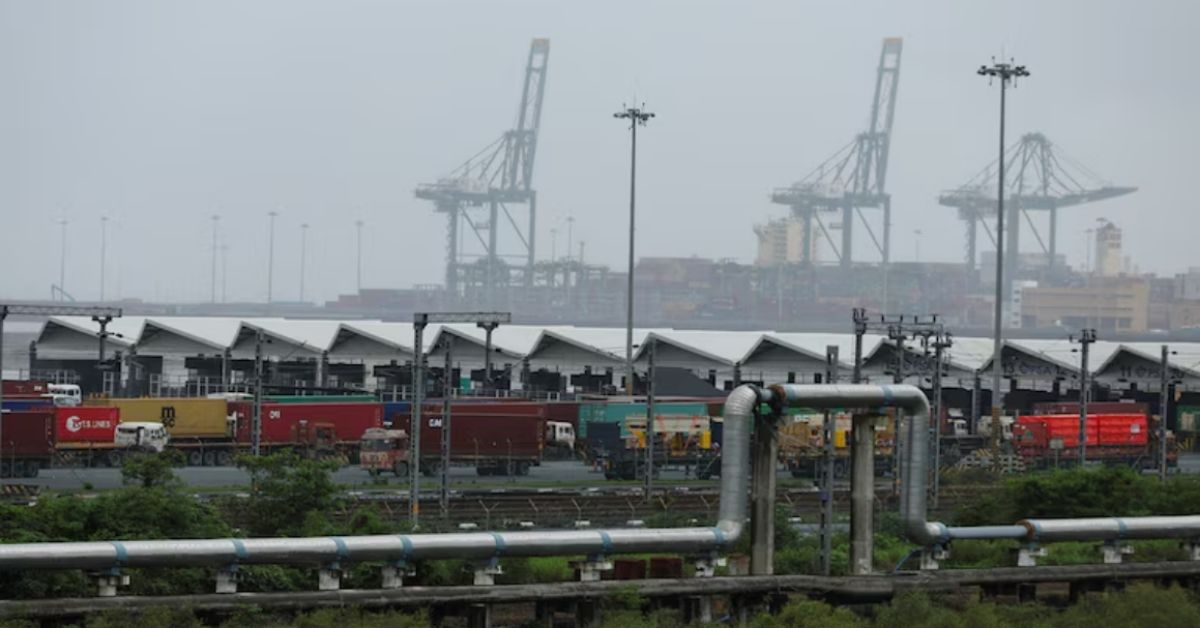

India’s decision to develop an ultra-mega deep-water port at Atlanta Bay in North Andaman represents a decisive step toward strengthening its commercial and strategic presence in the Bay of Bengal, according to defence and maritime experts. The move comes amid intensifying competition for influence and infrastructure across the region’s critical sea lanes.
Announced in October, the proposed dry-bulk transshipment port is currently undergoing a detailed techno-commercial feasibility assessment. Oversight of the project has been entrusted to Andaman and Nicobar Islands Lieutenant Governor Admiral DK Joshi (Retd), a former Chief of Naval Staff, underlining the importance the Centre places on the initiative.
Sources indicate that Prime Minister Narendra Modi is expected to visit the Andaman and Nicobar Islands later this month, during which he may review progress on both the Atlanta Bay project and the proposed container transhipment port at Galathea Bay, along with key defence installations across the island chain.
The Atlanta Bay facility is being planned as one of India’s most ambitious port projects. It is designed to accommodate some of the world’s largest dry-bulk carriers, including Capesize vessels of up to 200,000 tonnes. The port is also expected to feature the longest uninterrupted berth length in the country, positioning it as a major hub for bulk commodities such as coal, minerals, and industrial raw materials.
While the government has presented the project as a commercial venture, analysts point out that infrastructure of this scale inherently carries strategic value. A deep-water port in North Andaman could enable the Indian Navy and Coast Guard to operate larger vessels closer to vital shipping corridors, supporting refuelling, replenishment, and extended deployments in the eastern Indian Ocean.
North Andaman’s proximity to these busy sea lanes gives any country operating there enhanced visibility and influence over maritime traffic, offering both economic leverage and security benefits. India has already established its only tri-service military command in the islands, supported by airbases, naval facilities, and surveillance networks.
The addition of a large commercial port at Atlanta Bay would reinforce this strategic architecture by simplifying the movement of personnel, equipment, and supplies, while allowing naval assets to remain deployed for longer durations. According to Bhaskar, the project reflects a fundamental shift in India’s maritime ambitions.
Regional developments have also accelerated New Delhi’s plans. China has steadily expanded its presence in Bangladesh’s port sector, investing heavily in the modernisation of Chattogram and Mongla ports. Chinese naval vessels called at Chattogram in 2025, while Mongla—where China has pledged around $400 million in upgrades—is viewed by analysts as having potential dual-use implications. Pakistan’s access to Mongla has further heightened strategic concerns in India.
Atlanta Bay is being planned alongside the larger container transhipment port at Galathea Bay in Great Nicobar. While Galathea Bay is intended to capture container traffic currently routed through international hubs such as Singapore and Colombo, Atlanta Bay will focus on dry-bulk cargo. Together, the two ports would establish major maritime infrastructure at both the northern and southern ends of the Andaman and Nicobar archipelago.
Experts say the implications for India extend far beyond trade volumes. Economically, the ports are expected to cut reliance on overseas transhipment centres and improve supply-chain resilience. Strategically, they would enhance India’s ability to safeguard and influence some of the most important maritime routes in the Indo-Pacific.
 Join our WhatsApp channel for more updates:
 Subscribe to our YouTube channel for more updates: