


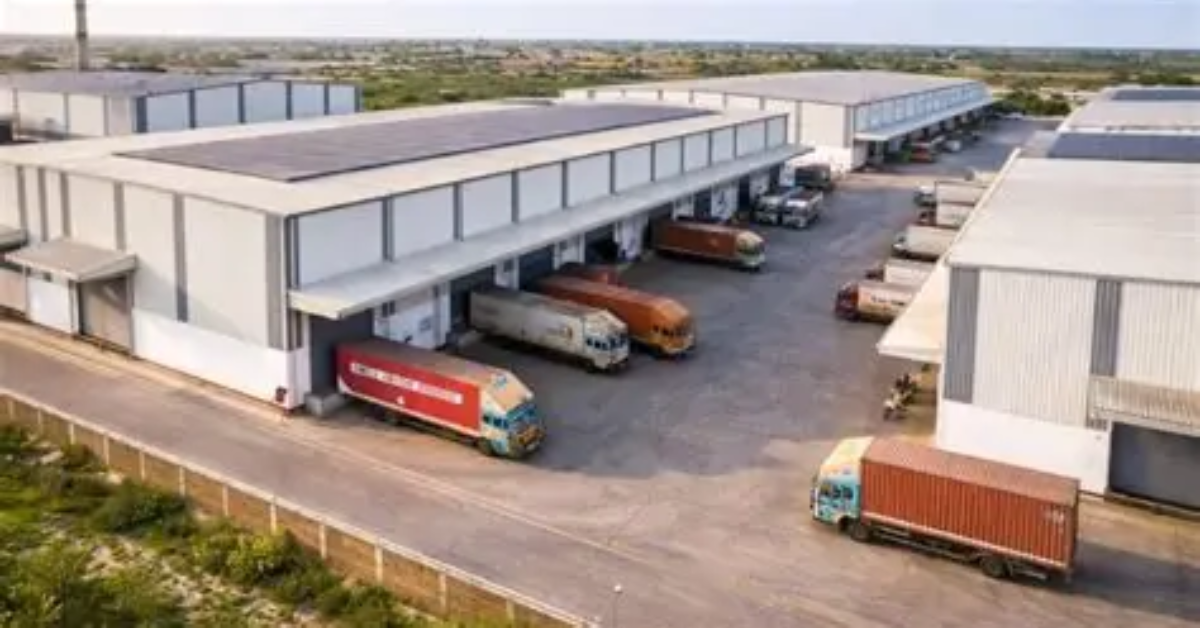

The Union Cabinet has approved one of the largest single-tranche manufacturing infrastructure schemes in recent Indian economic history, clearing the Bharat Audyogik Vikas Yojna (BHAVYA) with a total outlay of ₹33,660 crore for the development of 100 industrial parks across the country equipped with fully plug-and-play infrastructure.
Announcing the decision, Union Minister Ashwini Vaishnaw said the scheme is designed to eliminate the most persistent friction point in India’s industrial investment journey — the gap between a company’s decision to invest and its ability to actually begin production. By delivering ready-to-use industrial ecosystems with pre-built utilities, connectivity, and approvals, BHAVYA aims to dramatically compress the timeline from investment intent to operational manufacturing.
Plug-and-Play Model: What It Means for Logistics
The plug-and-play concept at the core of BHAVYA has direct and significant implications for India’s logistics and supply chain infrastructure. Industrial parks developed under the scheme will be required to include road and rail connectivity, warehousing facilities, utility infrastructure, and logistics support services as integral components — not afterthoughts. This integrated approach is expected to make the parks attractive to manufacturing companies across sectors including electronics, pharmaceuticals, textiles, engineering goods, and auto components that depend on reliable last-mile logistics for both inbound raw materials and outbound finished goods.
The scheme is expected to generate approximately 15 lakh direct jobs, with significant additional indirect employment in logistics, transportation, construction, and services. The geographic spread of the 100 parks — details of which are expected to be announced through a formal bidding process — is intended to extend manufacturing activity beyond traditional industrial clusters in Maharashtra, Gujarat, and Tamil Nadu into emerging states in the north, east, and northeast.
CONCOR–CMA CGM Collaboration Adds Strategic Context
The BHAVYA announcement is particularly timely in the context of a separate development this week: Container Corporation of India (CONCOR) is exploring a strategic collaboration with global shipping giant CMA CGM following a high-level meeting in Marseille on March 18. CONCOR Chairman and Managing Director Sanjay Swarup presented the company’s expanding logistics infrastructure to CMA CGM executives, with discussions covering the upcoming Bhavnagar Port, the proposed Bharat Container Shipping Line (BCSL), and the development of additional Multi-Modal Logistics Parks (MMLPs) across India.
A CONCOR–CMA CGM tie-up, if formalised, could provide the global shipping connectivity and commercial partnerships needed to activate the logistics networks serving BHAVYA industrial parks — particularly those in coastal and port-proximate locations. Together, the two developments signal a convergence of industrial policy, port capacity expansion, and global shipping integration that could meaningfully accelerate India’s manufacturing export ambitions.
E-Way Bill Reform to Further Ease Logistics
Complementing BHAVYA, the government is also advancing a major reform of the e-way bill system under the GST regime, moving it from a strict enforcement instrument toward a trust-based, technology-driven compliance framework aimed at reducing logistics friction. The reform, outlined in the Economic Survey 2025–26, is expected to cut transit delays, lower compliance costs, and improve the ease of doing business — outcomes that will benefit both industrial park operators and the logistics companies serving them.
 Join our WhatsApp channel for more updates:
 Subscribe to our YouTube channel for more updates: