



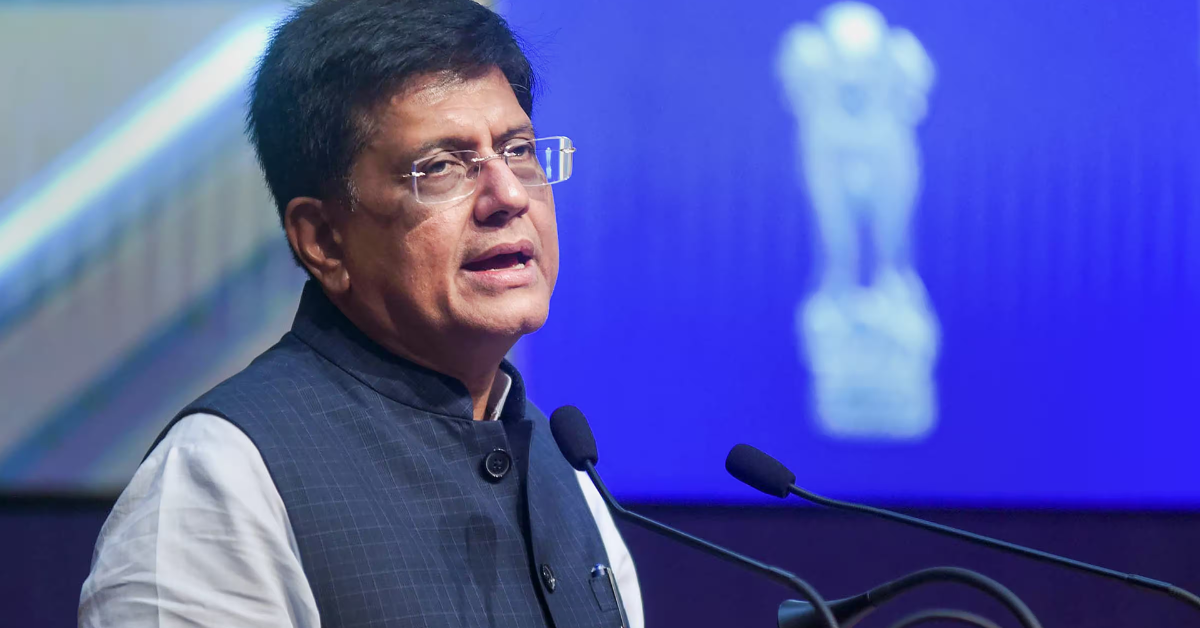

Union Commerce and Industry Minister Piyush Goyal on Saturday announced the launch of guidelines for the ‘BHAVYA (Bharat Audyogik Vikas Yojana) Scheme’, under which the Centre plans to develop 100 industrial parks across the country.
Scheme Overview
The scheme has a financial outlay of ₹33,660 crore and aims to create manufacturing and investment hubs through plug-and-play industrial parks in partnership with state governments. Goyal described it as another ease of doing business measure, stating that the government of India will be setting up 100 industrial parks across the length and breadth of the country.
The scheme was approved by the Union Cabinet about two months ago, and the Centre expects states to provide a “favourable environment” to encourage industrial development.
Implementation Timeline
Applications for 20 parks will be invited in the first two months, followed by another 30 parks in the subsequent two months, while the remaining 50 parks will be taken up in the next phase. The Centre is inviting applications from states/UTs in the next four months, looking for proposals for 50 industrial parks to quickly start rolling out the scheme across the country.
“We expect that in three years, these 50 parks will be operationalised,” Goyal said.
Park Specifications
The industrial parks will range from 100-1,000 acres, with financial assistance of up to ₹1 crore per acre for infrastructure development. For hilly states, industrial parks can also be approved on 25 acres of land.
Support covers internal roads, underground utilities, drainage systems, common treatment facilities, warehousing, testing labs, and worker housing facilities. The Centre has also proposed support for external infrastructure of up to 25 per cent of the project cost to improve connectivity with existing transport and logistics networks.
Partnership Model
The parks will be developed under the National Industrial Corridor Development Programme (NICDP) framework in partnership with states and private sector players. There is a provision for states to partner with private sector players and submit proposals, under which the Centre would provide assistance of ₹50 lakh per acre.
Selection Criteria
Project selection will be carried out through a challenge-based process focused on investment-ready and reform-oriented proposals. Approvals will depend on availability of contiguous land, transport and logistics connectivity, infrastructure readiness, and industrial potential of the region.
States have been asked to set up special purpose vehicles (SPVs), notify planning authorities, and establish single-window clearance systems to ensure faster approvals.
Economic Impact
The scheme is expected to promote cluster-based industrial development by enabling manufacturers, suppliers, and service providers to operate in close proximity, strengthening domestic supply chains and creating employment opportunities. The initiative aims to promote manufacturing growth, employment generation, export-oriented industries, logistics and supply chain efficiency, and regional industrial development.
The scheme will be implemented over six years, from 2026-27 to 2031-32, and is designed to support the Centre’s Make in India initiative. Implementation will be managed by the National Industrial Corridor Development Corporation.
 Join our WhatsApp channel for more updates:
 Subscribe to our YouTube channel for more updates: