


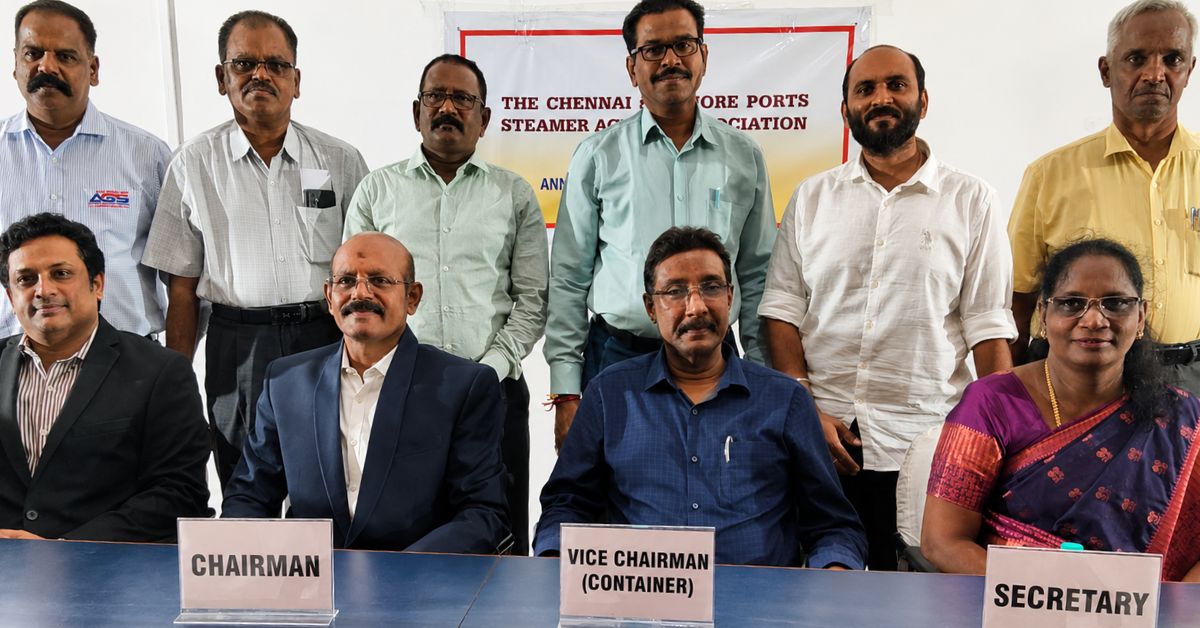

The Chennai & Ennore Ports Steamer Agents Association held its 69th Annual General Body Meeting on July 30, 2026, at the Seafarers Club in Chennai, with key concerns raised at the meeting set to be taken up with respective authorities to facilitate smoother trade compliance.
What did the chairman highlight at the AGM?
CHENSAA Chairman Y Leeladharan presented the Association’s Annual Report for 2025-26, outlining the body’s initiatives and key achievements during the period. He thanked officials from Chennai Port Authority, Kamarajar Port, the Chief Commissioner of Customs, DG Systems, CBIC, terminal operators CITPL and CCTL, and Adani Ennore and Kattupalli Port for their support to the trade.
What concerns were raised regarding SCMTR implementation?
Leeladharan addressed challenges in implementing the Sea Cargo Manifest and Transhipment Regulations, thanking CBIC officials for their support in resolving technical issues. He noted that when a vessel calls at its first Indian port with cargo bound for that port, agents are required to file the Sea Arrival Manifest along with cargo remaining on board, but manifest details are often unavailable in time due to documentation delays between importers and exporters. He suggested Customs Icegate should accept cargo details without insisting on Bill of Lading details in such cases.
What issues were flagged for non-containerised cargo?
On non-containerised cargo, including dry bulk, liquid bulk and break-bulk shipments, Leeladharan noted that multiple agents often handle a vessel across different ports in what remains a charterers’ market, meaning owners and importers are frequently unwilling to share Bill of Lading details with agents at ports unrelated to their cargo. He urged CBIC to reconsider penalising agents and owners for non-compliance in such cases, calling for more practical solutions instead.
What was proposed for sea-to-sea transshipment containers?
Leeladharan called for simplifying procedures around sea-to-sea transshipment by dispensing with Export Transshipment Permit documentation, which he said causes delays in connecting containers to mother vessels at gateway ports due to difficulties obtaining documents from origin ports in time. He noted that such procedures do not exist at competing foreign transshipment hubs handling comparable volumes, and recommended that shipping lines be permitted to file manifests directly on Icegate without additional documentation, helping exporters access Duty Drawback and IGST refunds more promptly.
What other issues did the Association raise?
Leeladharan called for regular awareness outreach programmes for EXIM trade to help importers and exporters understand evolving regulations and their compliance costs. He also urged that no port be allowed to operate without Immigration Check Post or proper immigration facilities, necessary for crew changes and foreign national attendance during vessel calls, and thanked the Ministry and Board of Investment for expanding e-business visa-enabled ICP ports.
 Join our WhatsApp channel for more updates:
 Subscribe to our YouTube channel for more updates: