



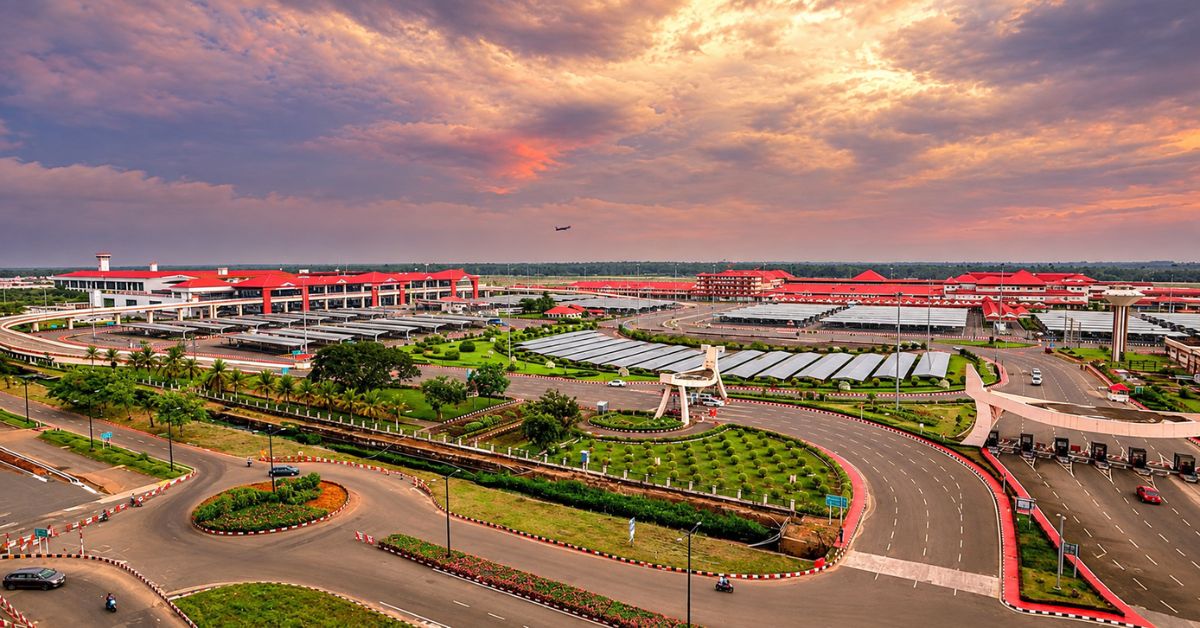

Envisaging to scale up cargo handling, storage and supply-chain operations, Cochin International Airport Limited (CIAL), as part of its new 25-year master plan, has decided to develop a next-generation cargo village at the airport. The plan will focus on sustainability, digitalisation, security and supply-chain efficiency.
The master plan is being prepared as the airport company marks its 25th anniversary. CIAL has appointed Jacobs Solutions India Pvt Ltd (JSIPL) to prepare the master plan at a cost of Rs 7.83-7.84 crore, with the consultancy required to be completed within 10 months.
The plan will cover the airport’s airside and terminal facilities, cargo operations, landside infrastructure, connectivity, utilities, commercial development and sustainability, and will also assess the land required to support the airport’s future expansion. As part of the exercise, a 25-year forecast of aviation demand will be prepared to assess the airport’s future requirements, and the study will examine the feasibility of building a second runway along with the required taxiways and apron facilities.
On the cargo side, JSIPL will prepare a business and development plan and assess the infrastructure required to support future cargo operations. The plan will cover domestic and international cargo facilities, a centre for perishable cargo, and bonded warehouses. Cargo projections will examine imports and exports, domestic cargo, belly cargo carried on passenger aircraft, freighter operations, and different categories of commodities.
The plan will further include a feasibility and development strategy for a dedicated heliport, covering facilities such as a heliport terminal, aircraft hangars and connectivity infrastructure. It will also assess demand for MRO hangars, where aircraft can undergo maintenance, repair and overhaul.
The airport’s future connectivity will also be studied, including road networks, rail augmentation and new stations, phased metro connectivity and potential inland-waterway links.
CIAL estimates that the plan’s sustainability measures could prevent 122-145 kg of carbon dioxide emissions per aircraft every hour.
 Join our WhatsApp channel for more updates:
 Subscribe to our YouTube channel for more updates: