


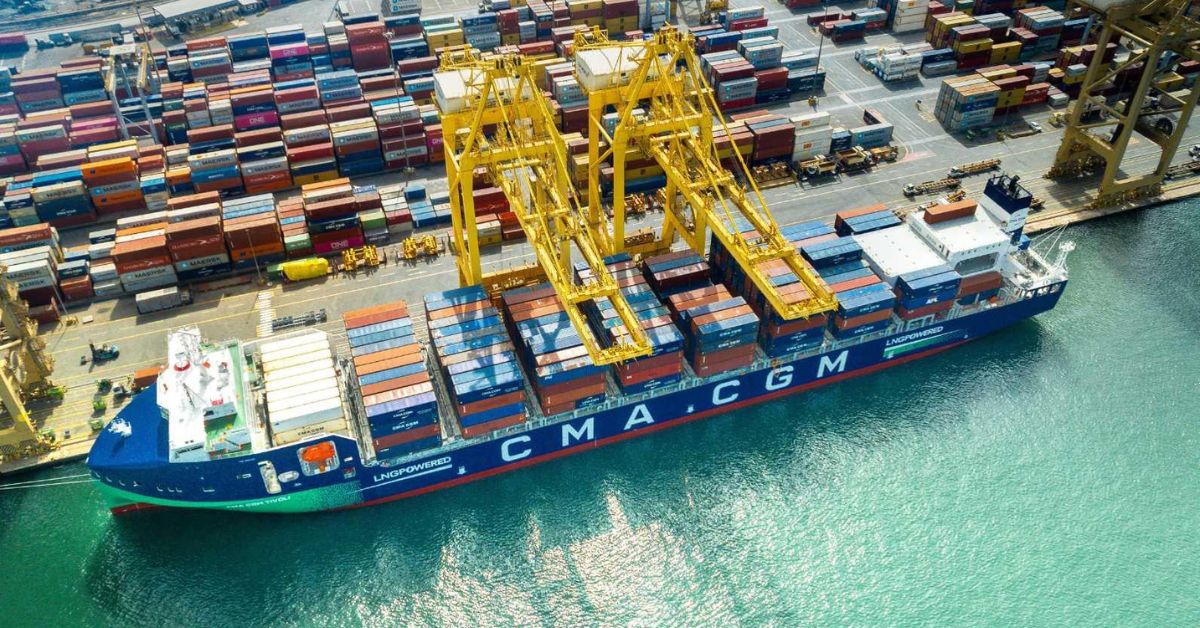

French shipping major CMA CGM has announced an upward revision of its Emergency Fuel Surcharge (EFS) effective March 27, 2026, citing a significant surge in fuel market prices driven by escalating geopolitical tensions in the Near and Middle East. The revision represents the latest in a series of surcharge escalations by major global carriers since the Strait of Hormuz crisis began on February 28, and signals that fuel cost pressures on the shipping industry are continuing to intensify rather than ease as the crisis extends into its fifth week.
CMA CGM’s EFS revision follows its Advisory No. 6, which had first implemented the Emergency Fuel Surcharge on March 16 as global fuel prices began to surge on the back of restricted oil flows through the Hormuz Strait and rising Brent crude prices above USD 108 per barrel. The revised quantum of the EFS — applicable from loading dates of March 27 onwards — has not been publicly disclosed in detail but represents a meaningful increase from the March 16 levels, reflecting the continued upward pressure on marine fuel costs across all regions and trade lanes.
CMA CGM’s Inland Emergency Fuel Surcharge
In addition to the revised maritime EFS, CMA CGM has also implemented an Inland Emergency Fuel Surcharge (IEFS) effective March 23, covering defined geographic areas where inland transport costs—across all modes, including road, rail, and river—have been impacted by rising fuel prices. This inland surcharge dimension is significant for Indian shippers because it affects the cost of container drayage, rail haulage, and river barge movements that are part of the complete door-to-port or port-to-door supply chain, not just the ocean freight component.
Maersk Raises Peak Season Surcharge
Maersk has separately announced an increase in its peak season surcharge, applying to cargo shipments across select trade lanes and cargo segments. While peak season surcharges are a routine commercial tool used by shipping lines to manage capacity during periods of high demand, the announcement of a peak season surcharge increase in the current environment — where the crisis-driven demand for any available shipping capacity is creating conditions similar to those of a peak season — reflects the tightening of effective vessel supply on key trade routes.
Maersk has also launched a new flexitank removal service across its network — a practical operational measure aimed at improving the turnaround efficiency of tank containers and flexitanks used for bulk liquid cargo, freeing up equipment that has been tied up at ports or in transit due to Gulf routing disruptions. The new service is part of Maersk’s broader effort to maintain operational continuity and equipment availability during the current supply chain crisis.
For Indian Importers and Exporters: Compounding Cost Burden
The combined effect of CMA CGM’s revised EFS, Maersk’s peak season surcharge increase, and the various War Risk Surcharges, Emergency Conflict Surcharges, and insurance premium increases imposed by carriers over the past four weeks means that the all-in cost of container shipping for Indian businesses continues to escalate. Industry bodies including FFFAI and FIEO have repeatedly called for regulatory oversight of carrier surcharge practices, and the Directorate General of Shipping’s circular on predatory pricing provides some regulatory backstop — but enforcement remains challenging in the short term as carriers hold the operational leverage.
 Join our WhatsApp channel for more updates:
 Subscribe to our YouTube channel for more updates: