


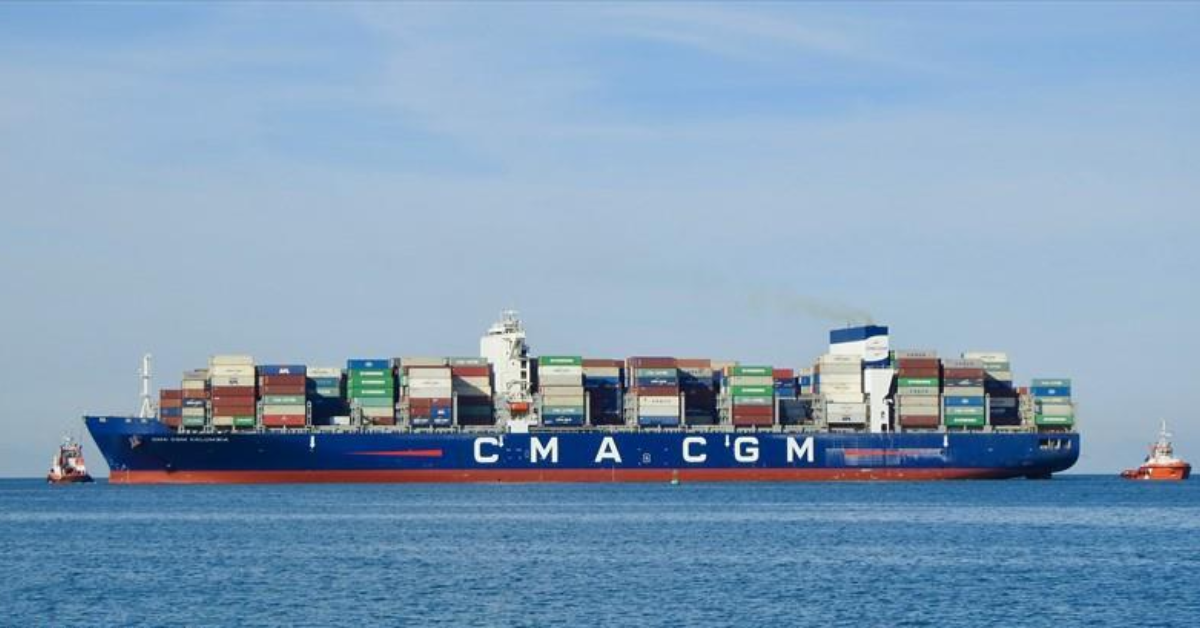

CMA CGM is restructuring its Asia–West Africa Central Range network, splitting its existing West Africa Express (WAX) service into three dedicated loops to boost capacity, coverage and schedule reliability on the corridor. The new configuration introduces WAX1 and WAX2 alongside the existing WAX3 loop, which will continue unchanged, reflecting growing demand across key West African gateways.
The reorganisation aims to better match cargo flows and port-pair demand between Asia, the Indian Subcontinent and West Africa, while offering more stable schedules, higher frequency and improved transit times. Under the revamped structure, WAX1 will connect Qingdao, Ningbo, Nansha, Shekou, Singapore, Colombo, Abidjan, Lekki and Kribi, before returning via Colombo to Vung Tau, with the first sailing scheduled from Qingdao on 30 March 2026 deploying the CMA CGM ZEPHYR.
By inserting Colombo as a relay node in both directions, CMA CGM is strengthening connectivity with South Asia, opening additional routing options for project and containerised cargo sourced from India and Sri Lanka into Central West Africa. Emerging hubs such as Lekki and Kribi are expected to benefit from tighter links to South China export centres, supporting rising volumes tied to energy infrastructure, industrial projects and consumer imports.
The WAX3 loop will continue to serve Singapore, Tanjung Pelepas, Lomé, Apapa, Onne and Cotonou, acting as a stabilising regional connector feeding Nigeria and Benin while linking into the mainline loops upstream. Maintaining this rotation is seen as critical to avoiding disruption in Nigeria-bound volumes, particularly for project cargo related to energy, LNG and refinery developments around Apapa and Onne.
CMA CGM said the new three-loop WAX architecture is designed to give shippers more reliable options amid infrastructure expansion and shifting trade patterns in Central West Africa, while maintaining seamless connections between Asia, Africa and key transhipment hubs such as Singapore and Colombo. For cargo owners in Asia and the Indian Subcontinent, the upgraded network is expected to support more predictable transit times and expanded direct coverage into West Africa’s central range markets.
 Join our WhatsApp channel for more updates:
 Subscribe to our YouTube channel for more updates: