



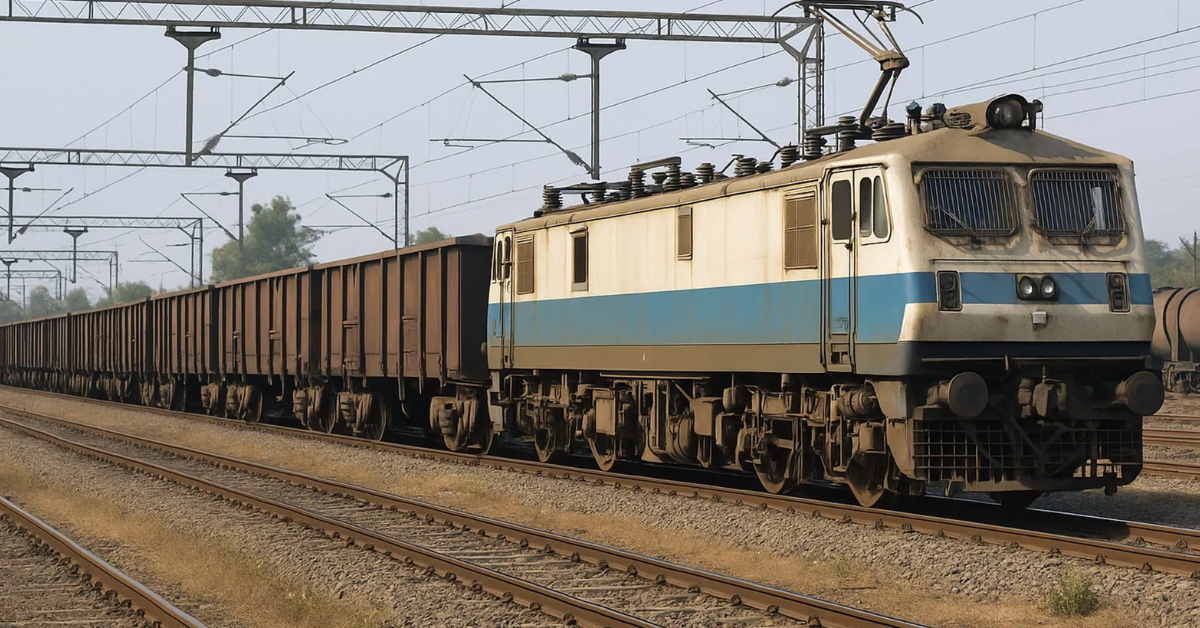

CONCOR and PSA Mumbai’s new MoU aims to move more cargo by rail — and in doing so, reshape how India’s hinterland connects to its busiest port gateway.
State-owned logistics giant Container Corporation of India (CONCOR) has signed a Memorandum of Understanding with Bharat Mumbai Container Terminals, the entity operating PSA Mumbai’s terminal at Nhava Sheva, to build a structured framework for rail-based cargo movement between India’s largest container port and the country’s extensive hinterland network.
The MoU, signed on May 15, 2026, in New Delhi in the presence of CONCOR Chairman and Managing Director Sanjay Swarup and PSA International’s Regional CEO for MESAAT Vincent Ng, marks a significant strategic alignment between two of the country’s most important logistics infrastructure players.
At its core, the agreement covers the movement of cabotage cargo, domestically traded containers, and Customs-cleared EXIM goods through rail-based services that connect PSA Mumbai’s quayside operations with CONCOR’s nationwide network of Inland Container Depots (ICDs) and domestic terminals. The ambition is to shift more freight from road to rail; a shift that would lower logistics costs, reduce carbon emissions, and improve reliability for cargo owners.
India’s logistics sector has long grappled with an over-reliance on road freight, which accounts for the vast majority of container hinterland movement from major ports. Rail evacuation, despite its cost advantages over longer distances, has historically suffered from inadequate first-and-last mile connectivity, inconsistent scheduling, and insufficient integration between port terminal operators and rail concessionaires.
The CONCOR-PSA Mumbai partnership is designed to address these gaps. By combining PSA Mumbai’s terminal real estate and quayside operational expertise with CONCOR’s pan-India rail network — which spans hundreds of ICDs, container freight stations, and multimodal logistics parks — the two organisations aim to create seamless multimodal logistics products that reduce truck dependency and offer shippers a genuinely competitive rail option.
The timing is notable. India’s port sector has been growing rapidly, with cargo volumes at major ports hitting record levels in the current financial year. JNPA, which handles the bulk of India’s containerised trade, has been under congestion pressure — a problem that faster and more efficient rail evacuation could meaningfully alleviate. The government has also been investing heavily in the Dedicated Freight Corridor (DFC) network, which promises faster and more predictable rail transit between port gateways and consumption centres.
For PSA Mumbai, which operates one of the key terminals within the JNPA complex, the MoU represents an effort to differentiate its offering to shipping lines by guaranteeing more reliable cargo evacuation — a factor that influences where carriers choose to berth their vessels. For CONCOR, the agreement deepens its role as the backbone of India’s intermodal logistics system, reinforcing its position at the port-hinterland interface.
Beyond commercial interests, the partnership aligns with the government’s broader National Logistics Policy objective of reducing India’s logistics costs from their current estimated level of around 13–14% of GDP to below 9% by 2030. Rail-led container movement is central to that ambition. Multimodal freight solutions that seamlessly integrate port, rail, and inland depot capacity are widely regarded as the most effective lever for making Indian exports more competitive on a landed-cost basis.
The MoU is a framework agreement — the concrete operational and commercial products it enables will take shape over the coming months. But its symbolism is important: it signals that India’s public-sector logistics infrastructure is ready to collaborate actively with international terminal operators to build a more efficient and integrated supply chain.
 Join our WhatsApp channel for more updates:
 Subscribe to our YouTube channel for more updates: