


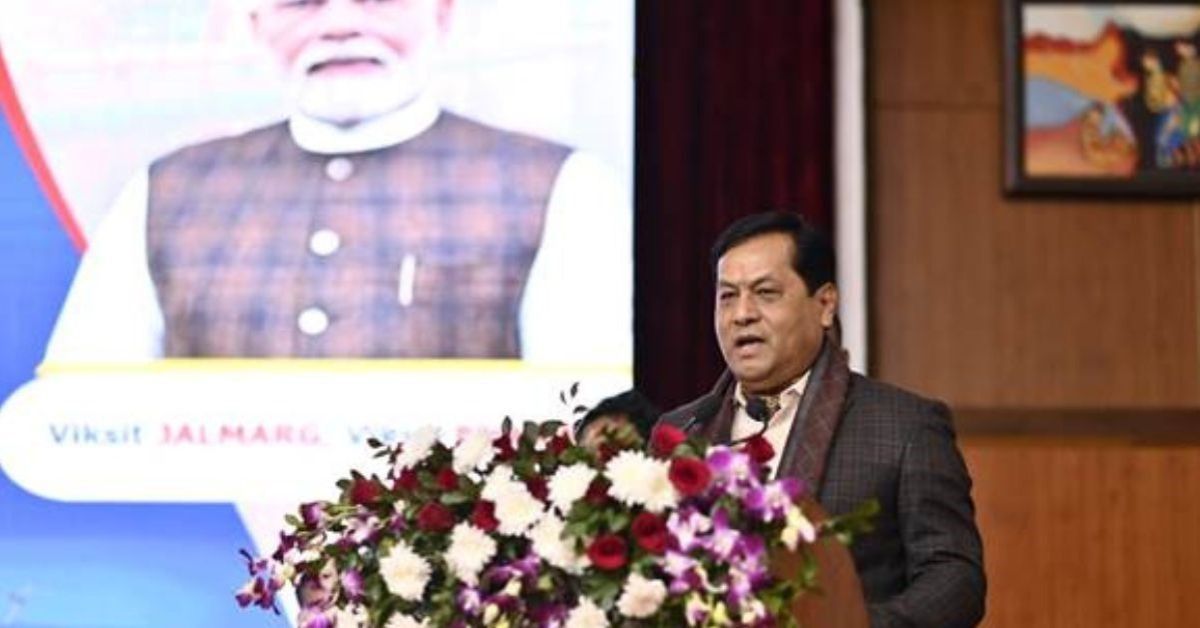

India’s new container manufacturing support scheme unveiled in Budget 2026 could unlock investments of around ₹1 trillion and build capacity equivalent to a tenth of global demand, Union Ports, Shipping and Waterways Minister Sarbananda Sonowal has indicated in a recent interaction. The programme, anchored by a ₹10,000 crore allocation over five years, is designed to create a globally competitive ecosystem for container production and sharply cut India’s dependence on imported boxes that has long exposed its EXIM logistics to external shocks.
For the second year in a row, Finance Minister Nirmala Sitharaman has used the Union Budget to roll out marquee initiatives for the maritime economy, with this year’s centrepiece being the container manufacturing assistance scheme. Sonowal said the government sees the scheme as a pillar of a wider maritime investment roadmap that targets a transformative scale-up in shipping, ports and logistics over the coming decade. The scheme aims to support the creation of domestic manufacturing capacity of about 1 million twenty-foot equivalent units (TEUs) over ten years, moving India from a marginal player into a meaningful source of global supply.
Today, India produces only a fraction of its container requirements and relies heavily on Chinese-made boxes, a vulnerability starkly exposed during the pandemic-era shortage and freight spike. Containers manufactured in India are estimated to be 30–40 per cent costlier than those from China due to higher input costs and limited economies of scale, a gap the scheme explicitly seeks to bridge through targeted fiscal support and ecosystem development. According to estimates cited by the shipping ministry, the new programme could generate an overall market value of about ₹1.07–1.1 lakh crore, implying an economic multiplier of roughly eight times the budgetary outlay.
Sonowal has also linked the scheme closely to the rollout of Bharat Container Shipping Line (BCSL), India’s proposed national container carrier, which is expected to require roughly 1 million TEUs for its operations in the medium term. A recent government note suggests that BCSL and the domestic container manufacturing initiative together will form the backbone of a revamped EXIM logistics strategy, backed by a proposed ₹59,000 crore fleet and container procurement plan. By aligning indigenous box production with the needs of a home-grown liner operator, policymakers hope to create assured demand that can de-risk fresh private investment in container factories.
The scheme is also expected to attract strong interest from global and domestic shipping and logistics majors. Companies such as Mediterranean Shipping Company (MSC), Maersk/Artsons (Tata Group), Adani and J M Baxi have already indicated willingness either to source India-made containers or participate in the programme, according to ministry inputs referenced in multiple reports. Officials say such anchor buyers will be crucial to achieving scale, ensuring that new manufacturing units are integrated into global container pools rather than serving only the domestic market.
Beyond headline investment numbers, the container scheme is expected to generate an estimated 3,000 direct jobs and more than 50,000 indirect employment opportunities across the value chain, including steel, corner castings, coatings, logistics handling, trucking and depot operations. Sonowal has framed the initiative as part of a broader maritime self-reliance push, arguing that a strong domestic container base, a national carrier in BCSL, and parallel investments in new waterways and coastal shipping incentives together will enhance India’s logistics resilience and support its export-led growth ambitions.
 Join our WhatsApp channel for more updates:
 Subscribe to our YouTube channel for more updates: