


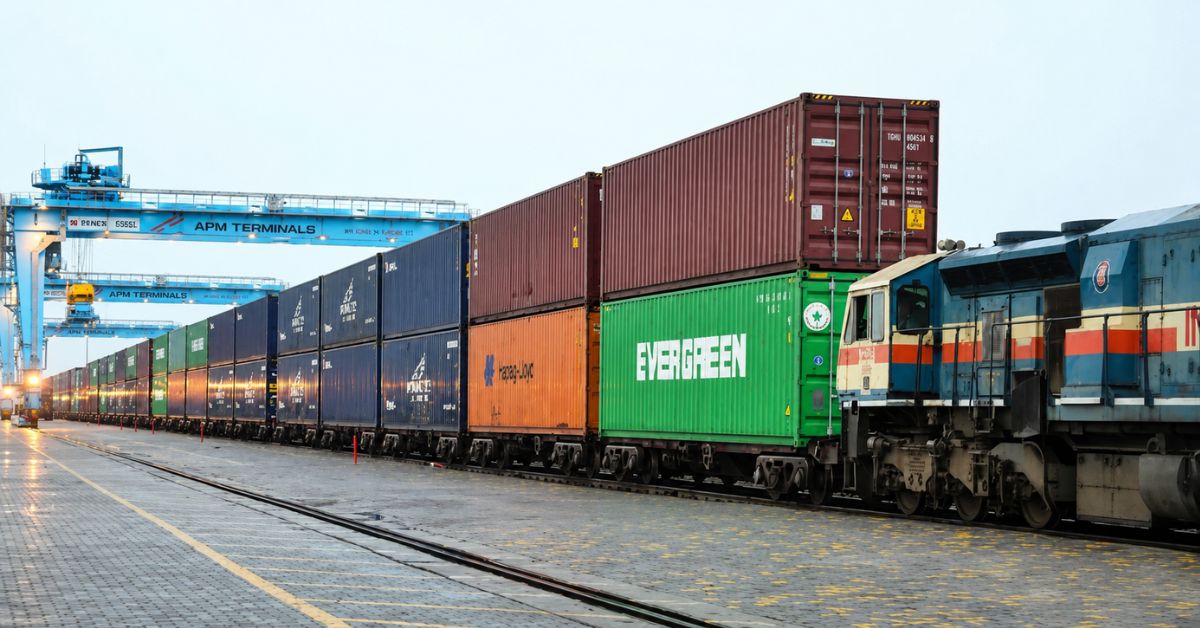

Indian Railways has approved key modifications to the Model Concession Agreement governing container train operations, allowing Container Train Operators to run trains across all routes on the network under a single All India Licence with a uniform registration fee of Rs 25 crore, replacing the earlier route-wise permission system. The changes will be notified through a Gazette Notification.
What does the single licence structure mean for operators?
Under the approved modifications, the existing route-wise categorisation of licences will be discontinued. Subject to approval by the Ministry of Railways, Container Train Operators will be granted a Single All India Licence, enabling them to operate across all routes on the network. Every applicant will now deposit a non-refundable uniform registration fee of Rs 25 crore, replacing the earlier system of differentiated fees for different route categories.
What are the terms for licence extension?
The approved amendments allow permission granted to a Container Train Operator to be extended for a further 20 years after expiry, subject to satisfactory performance and approval by the Competent Authority. No extension fee will be charged for this extension or for any future extensions granted to the same operator.
How will existing operators be affected?
Operators currently holding Category I licences may continue under their existing category until their concession period ends, with no fee charged on renewal or extension under the new licence. Operators in Category II, III and IV may similarly continue in their existing categories until their concession period expires, but will pay Rs 15 crore, the difference between the new Rs 25 crore fee and the Rs 10 crore already paid, on renewal or extension. These operators may also choose to migrate early to the new licence before completing their 20-year concession period by paying the same Rs 15 crore amount.
What benefits does this reform offer the industry?
The uniform registration fee and removal of extension fees are expected to reduce regulatory and compliance costs for operators while simplifying the approval process. The simplified licensing framework is expected to encourage greater private participation in container train operations, improving rail-based freight movement across the country and reducing logistics costs for industry, particularly MSMEs, by offering a more efficient and cost-effective transport option.
What does this mean for India’s broader freight and sustainability goals?
The reform is expected to accelerate the modal shift of container traffic from road to rail, easing highway congestion, reducing fuel consumption and lowering carbon emissions, contributing to more sustainable freight transportation. It forms part of Indian Railways’ broader push to establish a uniform and simplified licensing regime for Container Train Operators, streamlining approvals under a common regulatory framework.
 Join our WhatsApp channel for more updates:
 Subscribe to our YouTube channel for more updates: