


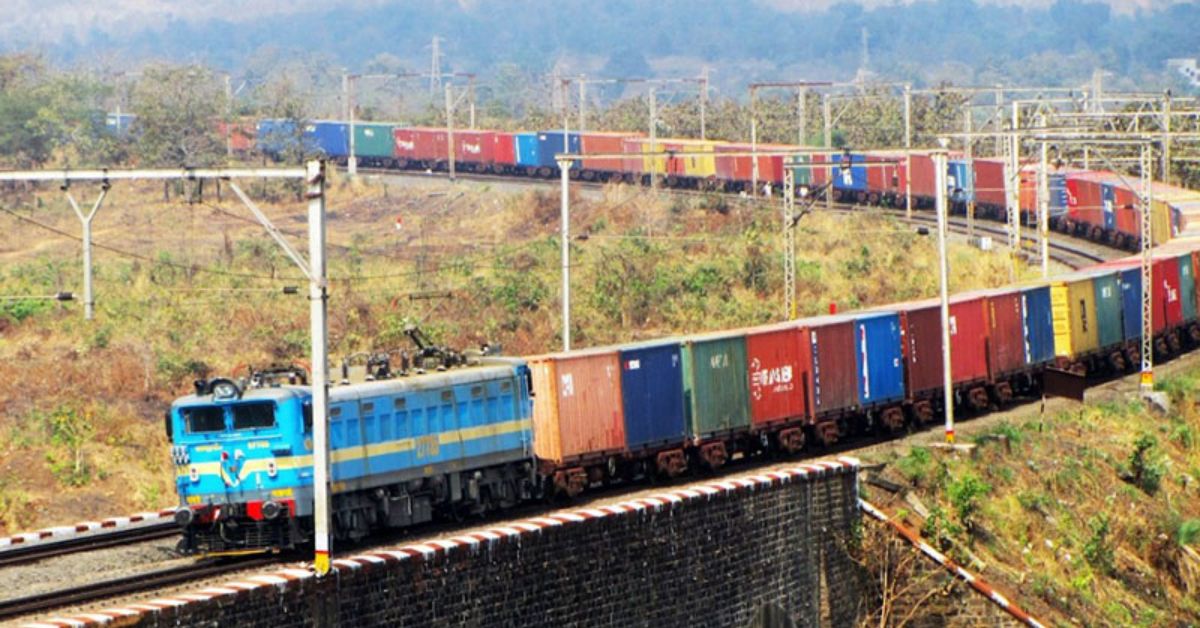

The Union government has cleared a new 2,052 km Dedicated Freight Corridor (DFC) between Dankuni in West Bengal and Surat in Gujarat, creating an East–West cargo spine that will plug India’s eastern manufacturing belt directly into the country’s busiest western ports. Announced in Budget 2026, the corridor will be developed by DFCCIL under the Railway Ministry and is designed to carry higher axle-load wagons and double-stack container trains, promising faster, more reliable and cheaper rail freight compared to the existing mixed-traffic network.
Railway Minister Ashwini Vaishnaw said the new DFC will traverse six states—West Bengal, Odisha, Chhattisgarh, Madhya Pradesh, Maharashtra and Gujarat—before linking into the Western Dedicated Freight Corridor near Surat. This integration with the existing Western DFC, which connects Dadri in Uttar Pradesh to JNPT near Mumbai, will enable smoother cargo flows from eastern and central India to major ports in Maharashtra and Gujarat, including JNPT, Mundra, Hazira and others along the west coast.
The corridor will also interface with the Eastern Dedicated Freight Corridor, which currently runs from Sahnewal near Ludhiana in Punjab to Dankuni, effectively stitching together a continuous freight rail backbone across northern, eastern and western India. Railways officials said the dedicated tracks for freight will decongest the current passenger-heavy routes, cut transit times, support double-stack container operations and sharply improve service quality for long-haul cargo.
By separating freight from passenger traffic, the Dankuni–Surat DFC is expected to lower logistics costs and enhance supply chain reliability for industries in mineral-rich and manufacturing hubs along its route. For ports in Maharashtra and Gujarat, the project is seen as a key enabler to attract more gateway cargo from the hinterland, deepen port-based industrialisation and support India’s broader push to shift more freight from road to rail for greener, high-capacity transport.
 Join our WhatsApp channel for more updates:
 Subscribe to our YouTube channel for more updates: