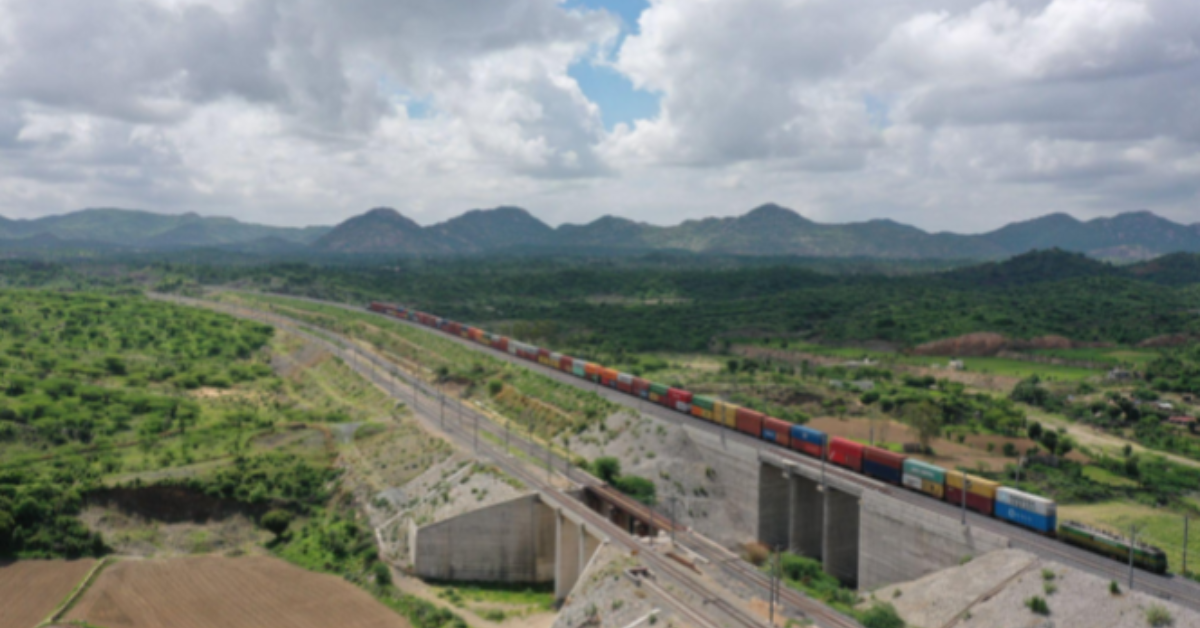

The Dedicated Freight Corridor Corporation of India (DFCCIL) has commissioned a new Gati Shakti Cargo Terminal at Gulaothi on the Eastern Dedicated Freight Corridor (EDFC), adding another critical node to India’s rapidly expanding rail-based logistics network and improving connectivity for industrial clusters in western Uttar Pradesh.
The terminal was inaugurated by DFCCIL Managing Director Praveen Kumar, who described the commissioning as an important milestone in improving logistics efficiency and reducing dependence on road transport. The Gulaothi GCT is strategically positioned near the Khurja–Dadri section of the EDFC and, through its linkage with the Western Dedicated Freight Corridor, will provide direct access to New JNPT, enabling manufacturers and exporters in the region to access port infrastructure more efficiently.
Outbound freight from Gulaothi is expected to flow towards Assam, Punjab, and Maharashtra, carrying commodities such as textiles, agricultural products, and electrical goods. Inbound cargo from Maharashtra, Gujarat, and Tamil Nadu will primarily consist of steel and automobile components, serving the manufacturing and industrial zones in the surrounding region. The terminal is well-connected by road via National Highway-334, as well as the Eastern Peripheral Expressway and the Delhi–Meerut Expressway — important logistics arteries in the National Capital Region.
The inauguration adds to DFCCIL’s growing network of Gati Shakti Cargo Terminals under the PM Gati Shakti National Master Plan, which is intended to attract private investment into rail-linked logistics infrastructure and accelerate the modal shift of freight from road to rail. DFCCIL says the terminals are selected based on cargo demand potential and industrial concentration, ensuring they function as genuine freight multipliers rather than underutilised sidings.
The terminal’s commissioning arrives at a significant moment: with West Asia conflict disruptions exposing the vulnerabilities of sea-route dependence for India’s EXIM community, a more robust and geographically distributed domestic freight rail network offers a degree of resilience that road-dependent logistics alone cannot provide. Stronger EDFC connectivity to JNPT, in particular, will allow India to move cargo efficiently even when maritime lanes are under stress.
 Join our WhatsApp channel for more updates:
 Subscribe to our YouTube channel for more updates: