


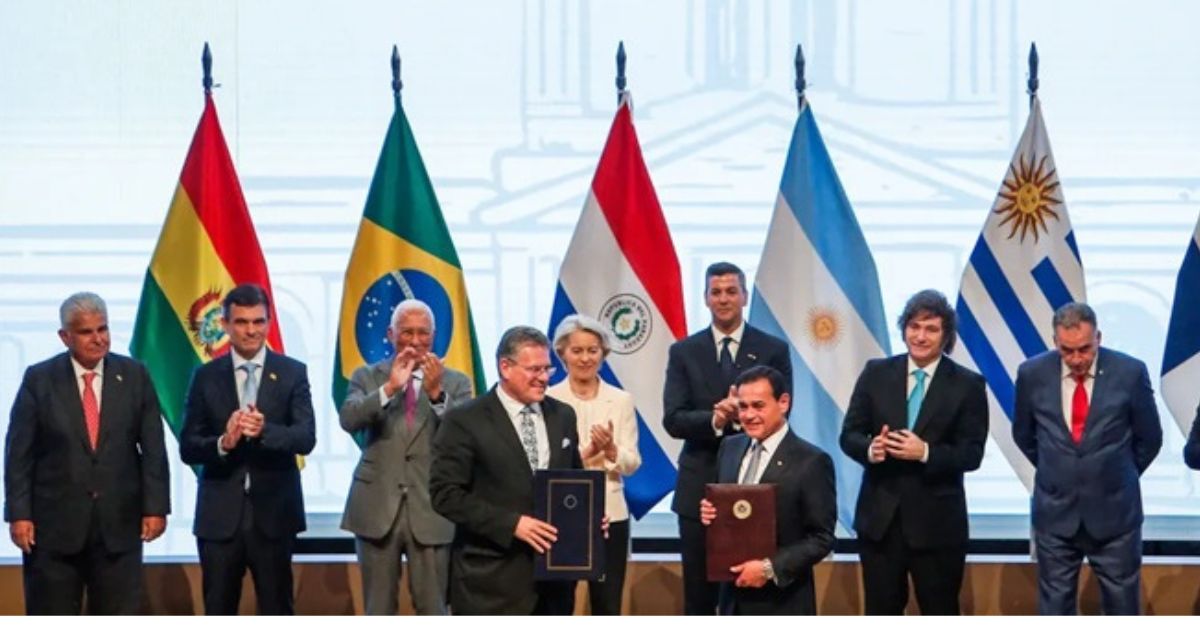

In a triumphant geopolitical milestone amid rising global protectionism, senior officials from the European Union and South America’s Mercosur bloc—comprising Argentina, Brazil, Paraguay, and Uruguay—formally signed a comprehensive free trade and partnership agreement on January 17, 2026, forging the planet’s largest open market spanning over 700 million consumers and 30% of global GDP.
The ceremony, hosted in Paraguay’s capital and attended by EU Commission President Ursula von der Leyen, European Council President António Costa, and Mercosur heads of state, capped a marathon 25-year negotiation saga fraught with agricultural disputes, environmental concerns, and shifting political winds. Von der Leyen hailed it as a bold stand against tariffs and isolationism, declaring, “We choose fair trade over tariffs, a long-term partnership over isolation,” while Paraguay’s President Santiago Peña and Brazil’s Foreign Minister Mauro Vieira celebrated it as a rejection of unpredictability and protectionism.
Under the deal, tariffs will be eliminated on over 90% of bilateral goods and services, with phased reductions over 10-15 years for sensitive items like beef, poultry, sugar, rice, soybeans, and ethanol—South America’s agricultural powerhouses—while opening EU markets to cars, wines, cheeses, machinery, and chemicals. Strict quotas, safeguards, and enhanced EU subsidies for farmers addressed opposition from France and environmental groups wary of deforestation risks, securing buy-in from Italy and a qualified majority of member states just days prior.
Now facing ratification hurdles—the European Parliament’s approval and Mercosur legislatures’ nods, expected by late 2026—the pact promises €4 billion annual EU export gains and diversified supply chains for critical raw materials like minerals and agri-products, countering dependencies on China and navigating U.S. tariff threats under President Trump. For Mercosur, it unlocks Europe’s affluent consumers; for the EU, it bolsters food security and industrial competitiveness in a fragmented trade landscape, signaling multilateralism’s resilience despite farmer protests and geopolitical headwinds.
 Join our WhatsApp channel for more updates:
 Subscribe to our YouTube channel for more updates: