



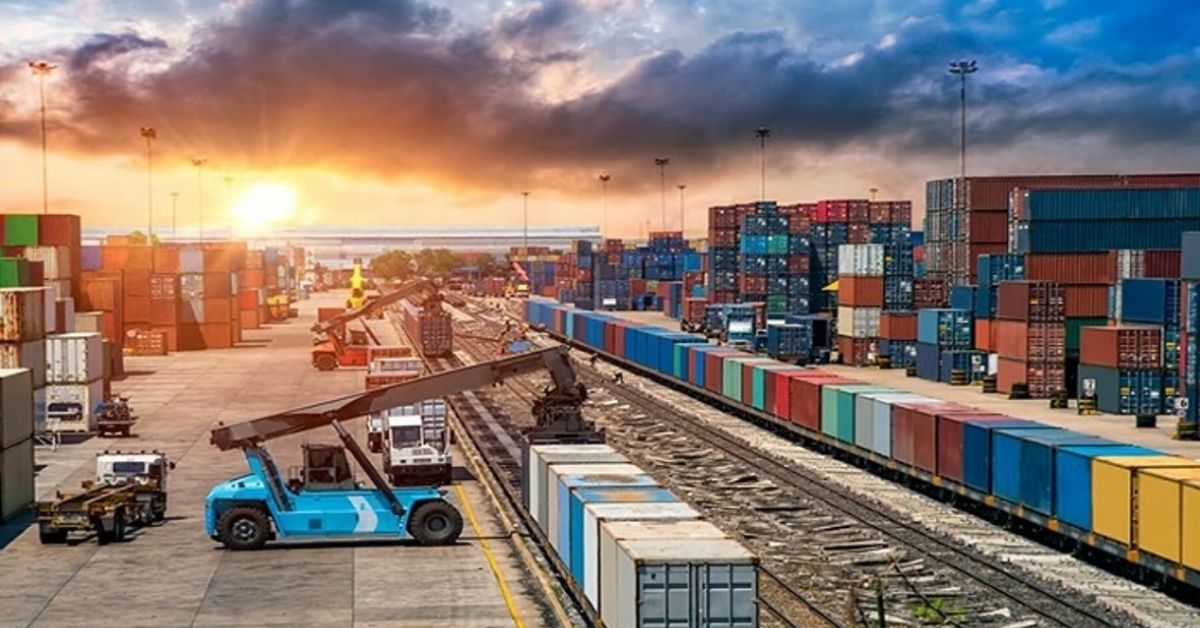

India’s logistics ecosystem is undergoing a structural transformation, with logistics costs declining to 7.97 percent of GDP—an important benchmark that brings the country closer to global efficiency standards. A major contributor to this progress has been the rapid rollout of Gati Shakti Cargo Terminals (GCTs) under Indian Railways.
Introduced under the Gati Shakti Cargo Terminal Policy, 2021, the initiative aligns with the Prime Minister’s Gati Shakti National Master Plan, which aims to integrate railways, highways, ports, and airports into a unified multimodal transport network. The objective is to enhance connectivity, improve ease of doing business, support domestic manufacturing, and promote balanced regional development.
Gati Shakti Cargo Terminals are modern rail-based logistics hubs designed to facilitate the seamless loading, unloading, and transfer of goods between trains and other modes of transport. Before the introduction of GCTs, freight movement in India was fragmented across road, rail, and port networks, often resulting in congestion, delays, and elevated logistics costs. The new terminals are designed to eliminate these inefficiencies by acting as integrated freight gateways.
A key operational advantage of GCTs is the adoption of engine-on-load operations. Under this model, locomotives remain attached during loading or unloading within permitted free time, enabling trains to depart immediately upon completion of cargo handling. This significantly reduces turnaround times and improves asset utilisation across the rail network.
Progress on the ground has been steady. Indian Railways has approved 306 Gati Shakti Cargo Terminals nationwide, of which 118 are already operational. These commissioned terminals together offer an estimated handling capacity of 192 million tonnes per annum, supporting a steady increase in rail-based freight volumes and contributing to lower logistics costs.
To streamline implementation and operations, Indian Railways issued a Master Circular on GCTs in 2022, laying down clear guidelines for terminal agreements, operational procedures, and efficiency enhancements.
The shift towards rail-based logistics also carries strong environmental benefits. Rail transport costs less than half of road freight and generates nearly 90 percent lower carbon emissions. Since 2014, an additional 2,672 million tonnes of freight has been diverted from road to rail, resulting in savings of approximately 143.3 million tonnes of CO₂ emissions, while also easing highway congestion and supporting India’s long-term carbon neutrality goals.
Private sector participation has been a cornerstone of the GCT programme. Since its launch, the policy has attracted nearly ₹8,600 crore in private investment. Approved developers are required to complete terminal construction within 24 months, ensuring timely project execution and quicker operational readiness.
The financial impact of GCTs has been equally significant. Freight revenue generated through these terminals has grown more than fourfold between FY 2022–23 and FY 2024–25, reaching ₹12,608 crore. This surge reflects the increasing reliance on GCTs as critical nodes in India’s logistics network.
With their focus on speed, reliability, multimodal connectivity, and sustainability, Gati Shakti Cargo Terminals are emerging as central pillars of India’s logistics reform agenda—bringing together infrastructure development, private investment, and environmental responsibility under a single national vision.
 Join our WhatsApp channel for more updates:
 Subscribe to our YouTube channel for more updates: