




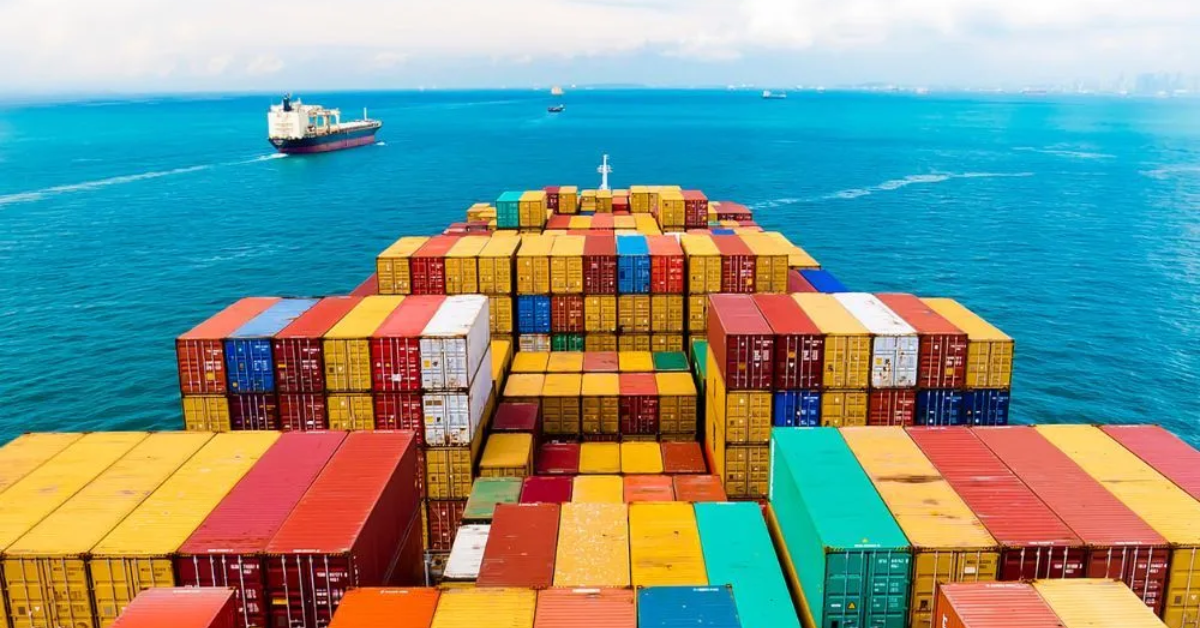

Global container freight rates are on the verge of another significant upswing, with a confluence of supply chain pressures tightening effective shipping capacity and shifting bargaining power back to carriers. Industry analysts warn that shippers could face a replay of pandemic-era rate escalation if the current disruptions intensify.
Jacob van Rensburg, Head of Research and Development at the South African Association of Freight Forwarders (SAAF), highlighted that the relationship between freight rates and carrier profitability is once again aligning in carriers’ favour. He noted that in most of the past 22 quarters, liner profits have risen alongside increases in the Global Supply Chain Pressure Index (GSCPI), a pattern that is reasserting itself.
Multiple sources of pressure are converging simultaneously. Red Sea diversions via the Cape of Good Hope remain in effect, adding thousands of nautical miles to Asia-Europe routes. The US-Iran conflict has introduced additional uncertainty in the Strait of Hormuz. Panama Canal water levels have occasionally constrained transits. And carriers are deliberately managing capacity through blank sailings, service rationalisations, and selective reductions in vessel deployment.
The Drewry World Container Index (WCI) and the GSCPI are both trending upward after a brief decoupling during 2025, signalling a renewed tightening cycle. Analysts see this parallel movement as a reliable leading indicator of rate increases across key trade lanes.
For Indian shippers and exporters, the implications are concrete. Freight costs are already rising for Asia-Europe and transpacific routes. War-risk surcharges, fuel recovery charges and congestion surcharges are increasingly being passed on. Space availability has tightened on several services, particularly those serving West and North Indian ports.
The broader worry is that if the Strait of Hormuz remains restricted, the capacity disruption could dwarf even the Red Sea crisis in terms of volume displaced. The Hormuz channel accounts for roughly 20 per cent of global oil flows and a significant portion of LNG and dry bulk trade. Any sustained closure would have cascading effects on global trade logistics, energy markets and freight pricing far beyond container shipping.
 Join our WhatsApp channel for more updates:
 Subscribe to our YouTube channel for more updates: