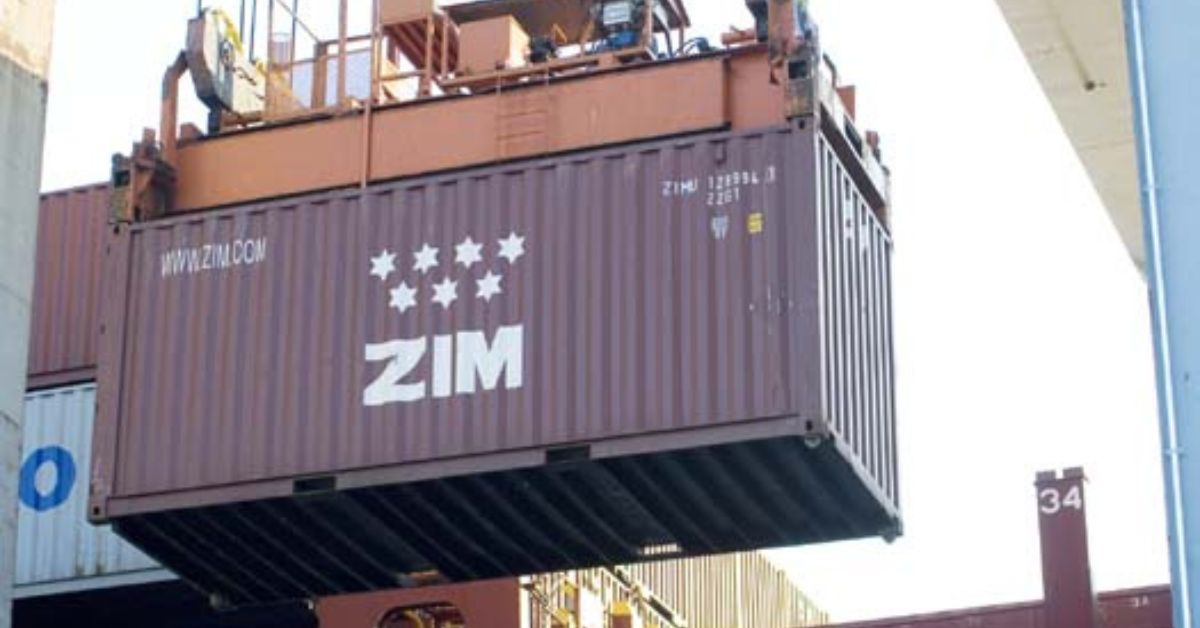

Global shipping majors are weighing bids for ZIM Integrated Shipping Services, Israel’s largest container line, even as early efforts have already sparked political pushback and labour opposition.
According to multiple reports, Hapag-Lloyd has emerged as a leading contender. But the German carrier’s approach is facing resistance from ZIM’s workers’ committee, which argues that the involvement of Qatari and Saudi sovereign funds among Hapag-Lloyd’s shareholders could raise national security concerns for Israel.
Hapag-Lloyd’s ownership structure is diverse: roughly 30% each is held by German billionaire Klaus-Michael Kühne and Chilean shipping company CSAV. The City of Hamburg owns about 14%, while Qatar’s Investment Authority controls around 12.5%, and Saudi Arabia’s Public Investment Fund holds close to 10%.
ZIM has also been linked to possible interest from other global giants, including Mediterranean Shipping Co (MSC) and Maersk, as carriers explore consolidation opportunities in a softening market.
The renewed acquisition chatter follows the ZIM board’s recent rejection of a $2.4 billion buyout proposal submitted by CEO Eli Glickman and Rami Ungar, the head of Ray Car Carriers. After turning down the offer, the board announced the formation of a dedicated team to assess strategic options for the company’s future.
However, any takeover attempt is likely to face major political and structural hurdles. ZIM is shielded by a Special State share, a golden-share mechanism granting the Israeli government broad authority to preserve the carrier’s national status and ensure access to vessels during security emergencies. This effectively gives the state veto power over any foreign acquisition. Labour groups have also voiced firm opposition to foreign ownership.
Such barriers are not without precedent. In 2023, Hapag-Lloyd’s effort to buy South Korea’s HMM was derailed after Seoul rejected the sale of its flagship carrier to an overseas buyer.
The German carrier has previously considered a tie-up with ZIM. Before the pandemic, Hapag-Lloyd examined a possible acquisition when the Israeli line was under significant financial pressure.
 Join our WhatsApp channel for more updates:
 Subscribe to our YouTube channel for more updates: