



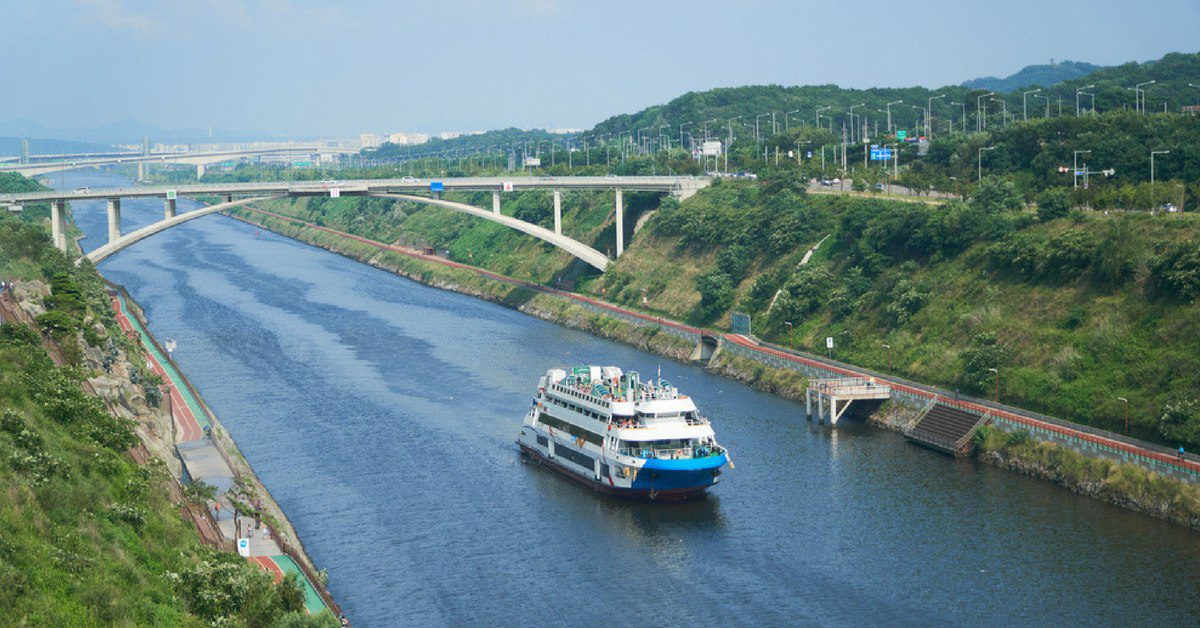

The government is preparing a renewed policy and incentive drive to scale up coastal shipping and inland water transport as part of a broader strategy to cut logistics costs, decongest roads and railways, and shift more freight to greener modes. Central to the plan is a proposed Coastal Cargo Promotion Scheme announced in Budget 2026, which will incentivise a modal shift from rail and road to waterways with an eye on doubling the share of inland waterways and coastal shipping in India’s freight mix from about 6 per cent to 12 per cent by 2047.
Finance Minister Nirmala Sitharaman said the government will operationalise 20 new National Waterways over the next five years, starting with National Waterway-5 in Odisha to link mineral-rich Talcher and Angul and industrial hubs such as Kalinga Nagar with the ports of Paradip and Dhamra. The initiative builds on earlier efforts under Sagarmala and Jal Marg Vikas, but with a stronger focus on turning infrastructure into actual cargo volumes through regulatory simplification, better last-mile connectivity, and targeted financial support.
Officials said the fresh framework will look to fix long-standing bottlenecks that have held back wider adoption of water-based transport, despite India’s 11,000-km coastline and extensive inland waterway network. Measures under consideration include streamlined approvals, improved port and terminal infrastructure, cargo aggregation support, and incentives to draw more private investment into coastal and riverine shipping.
While coastal shipping has struggled to take off amid issues such as cargo assurance and viability, inland water transport has seen stronger traction, with cargo movement on national waterways rising from 18.1 million tonnes in FY 2013–14 to 145.5 million tonnes in FY 2024–25, driven mainly by bulk commodities like coal, iron ore, sand and fly ash. To support this growth, the government has brought inland vessels under the tonnage tax regime and plans to develop a ship repair ecosystem at Varanasi and Patna, alongside regional training centres to build skilled manpower for waterway operations.
The Ministry of Ports, Shipping and Waterways has already rolled out several measures to encourage coastal cargo, including dedicated coastal berths, lower port tariffs, green-channel clearances, priority berthing and relaxed cabotage rules, which have helped sustain double-digit growth in coastal movements. Industry stakeholders have welcomed the renewed push, but stress that consistent incentives and an integrated multimodal approach will be crucial to make water-based logistics commercially viable at scale and to deliver meaningful reductions in India’s logistics costs.
 Join our WhatsApp channel for more updates:
 Subscribe to our YouTube channel for more updates: