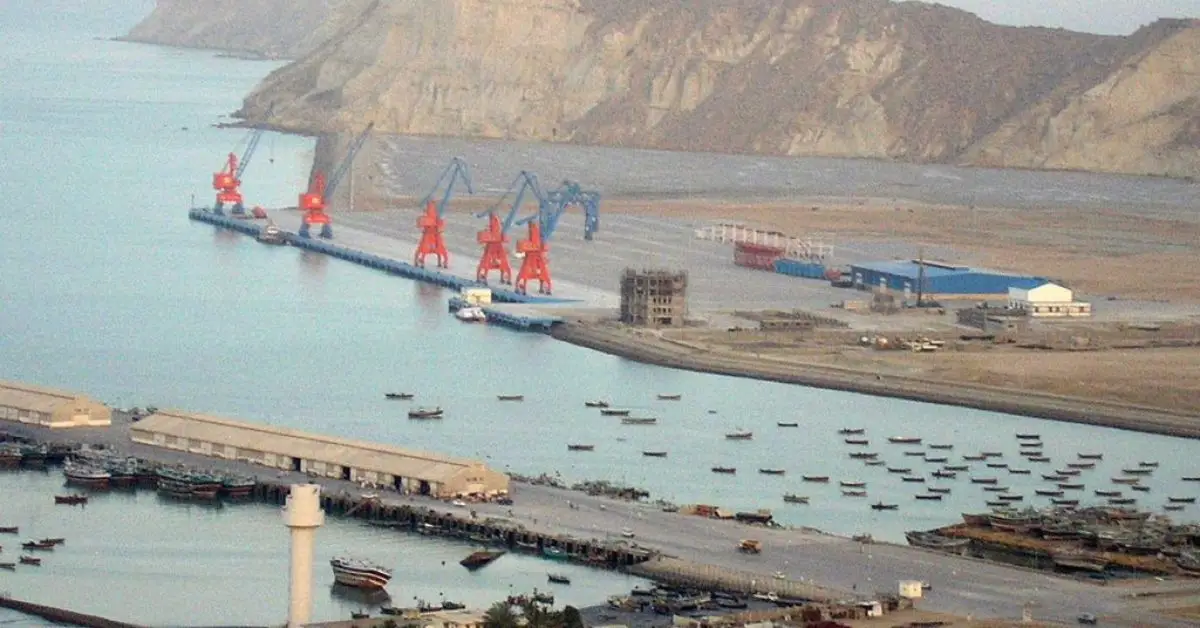

Plans to establish a multinational maritime fusion centre linked to Gwadar are being promoted as a confidence-building measure to enhance cooperation, transparency and regional maritime security. Framed officially as a responsible step by Pakistan towards shared maritime awareness, the proposal appears benign on the surface. A closer look, however, suggests it could significantly erode Pakistan’s control over its own maritime domain.
Maritime fusion centres are far more than coordination platforms. They function as intelligence hubs, gathering and analysing data on shipping movements, naval deployments, commercial traffic and behavioural patterns at sea. Access to such information provides deep insight into a country’s coastline, its operational routines and its vulnerabilities. Hosting such a centre near Gwadar would place Pakistan’s maritime space under sustained international scrutiny, potentially beyond Islamabad’s effective control.
Gwadar’s geography makes the proposal particularly sensitive. Located close to major sea lanes, energy corridors and areas of rising naval activity, the port occupies a strategically valuable position in the northern Arabian Sea. A fusion centre operating from this location would offer external navies and agencies a continuous window into activity off Pakistan’s coast, covering commercial shipping, port operations, patrol patterns and response timelines. Even when shared under cooperative frameworks, this level of visibility would tilt maritime awareness decisively in favour of outside actors.
Proponents argue that shared data enhances collective security. In practice, intelligence sharing is rarely balanced. Countries with advanced satellites, sensors and maritime patrol capabilities extract far greater value from localised data than host nations can ever gain in return. Pakistan would contribute geography, access and political legitimacy, while external partners would supply technology, analysts and global intelligence networks operating far beyond Pakistan’s reach.
The boundary between cooperation and surveillance can blur quickly. Fusion centres often begin with narrow mandates such as counter-piracy or anti-smuggling operations. Over time, their scope expands to include commercial flows, port logistics, naval exercises and even gaps in coastal coverage. What starts as shared situational awareness can gradually evolve into persistent monitoring of the host country’s own maritime behaviour.
This raises fundamental questions of sovereignty. With foreign personnel, software and analytical systems embedded on Pakistani soil, control over data becomes ambiguous. Decisions about what information is collected, stored or shared are often shaped by those who own the technology. In many such arrangements, the host country remains dependent on external systems it does not fully control.
Gwadar’s broader trajectory heightens these concerns. The port is already characterised by heavy security, restricted access and strong external influence. Adding a multinational intelligence facility would further reinforce the perception that Gwadar is less a national commercial port and more a strategic platform for others. Each additional layer of externally driven infrastructure dilutes local authority while increasing foreign visibility.
There is also the issue of liability without authority. Any intelligence breach, data misuse or operational controversy linked to the fusion centre would be attributed to Pakistan as the host nation, regardless of who was responsible. Diplomatic fallout or regional escalation would land squarely at Islamabad’s door.
Such risks are not hypothetical. Intelligence hubs attract espionage, cyber intrusion and political pressure. Hosting one commits Pakistan to safeguarding not only its own interests but also those of foreign agencies operating from its territory, creating permanent strategic exposure.
Supporters warn that rejecting such initiatives could isolate Pakistan. This argument is unconvincing. Meaningful cooperation does not require surrendering physical or informational control. Maritime information sharing can be achieved through limited, clearly defined arrangements without establishing permanent, foreign-linked infrastructure at a sensitive port.
The deeper issue lies in how Gwadar is approached as a policy project. Too often, decisions are driven by strategic symbolism rather than rigorous cost-benefit analysis. Initiatives are embraced for the prestige and alignment they signal, not for how they strengthen national capability. The proposed fusion centre fits this pattern, offering diplomatic optics while imposing long-term strategic costs that remain under-examined.
Maritime domain awareness is a powerful instrument. Used wisely, it strengthens a nation’s command over its own waters. Used carelessly, it weakens sovereignty. If Gwadar becomes a site where others observe, analyse and operate, Pakistan risks turning its coastline into an external operations room.
Ports quietly shape power. So do intelligence facilities. Presenting foreign security infrastructure at Gwadar as cooperation masks a more uncomfortable reality: Pakistan would be providing location and legitimacy, while others gain awareness, leverage and strategic advantage. That is not partnership; it is exposure—and one that demands far greater caution than the current debate suggests.
 Join our WhatsApp channel for more updates:
 Subscribe to our YouTube channel for more updates: