




Global shipping giant targets gender imbalance in onboard roles through structured recruitment, mentorship, and career development for women seafarers
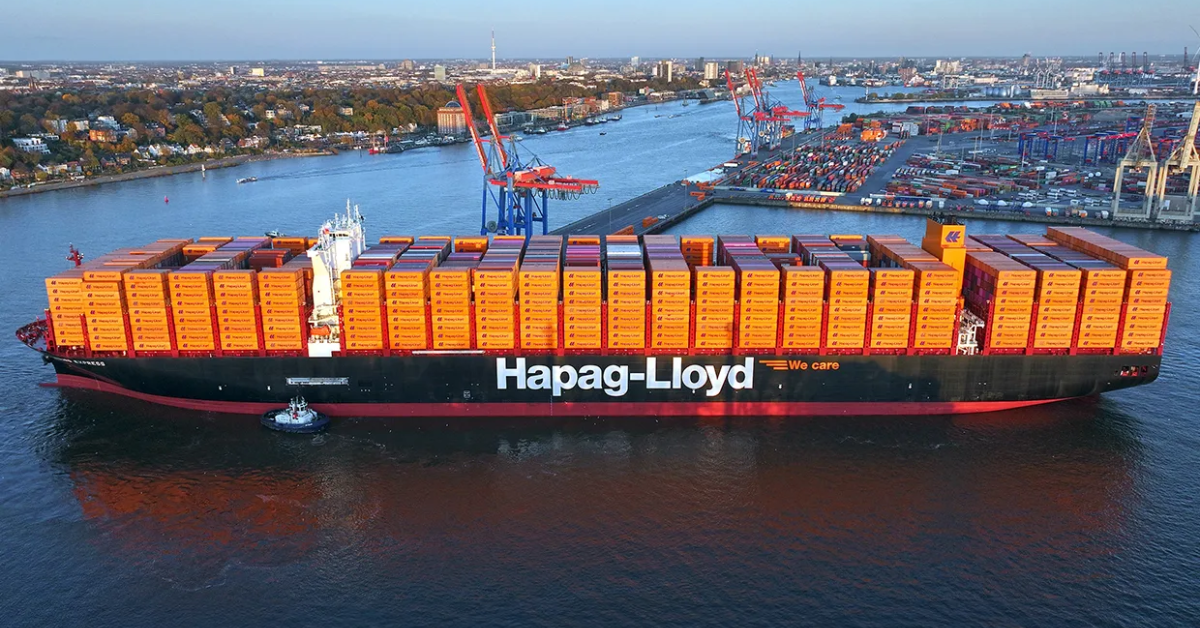
One of the most persistent structural challenges facing the global maritime industry is a stark one: women make up less than 2 percent of the world’s seafarer workforce, according to the International Labour Organization. A new initiative from Hapag-Lloyd — the world’s fifth-largest container shipping company — is attempting to change that, with the launch of a dedicated program called ‘Shefarer,’ explicitly designed to increase female participation in maritime careers at sea.
The Shefarer initiative is structured to address the gender gap across multiple points in the maritime talent pipeline — from initial recruitment and cadet training to mentorship during mid-career stages and progression into senior deck and engineering officer positions. Hapag-Lloyd stated that the program reflects its ‘broader commitment to diversity, inclusion, and workforce development’ within global shipping.
The maritime sector’s gender imbalance is not merely a social equity issue — it is increasingly being discussed as a labour market challenge. The global merchant fleet faces a well-documented shortage of qualified officers, with projections by BIMCO and the International Chamber of Shipping suggesting that demand for seafarers will continue to outpace supply through the 2030s. In this context, the systematic exclusion or self-exclusion of women from seafaring careers represents a significant under-utilisation of potential talent.
Shipping companies and maritime training institutions are also increasingly under pressure from Environmental, Social and Governance (ESG) investors and large cargo customers — including major retail and consumer goods corporations — to demonstrate measurable progress on diversity, equity, and inclusion (DEI) metrics. Hapag-Lloyd’s Shefarer launch can be read, in part, as a response to these external pressures as well as an internal conviction.
For India, where merchant navy graduates represent one of the largest national pools of officer cadets globally, the Shefarer initiative has particular relevance. India supplies approximately 10-12 percent of the world’s total seafarer workforce — but Indian women remain dramatically underrepresented in seafaring careers, accounting for a tiny fraction of that number despite growing enrolment in maritime education programs.
Indian maritime training institutions, including the Training Ship Rahaman, Tolani Maritime Institute, and the Indian Maritime University, have been making incremental progress in attracting female students to officer-level programs. Industry initiatives like Shefarer from major shipping lines can create the commercial demand signal — and the visible role models — needed to accelerate this trend.
Hapag-Lloyd noted that the program will also focus on improving onboard living and working conditions to make seafaring careers more accessible and attractive for women — addressing practical concerns around privacy, safety, and professional environment that have historically been cited as barriers by prospective female seafarers.
The Shefarer initiative joins a broader set of industry-wide diversity programs including the IMO’s ‘Women in Maritime’ initiative, the ITF Women’s Seafarers Committee, and various national programs launched by maritime administrations in the Philippines, India, and European countries. Collectively, these efforts represent a growing recognition that gender diversity is not just morally correct — it is commercially and operationally smart for an industry that can no longer afford to overlook half its potential workforce.
 Join our WhatsApp channel for more updates:
 Subscribe to our YouTube channel for more updates: