



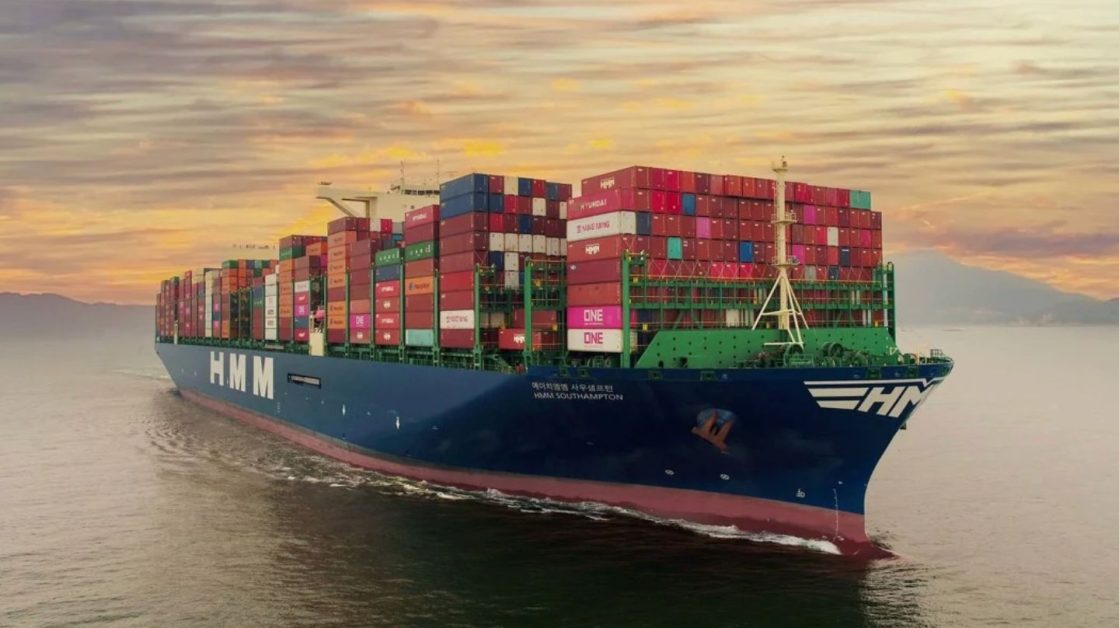

South Korea’s largest container carrier HMM has slashed its 2030 fleet capacity target while adding dozens more vessels, signalling a sharp pivot away from the mega-ship model that has dominated container shipping over the past decade.
What exactly has HMM changed in its fleet strategy?
HMM cut its container fleet capacity target from 1.55 million TEU to 1.47 million TEU by 2030, while raising its planned vessel count from 130 to 166 ships. The company also nearly doubled its investment plan to KRW 29 trillion, around USD 19.8 billion, up from KRW 15 trillion previously. The revised strategy points to a fleet with a significantly lower average vessel size, down from HMM’s current average of roughly 10,700 TEU per ship to an implied average of about 8,850 TEU across the new fleet.
Why is HMM moving away from megavessels?
The shift runs counter to the industry-wide push toward ever-larger ships that has defined container shipping since the 2010s. While bigger vessels delivered lower slot costs and fuel efficiency, they also tied carriers to a shrinking number of deep-water ports, reduced schedule flexibility, and left operators exposed when demand softened or port congestion spiked. HMM’s pivot suggests the carrier now sees more value in agility than raw scale, favoring a larger fleet of smaller ships that allows more frequent sailings on secondary routes and reduced dependency on a handful of mega-hubs.
How does alliance restructuring factor into this decision?
HMM is a member of the Premier Alliance alongside ONE and Yang Ming, a grouping that was restructured after Hapag-Lloyd left to join Maersk in the Gemini Cooperation. In a more fragmented alliance landscape, carriers increasingly need networks that can adapt quickly to shifting partnership obligations and trade lane demands.
What does the investment cover, and how does it tie into decarbonisation goals?
Including both container ships and bulk carriers, HMM expects its total fleet to reach 276 vessels by 2030, with the KRW 29 trillion investment covering newbuilds, terminals, ports and broader logistics infrastructure. HMM has also committed to a 2045 net-zero target, and smaller vessels are seen as better suited to adopting alternative fuels such as methanol and LNG, technologies still scaling up and costly to deploy on the largest ship classes.
What could this mean for the wider shipping industry?
Analysts will watch closely for HMM’s newbuilding orders as shipyard slots for mid-size container vessels tighten amid competition from regional carriers and niche operators. If HMM’s bet on smaller, more numerous ships proves successful, other carriers may follow, potentially reversing years of consolidation around ultra-large container vessels. For port operators, a shift toward smaller ships could mean more frequent calls, higher berth turnover and renewed relevance for mid-size terminals sidelined by the mega-ship race.
 Join our WhatsApp channel for more updates:
 Subscribe to our YouTube channel for more updates: