



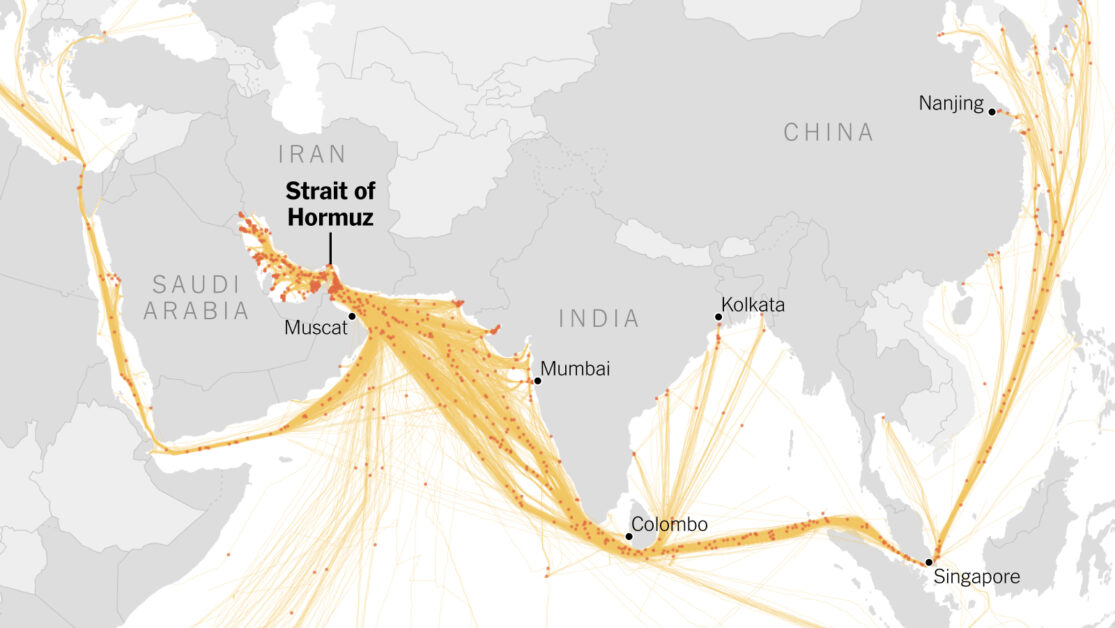

The effective halt of tanker traffic through the Strait of Hormuz has raised concerns over India’s crude, LNG and LPG supplies, given its heavy dependence on West Asian energy flows.
India imports about 88–90% of its crude needs, with roughly 35–52% of those volumes usually transiting Hormuz. The chokepoint also handles close to half of India’s LNG imports and a significant share of LPG cargoes.
Combined commercial and strategic inventories provide around 40–45 days of crude cover in a disruption scenario. Refiners are holding more than 10 days of crude plus around a week of fuel stocks, with another week’s crude in strategic petroleum reserves and floating storage.
Indian refiners are increasing intake from non‑Hormuz routes, including Russia, the US, West Africa and Latin America. Government sources have indicated plans to step up Russian purchases and tap alternative suppliers to cushion pump prices.
New Delhi can phase drawdowns from strategic reserves if the disruption extends, to smooth domestic supply. In a prolonged shutdown, authorities may be forced to curtail gas supplies to some industries to prioritise essential sectors. Analysts warn that a multi‑month closure keeping crude above about 120 dollars a barrel could feed into higher inflation, rupee pressure and slower growth.
 Join our WhatsApp channel for more updates:
 Subscribe to our YouTube channel for more updates: