



Incat Tasmania has reached a major milestone in maritime electrification after successfully powering up and testing the propulsion system of the world’s largest battery-electric ship in Hobart.
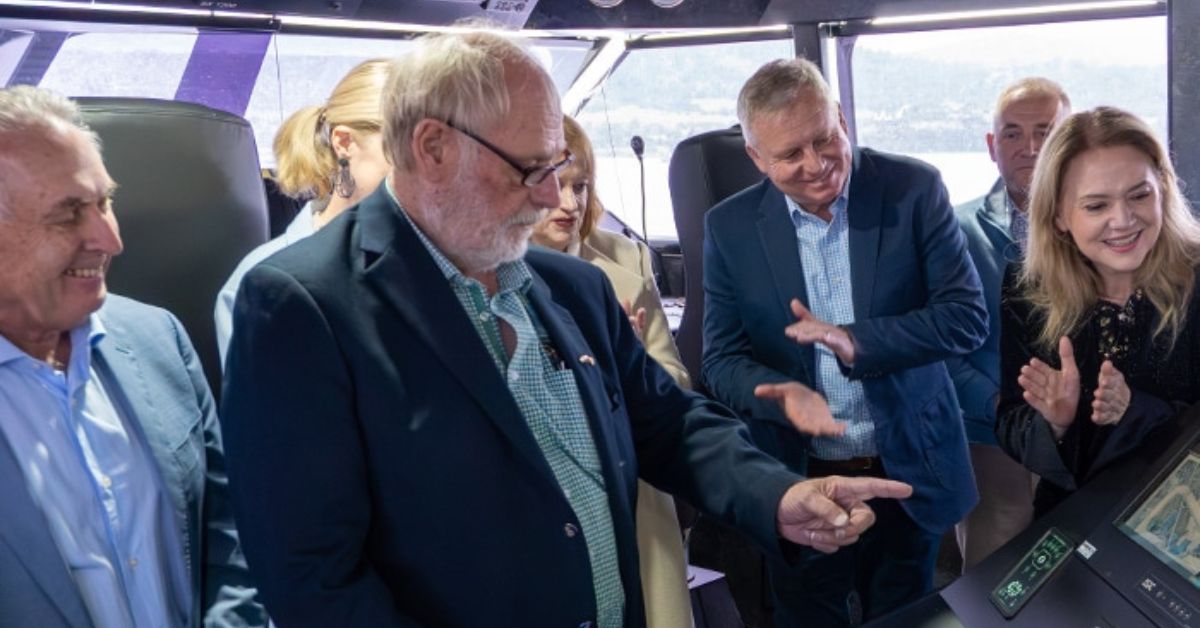
The 130-metre vessel, known as Hull 096, completed its first electric motor trial this week, marking the first time a ship of this size has been operated entirely on battery-electric power. The event was attended by senior industry figures and public officials at Incat’s Tasmanian shipyard.
Designed to carry up to 2,100 passengers and more than 220 vehicles, the ferry is fitted with the largest battery-electric propulsion system ever installed on a vessel. Its energy storage system weighs over 250 tonnes and provides more than 40 MWh of installed capacity—around four times the size of any previous maritime battery installation.
Incat chairman Robert Clifford described the trial as a defining moment for global shipbuilding. He said the successful power-up demonstrates that full battery-electric propulsion is now viable for large, ocean-going vessels, representing a decisive shift away from conventional marine power systems.
The initial e-motor test is the first stage of an extensive commissioning program. Further trials will be carried out in the coming months before the vessel is delivered and sails to South America.
The breakthrough comes amid rapid advances in marine battery technology worldwide. China’s BYD has signalled its intention to expand into the maritime sector, with its energy storage arm recently signing a memorandum of understanding with Norway-based Corvus Energy to jointly develop next-generation marine battery systems. The partnership brings together BYD’s scale and expertise in lithium iron phosphate batteries with Corvus Energy’s long experience in marine energy storage applications.
Other collaborations are also reshaping the market. Netherlands-based Green Whale Technology has partnered with China’s EVE Energy to supply battery systems for ships globally, combining EVE’s lithium marine battery technology with Green Whale’s marine engineering, commissioning and lifecycle support capabilities. EVE Energy, one of the world’s largest battery producers, is offering marine batteries with 15-year warranties and pricing below $300 per kWh.
Meanwhile, CATL is accelerating its own expansion into maritime electrification. Already supplying battery systems to nearly 900 vessels and accounting for about 40% of the global electric-ship market, the Chinese battery major believes that within the next three years, large fully electric ships will begin operating on open-sea routes, extending electrification well beyond rivers and coastal trades.
Together, these developments underline how rapidly battery-electric propulsion is moving from niche applications to the mainstream of global shipbuilding.
 Join our WhatsApp channel for more updates:
 Subscribe to our YouTube channel for more updates: