


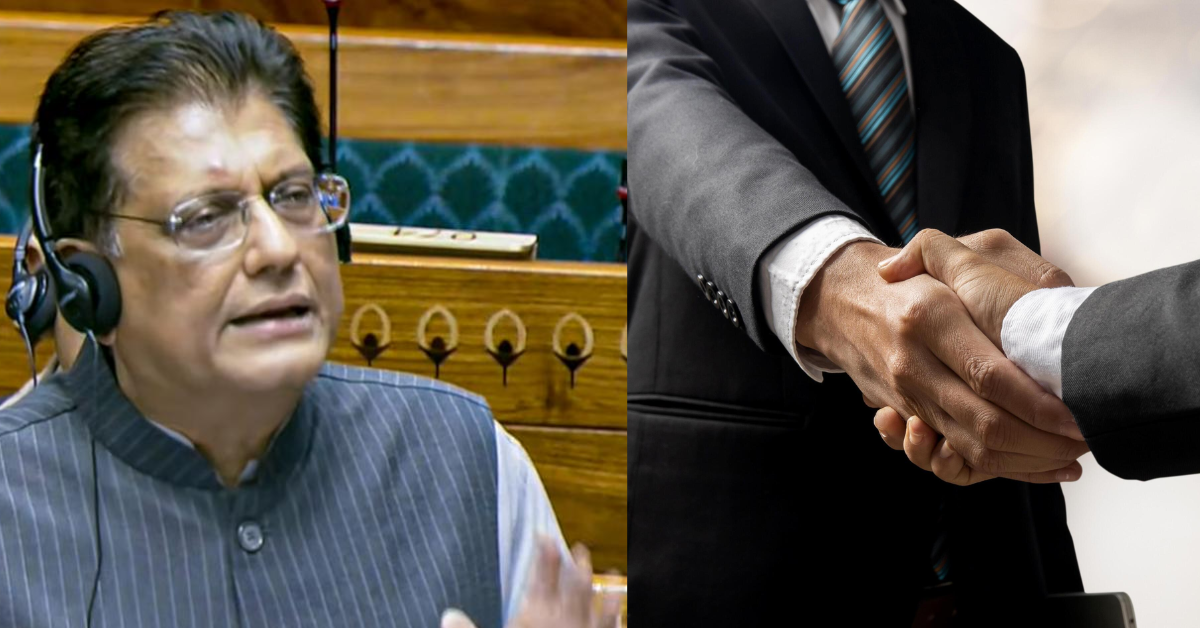

India is advancing negotiations for a landmark free trade agreement (FTA) with the six Gulf Cooperation Council (GCC) nations—Saudi Arabia, UAE, Qatar, Kuwait, Oman, and Bahrain—positioning the Gulf as its premier trading bloc ahead of the EU, ASEAN, US, and China. Bilateral trade hit $179 billion in FY 2024-25, up from $161.82 billion the previous year, driven by energy imports and exports like gems, metals, electronics, and chemicals. Commerce Minister Piyush Goyal signed the terms of reference (ToR) on February 5, 2026, to launch formal talks, reviving stalled discussions from 2006-2008.
Boost for Maritime and Energy Security
The FTA aims to eliminate duties and non-tariff barriers, supercharging Indian exports and investments while ensuring mutual food and energy security—India as a food grain powerhouse supplying GCC needs, and Gulf states providing oil, gas, and diversification. Building on existing CEPAs with UAE (May 2022) and Oman (December 2025), the pact promises stability, predictability, and greater goods-services flow. Goyal highlighted 5,000 years of trade history, projecting petrochemicals, ICT, and skilled labor as growth drivers.
For India’s maritime sector, the deal enhances shipping routes via key ports like Mundra, JNPT, and Hazira, vital for crude imports from Saudi Arabia ($30.12B), UAE ($63.4B), Qatar ($12.46B LNG), Kuwait ($8.28B), Oman ($6.54B), and Bahrain. Trade deficits persist—e.g., $26.76B with UAE, $18.36B with Saudi—but exports grew 1% to $57B amid 15% import surge to $121.7B.
Economist Jeffrey Sachs, a UN advisor, flags the Gulf as India’s “next big market” alongside Southeast Asia, China, and Africa, urging diversification from US reliance. With 10 million Indians in the Gulf aiding remittances and ties, the FTA could double maritime logistics flows, benefiting freight forwarders and coastal shipping in the Arabian Sea.
Hosting 10 million expatriates, the region bolsters India’s energy security amid global trade wars. As negotiations progress, this pact promises to reshape South Asia-West Asia trade corridors.
 Join our WhatsApp channel for more updates:
 Subscribe to our YouTube channel for more updates: