


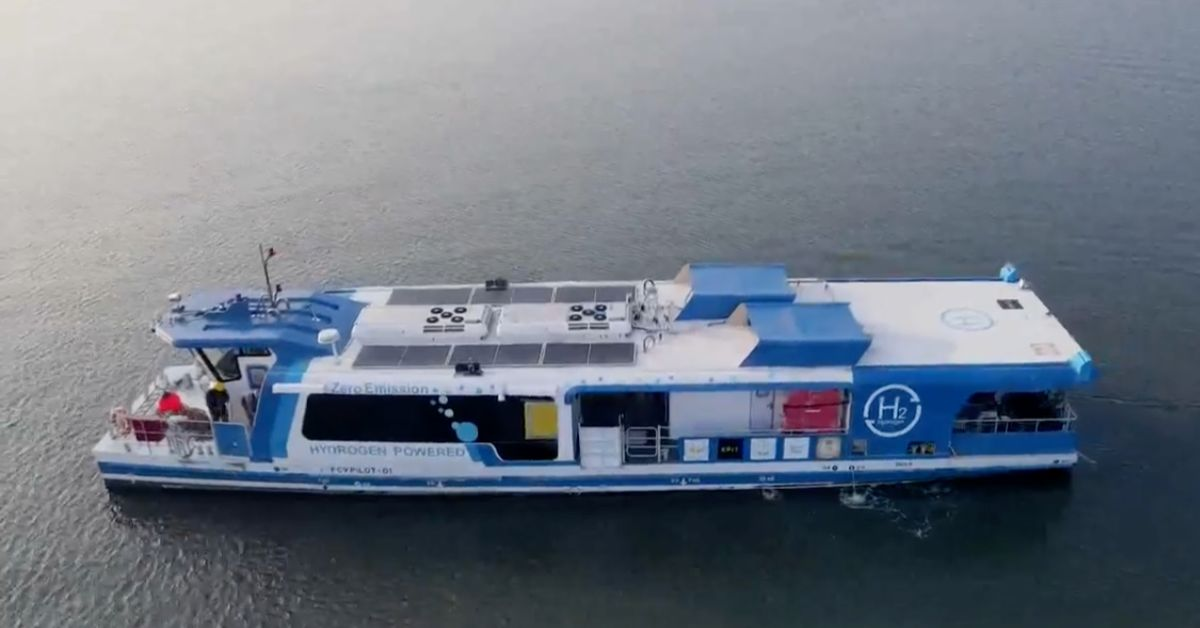

India took a significant step toward cleaner inland water transport on December 11 as the nation’s first domestically built hydrogen fuel cell vessel officially entered commercial service in Varanasi. Union Minister for Ports, Shipping and Waterways Sarbananda Sonowal presided over the inauguration at Namo Ghat, marking the operational debut of a new navigation channel on the Ganga.
Senior officials from the Uttar Pradesh government joined the ceremony, which forms part of a wider push to modernise inland waterways, improve passenger connectivity and support low-emission transport. In recent years, the Inland Waterways Authority of India (IWAI) and the central government have expanded navigational reach across key rivers, created new terminals, upgraded facilities and opened additional passenger and cargo routes aimed at reducing logistics costs and boosting accessibility.
Addressing the gathering, Sonowal said the launch reflects the transformative infrastructure vision of Prime Minister Narendra Modi and signals India’s readiness to embrace a new class of sustainable transport solutions. “The induction of our first hydrogen fuel cell vessel showcases our commitment to advanced, environmentally friendly technologies that will shape the future of mobility. This innovation strengthens economic prospects while making everyday travel safer, cleaner and more convenient for people,” he noted.
Sonowal added that the introduction of a green-powered vessel in Varanasi — one of India’s oldest and most culturally significant cities — enhances the experience of residents, tourists and pilgrims moving along the sacred ghats, offering an efficient, dignified and comfortable mode of transport.
The initiative aligns closely with strategic frameworks such as the Maritime India Vision 2030 and the Maritime Amrit Kaal Vision 2047, both of which emphasise greener logistics, smart maritime infrastructure and expanded use of alternative fuels on inland waterways.
With the launch at Namo Ghat, Varanasi now stands at the forefront of India’s shift toward sustainable river transport, signalling the beginning of a new chapter in the country’s green mobility drive.
 Join our WhatsApp channel for more updates:
 Subscribe to our YouTube channel for more updates: