



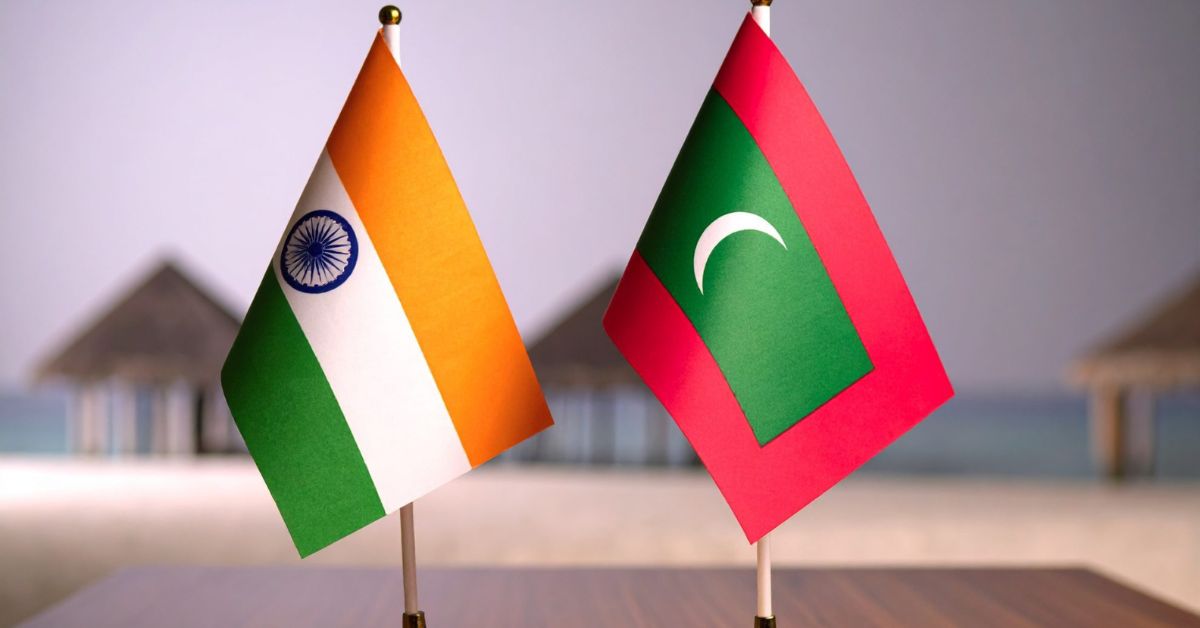

Bilateral trade between India and the Maldives has recorded a sharp expansion over the past eight years, underscoring the deepening economic partnership between the two neighbours. India’s exports to the Maldives have doubled to about $680 million in FY 2024–25, while imports from the island nation have surged nearly 20 times to $119 million, according to recent data.
The rapid growth in trade mirrors a broader strengthening of economic interdependence, supported by rising Indian tourist arrivals and expanding cooperation across infrastructure, finance, and development sectors.
India–Maldives relations have recently gained renewed momentum following Prime Minister Narendra Modi’s visit to the Maldives, during which the two countries signed eight major bilateral agreements. These include measures to ease Maldives’ debt burden by around 40 per cent, a $565 million Line of Credit for infrastructure development, integration of UPI and RuPay payment systems, enhanced cooperation in fisheries, housing initiatives, security collaboration, climate resilience projects, and progress toward a Free Trade Agreement (FTA) and Bilateral Investment Treaty (BIT).
An analysis published by Maldives Insight noted that Indian exports are vital to the Maldivian economy. Petroleum products, pharmaceuticals, and essential food items such as rice, fruits, and vegetables form the backbone of India’s shipments to the island nation. Exports of machinery, electrical equipment, and transport vehicles have also become increasingly important in meeting consumer and infrastructure needs.
Although smaller in absolute value, imports from the Maldives are strategically significant for India, consisting largely of fish and marine products that support India’s seafood processing and export sectors.
Tourism continues to be a central pillar of the relationship. India consistently ranks among the leading source markets for visitors to the Maldives, providing a stable inflow of tourists and helping cushion the tourism-dependent economy against volatility in arrivals from Europe and East Asia.
The report observed that bilateral ties have evolved well beyond traditional neighbourhood relations, developing into a broad-based partnership rooted in trust and long-term cooperation. India’s role as a first responder during crises and as a sustained partner in infrastructure, trade, tourism, and sustainability has reinforced this relationship.
Looking ahead, the proposed FTA and investment treaty are expected to further accelerate trade growth, encourage private sector participation, and deepen economic integration between the two countries, positioning India–Maldives ties for a more expansive phase of collaboration.
 Join our WhatsApp channel for more updates:
 Subscribe to our YouTube channel for more updates: