



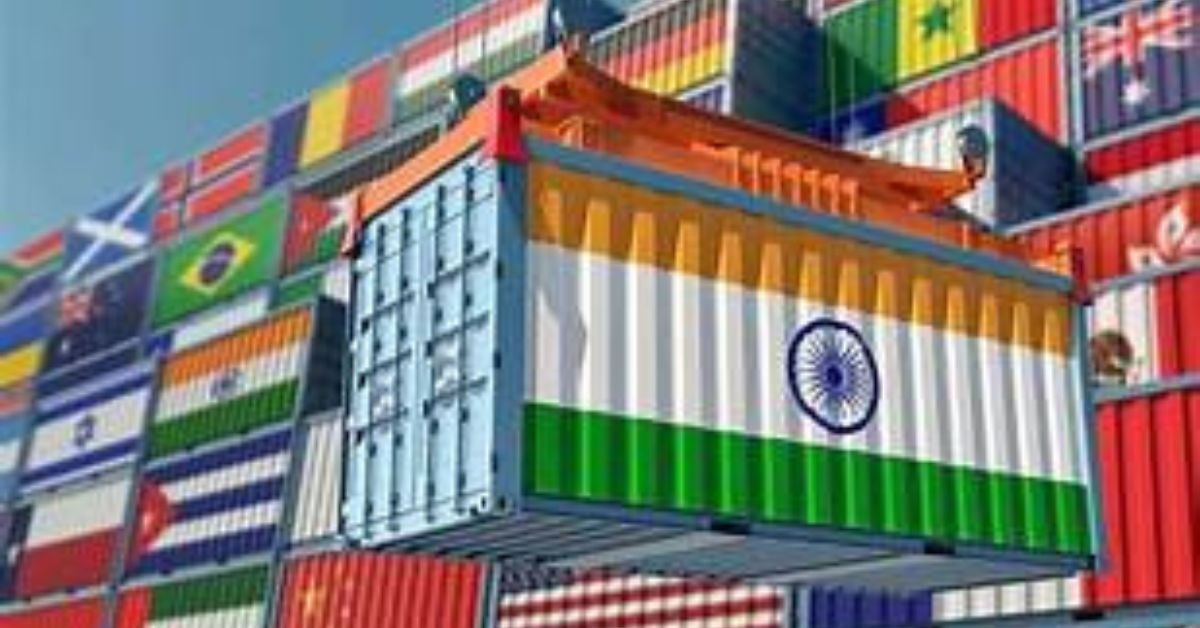

The Indian government rolled out two additional components under its Export Promotion Mission, committing a combined outlay of ₹7,295 crore to improve the availability and affordability of export finance, particularly for micro, small and medium enterprises (MSMEs).
The larger of the two initiatives, with a budget of ₹5,181 crore, focuses on providing interest subvention on both pre-shipment and post-shipment export credit. The measure is designed to lower borrowing costs and ease working-capital pressures faced by exporters. Eligible banks and financial institutions will extend rupee-denominated export credit at subsidised rates, with the subvention benchmarked against repo rates prevailing in India and comparable economies.
This interest support will be available for six years, up to the end of fiscal 2031, and will apply only to exports listed under a notified “positive list” of tariff lines. The list covers around three-quarters of India’s total tariff lines. All eligible MSME exporters will receive an interest subsidy of 2.75%, with additional incentives planned for firms exporting to new and emerging markets. The maximum benefit has been capped at ₹50 lakh per exporter.
The second component, introduced under the Niryat Protsahan framework, carries an outlay of ₹2,114 crore and aims to tackle collateral-related challenges in accessing export credit. The scheme will provide collateral guarantee support in collaboration with the Credit Guarantee Fund Trust for Micro and Small Enterprises (CGTMSE).
Under this arrangement, guarantee cover of up to 85% will be offered for micro and small exporters and up to 65% for medium exporters, subject to a maximum guaranteed outstanding exposure of ₹10 crore per exporter in a financial year.
According to the Ministry of Commerce, the positive list of eligible products has been developed using a data-driven approach that prioritises labour-intensive and capital-intensive sectors, high MSME participation and value addition. Restricted and prohibited items, waste and scrap, and products already covered under overlapping incentive schemes have been excluded. Defence exports and SCOMET-notified items have been included to support strategic trade objectives.
Operational guidelines for the schemes will be issued by the Reserve Bank of India. The government plans to begin with a pilot rollout, allowing for adjustments based on feedback from implementation.
 Join our WhatsApp channel for more updates:
 Subscribe to our YouTube channel for more updates: