



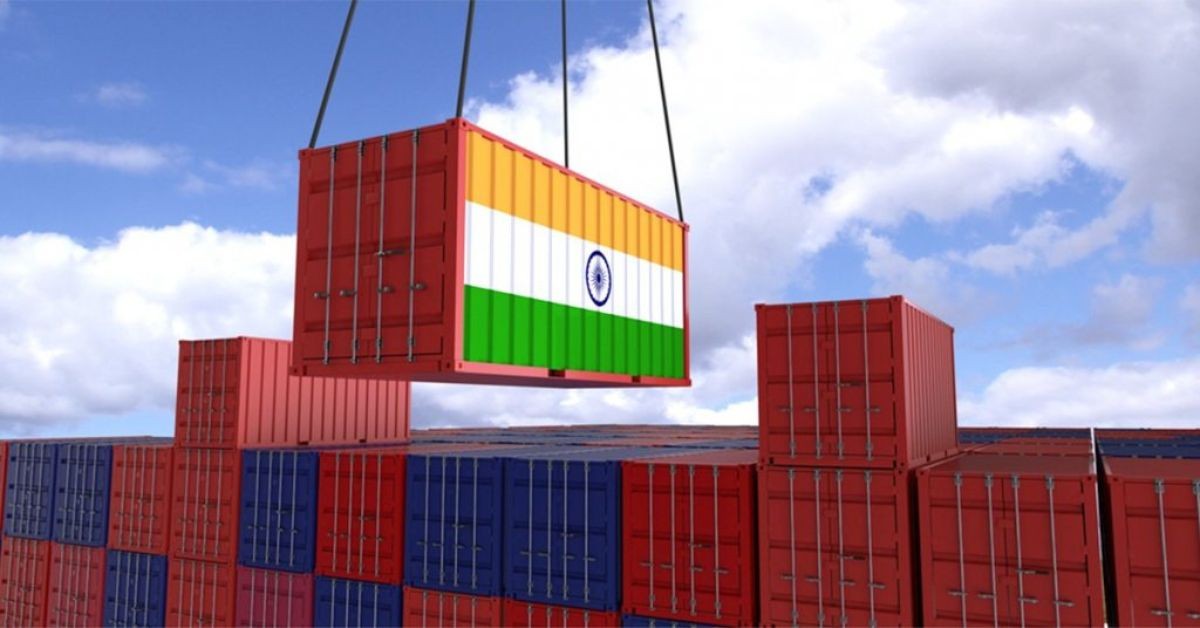

As the steep 50% US tariffs imposed on several Indian goods from August 27 begin to bite, exporters in key sectors have swiftly redirected shipments to alternative markets across Asia, Europe and the Middle East—helping blunt the immediate impact on overall exports.
Fresh data from the Commerce and Industry Ministry shows that while some sectors have taken a severe hit in the US market, others have rapidly diversified, preventing a broader export slump.
High-Value Sectors Pivot Successfully
Gems and jewelry—a major casualty of the US tariff hike—saw shipments to America plunge 76% in September. Yet, India’s overall exports of the category dipped only 1.5%, thanks to sharp increases in dispatches to:
- UAE: up 79%
- Hong Kong: up 11%
- Belgium: up 8%
A similar cushion was visible in auto components, where a 12% drop in US shipments was offset by rising exports to Germany, the UAE and Thailand, enabling the category to post an 8% overall rise.
Marine products were among the strong performers, growing 25% in September and 11% in October, powered by higher orders from:
- China: nearly 60% growth
- Japan: up 37%
- Thailand: around 70%
- European Union: notable gains across multiple markets
Officials say these trends reinforce the view that widening India’s trade footprint—particularly within Asia—offers a meaningful buffer against the ongoing tariff shock from Washington.
Low-Margin Sectors Struggle
Not all categories have been able to pivot. Labor-intensive, low-margin exports such as:
- cotton garments
- leather footwear
- sports goods
- carpets
are facing the hardest blow. These products compete directly with China and ASEAN economies, and exporters often lack the financial muscle to venture into new markets or set up units abroad.
Sports goods, which send 40% of their shipments to the US, saw overall exports fall 6% in October, with few viable destinations found so far. Cotton garments, despite some gains in the UAE, Spain, Italy and Saudi Arabia, still recorded a 6% export decline in September after a 25% drop in US shipments. Leather footwear saw a 10% contraction for similar reasons.
Shrimp Shipments Hit the Most
Among all products, shrimp exports—worth $4.88 billion in FY25—are the most affected, as more than 65% traditionally go to the US. Being low-margin, the segment is especially vulnerable.
Exporters have been advised not to slash prices aggressively while entering new markets, to avoid eroding India’s long-term positioning. Some US shipments continue as buyers replenish inventory, but these are increasingly being replaced by Indonesia and Ecuador, both of which face much lower US tariffs (19% and 15%, respectively).
EU Opens Doors; Russia Next
To support diversification, the government has fast-tracked approvals for exporters seeking access to the European Union, India’s second-largest market for seafood.
Since the US tariffs came into force, 102 additional Indian marine units have secured EU clearance—up 25% from earlier.
This could result in a 20–25% jump in seafood exports to the EU, which already imported $1.1 billion worth from India in FY24.
Exporters have also been encouraged to tap Russia, where 25 fishery units are likely to receive approval soon.
Diversification Still Limited in Scale
Officials estimate that only about $2 billion worth of exports can realistically be redirected to new destinations in the near term—far below the $8 billion India shipped annually to the US before the new tariffs.
Still, the government believes these steps provide vital momentum to India’s long-term market diversification efforts.
The Centre has rolled out ₹45,060 crore in support measures— including ₹20,000 crore in credit guarantees— to ease liquidity constraints for affected exporters.
Data Shows Early Signs of Realignment
An SBI Ecowrap report last week highlighted that India’s diversification push is beginning to show results.
Between April and September, India’s merchandise exports grew 2.9%, while shipments to the US—despite September’s decline—were up 13% cumulatively, possibly due to front-loading of orders.
The report also noted:
- A visible rise in India’s exports to the UAE, China, Vietnam, Japan, Hong Kong, Bangladesh, Sri Lanka and Nigeria.
- A surge in intermediated trade—countries increasing imports from India and re-exporting to the US.
- Shifts in container flows:
- India: –18.4% decline in US-bound container volumes
- China: –16.3%
- Indonesia: +10.1%
- Thailand: +3.6%
- Vietnam: +3.6%
This suggests a rerouting of supply chains as countries with lower tariff exposure fill the gap.
 Join our WhatsApp channel for more updates:
 Subscribe to our YouTube channel for more updates: