



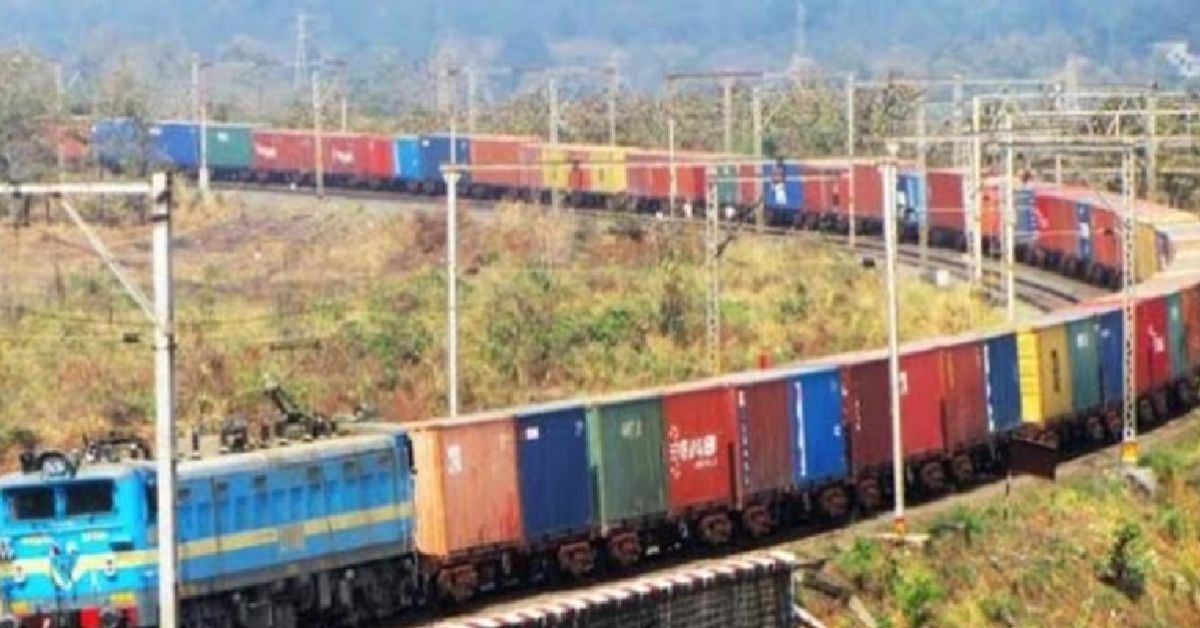

Indian Railways has crossed a major benchmark in the current financial year, moving past 1 billion tonnes of freight well before the year-end. As of November 19, total loading reached 1,020 million tonnes, according to data released by the Ministry of Railways.
Steady freight performance is often a proxy for economic momentum—indicating active factories, steady power generation and rising construction activity. This year, that momentum remains intact: average daily loading has climbed to around 4.4 million tonnes, compared with 4.2 million tonnes during the same period last year.
A closer look at commodity-wise volumes shows both continuity and transition within India’s freight landscape.
• Coal continues to anchor the system, with 505 million tonnes transported so far—nearly half of all rail freight.
• Iron ore contributed 115 million tonnes.
• Cement accounted for 92 million tonnes, underscoring growing demand from infrastructure and housing projects.
Between April and October alone, rail freight reached 935.1 million tonnes, up from 906.9 million tonnes last year. The growth comes despite turbulent global markets, fluctuating commodity prices and inconsistent monsoon patterns.
The ministry used the milestone to highlight a sector it sees as strategically important for the next phase of freight reform: cement logistics. Cement is closely tied to India’s capital expenditure cycle—driving roads, metro systems, industrial corridors and real estate development. To tap this potential, the Railways has introduced a dedicated Policy for Bulk Cement Terminals and adjusted tariffs for containerised bulk cement movement. The objective is simple: shift larger volumes of cement to rail by making it faster, cheaper and more efficient.
If the effort succeeds, it could gradually rebalance the freight basket—reducing the system’s heavy reliance on coal and increasing the share of construction-related cargo. Such a shift would also align with India’s broader decarbonisation goals by encouraging cleaner, rail-based movement of energy-intensive materials.
For the Railways, boosting bulk cargo is both a revenue and capacity optimisation strategy. For the wider economy, it supports lower logistics costs, reduced highway congestion and fewer emissions. MSMEs stand to gain as well, as more predictable and affordable freight movement can enhance competitiveness in sectors where margins are already tight.
 Join our WhatsApp channel for more updates:
 Subscribe to our YouTube channel for more updates: