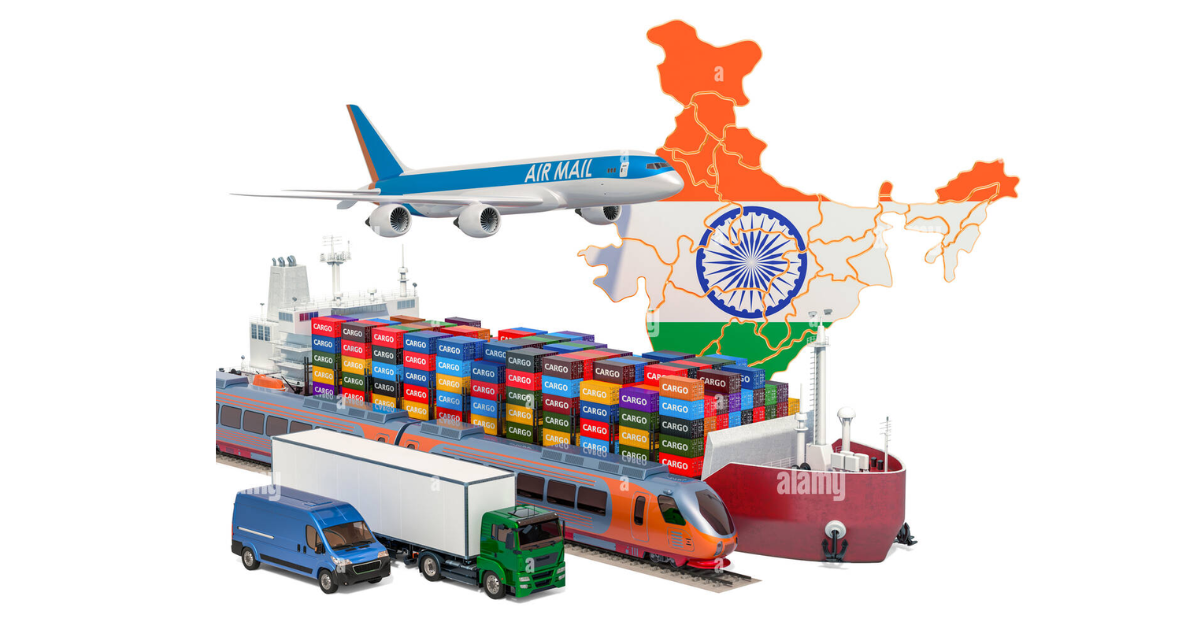

India’s freight sector is on course for nearly a 400% rise in carbon dioxide emissions by 2047 if current logistics practices and fuel use patterns continue unchanged, according to a new whitepaper by Smart Freight Centre (SFC) India, TERI and IIM Bangalore. The study warns that without urgent reforms, freight will become one of the most critical obstacles to India’s net-zero 2070 pathway, even as logistics demand keeps rising with economic growth.
The authors identify a core problem: India lacks a harmonised, India-specific framework to measure freight emissions across modes, corridors and operators, making it impossible to design targeted decarbonisation policies or hold supply chains accountable. Today, fragmented and inconsistent emissions accounting practices mean that many companies cannot reliably track the carbon impact of their road, rail or coastal freight activities, let alone optimise them.
To address this, the whitepaper proposes a national freight emissions accounting framework aligned with ISO 14083 and the GLEC (Global Logistics Emissions Council) methodology, but calibrated with India-specific emission factors and local data. It outlines a roadmap for a Clean Freight Program backed by a digital MRV (monitoring, reporting and verification) platform and a multi-stakeholder governance structure bringing together government, industry and academia.
Experts quoted in the report stress that “you cannot decarbonise what you cannot measure,” arguing that standardised metrics are a prerequisite for measures like fleet modernisation, mode shift to rail and waterways, green corridor development and access to climate finance for small operators. The paper also flags structural barriers: dominance of diesel-heavy road transport, higher upfront costs for EVs and alternative fuels, and limited charging and refuelling infrastructure, all of which risk locking India into a high-emissions freight trajectory unless tackled systematically.
 Join our WhatsApp channel for more updates:
 Subscribe to our YouTube channel for more updates: