



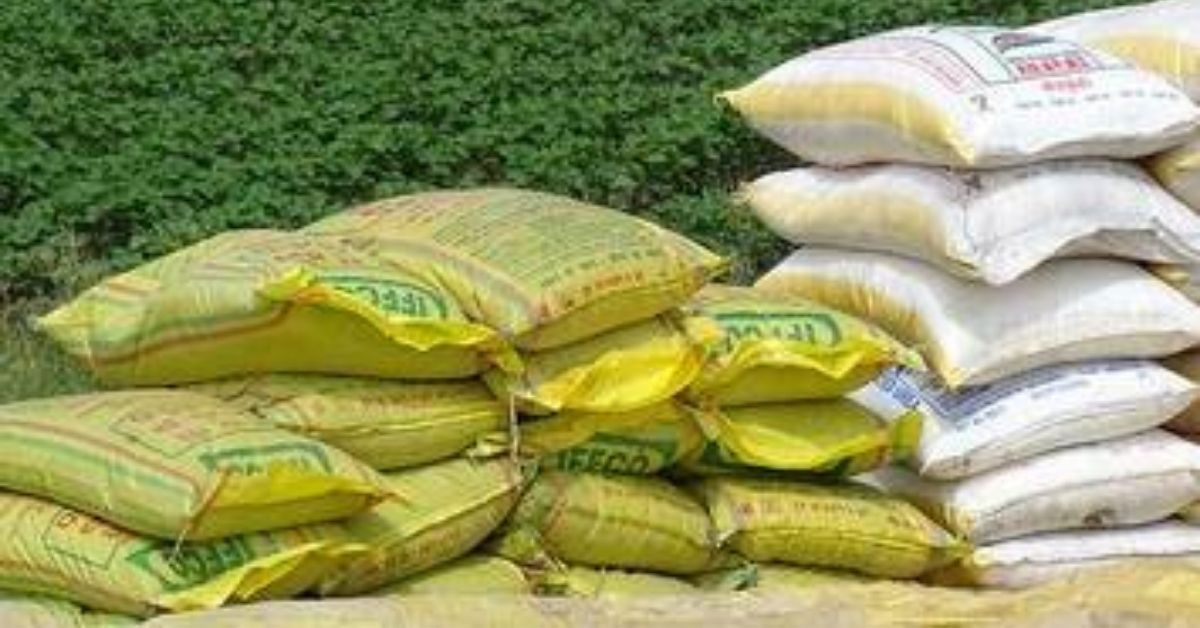

India’s fertiliser ecosystem is undergoing a defining transition. Rising import volumes, port-led logistics shifts, widening gaps between domestic production and consumption, and mounting subsidy pressures are reshaping how fertilisers are sourced, moved and priced.
With agricultural demand structurally strong and policy choices increasingly complex, fertilisers have become both a strategic commodity and a stress test for India’s logistics and port infrastructure.
Import dependence deepens
Between April and November 2025, India imported 21.93 million metric tonnes (MMT) of fertilisers, up from 16.36 MMT in the same period last year—an increase of over 34 per cent. The surge underscores the persistent imbalance between domestic capacity and demand, particularly for urea, phosphatic and potassic nutrients, where India remains structurally import dependent Paradip Port retained its leadership with 3.90 MMT of fertiliser cargo during Apr–Nov 2025, supported by its proximity to production centres and consumption hubs in eastern India. Mundra followed with 2.84 MMT, posting one of the strongest year-on-year gains as western ports increasingly serve northern and central hinterlands. Visakhapatnam, Kandla and Kakinada also reported solid growth, reinforcing the need for capacity across both coasts. In contrast, declines at ports such as Hazira point to cargo consolidation towards locations offering scale, faster evacuation and integrated storage.
Commodity concentration and port specialisation
India’s fertiliser imports remain concentrated in a few key commodities. During April–October 2025, imports of Rock Phosphate, Di-Ammonium Phosphate (DAP), Sulphur, Urea and mmonium Nitrate together reached 17.91 MMT.
Ports are increasingly This specialising by commodity to manage scale efficiently. Paradip led in Rock Phosphate (2.61 MMT), Ammonium Nitrate (0.37 MMT) and Sulphur (0.39 MMT), reinforcing its role as a bulk mineral and fertiliser hub. Mundra dominated DAP (1.43 MMT) and Urea (0.91 MMT), leveraging deep-draft berths, extensive storage and strong multimodal connectivity.
This specialisation reflects operational efficiency and congestion management. For port operators, fertilisers have emerged as strategic cargo, driving investments in mechanised handling, covered storage and rail evacuation.
Shifting supply geographies
India’s sourcing strategy reflects diversification amid global uncertainty. In Apr–Oct 2025, Saudi Arabia and Morocco were the largest suppliers at 2.70 MMT each, followed by Russia (2.61 MMT) and Jordan (2.39 MMT). China accounted for 2.17 MMT despite periodic export strictions, while Oman, Egypt, Qatar, the UAE and Togo also featured prominently. Commodity-country linkages remain strong. Rock Phosphate was largely sourced from Jordan (1.94 MMT), DAP from Saudi Arabia (1.55 MMT), Urea and Sulphur from Oman, and Muriate of Potash from Russia. These dependencies expose India to geopolitical and policy risks, particularly for urea and potash.
Concentrated importer landscape
A small group of players dominates India’s fertiliser imports. IFFCO led with 4.07 MMT, followed by Coromandel International, Indian Potash Ltd (IPL) and Paradip Phosphates. Public sector companies such as NFL, RCF and KRIBHCO also play a critical role, reflecting the capital-intensive nature of imports, long-term contracts and the government’s reliance on public entities to ensure supply during peak seasons.
The urea paradox
At the centre of India’s fertiliser challenge is urea. Its Maximum Retail Price has remained frozen since 2015 at about ₹242 per 45-kg bag, encouraging overuse, soil nutrient imbalance and diversion to non-agricultural applications.
Urea consumption reached 38.8 million tonnes in FY25 and is projected to touch 40 million tonnes in FY26.
 Join our WhatsApp channel for more updates:
 Subscribe to our YouTube channel for more updates: