


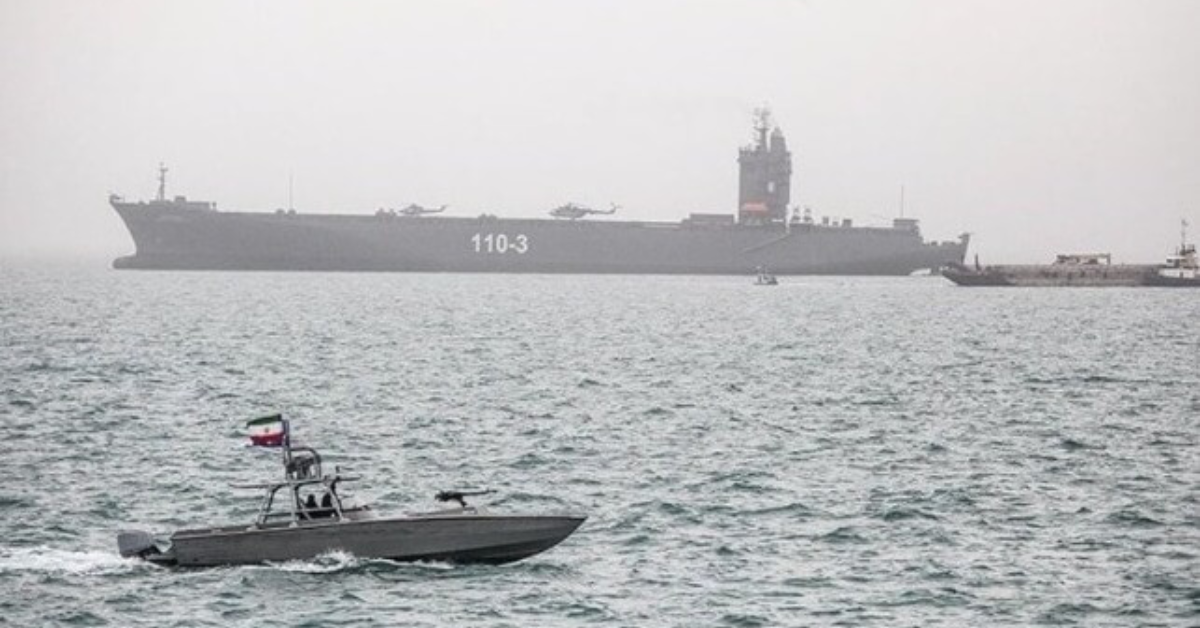

The Strait of Hormuz crisis entered its most diplomatically complex phase. Yet, this week as Iran added recognition of its sovereignty over the strait to its list of ceasefire demands, the IRGC formalised a $2 million per vessel transit fee system settled in Chinese yuan. President Trump simultaneously signalled a desire to ‘finish the job very fast’ — creating a confusing and contradictory set of signals for the nearly 2,000 vessels now stranded on both sides of the world’s most critical maritime chokepoint.
Iran’s new supreme leader Mojtaba Khamenei used his first public address to state that the leverage of blocking the Hormuz waterway ‘must continue to be used’ — a statement that hardened expectations that even a ceasefire on kinetic hostilities would not automatically restore normal commercial shipping access. Iran’s parliament security commission separately approved a plan to impose formal tolls, enforce security arrangements, and collect rial-denominated fees from transiting vessels, with one lawmaker describing the scheme as both a strategic necessity and a potential revenue source of USD 600-800 million per month — comparable to Egypt’s pre-crisis Suez Canal earnings.
The IRGC Toll Booth: $2 Million a Crossing in Yuan
The practical reality of Iran’s transit regime is already operating in the market. Lloyd’s List has confirmed that at least 26 vessel transits through the strait have followed a route pre-approved under the IRGC toll system, requiring operators to submit cargo details, crew lists, and destination information to IRGC-approved intermediaries, receive a clearance code, and be escorted through Iranian territorial waters via a northern channel near Larak Island rather than the standard southern passage. At least two vessels have paid USD 2 million per transit, reportedly settled in Chinese yuan through a Chinese maritime services company acting as intermediary. The IRGC has turned a 21-mile-wide international waterway into a pay-to-pass checkpoint — and the global community’s response, beyond diplomatic protests, has been limited.
Trump: ‘Finish the Job’ — But Without Hormuz as Precondition
Adding to the complexity, Trump made clear on April 1 that a ceasefire request from Iran’s new leadership was being received in Washington — he stated that Iran had ‘requested a ceasefire’ — but simultaneously conditioned any US agreement on the Strait of Hormuz being ‘open, free, and clear.’ The formulation is significant: it implies that the US will not agree to halt military operations while Hormuz remains restricted, linking kinetic de-escalation directly to Iran’s commercial shipping behaviour. The UK-led 60-nation talks India joined on April 2 are operating in the space between these positions — seeking a diplomatic pathway that addresses both the security and the maritime access dimensions of the crisis simultaneously.
Al Jazeera and industry analysts warn that even if a ceasefire is agreed tomorrow, the disruption to global supply chains will continue for months as the backlog of nearly 2,000 stranded vessels is cleared, port congestion at Gulf hubs is worked through, and shipping insurance regimes are reconstructed for the Hormuz corridor. Hapag-Lloyd’s communications director Nils Haupt captured the industry consensus: ‘When the war is officially over, the real work starts. We will see hundreds of ships that want to call in at the key ports in the Persian Gulf. Lots of containers are going into the region, and we will see disruption of supply chains going to and from the Persian Gulf.’
 Join our WhatsApp channel for more updates:
 Subscribe to our YouTube channel for more updates: