


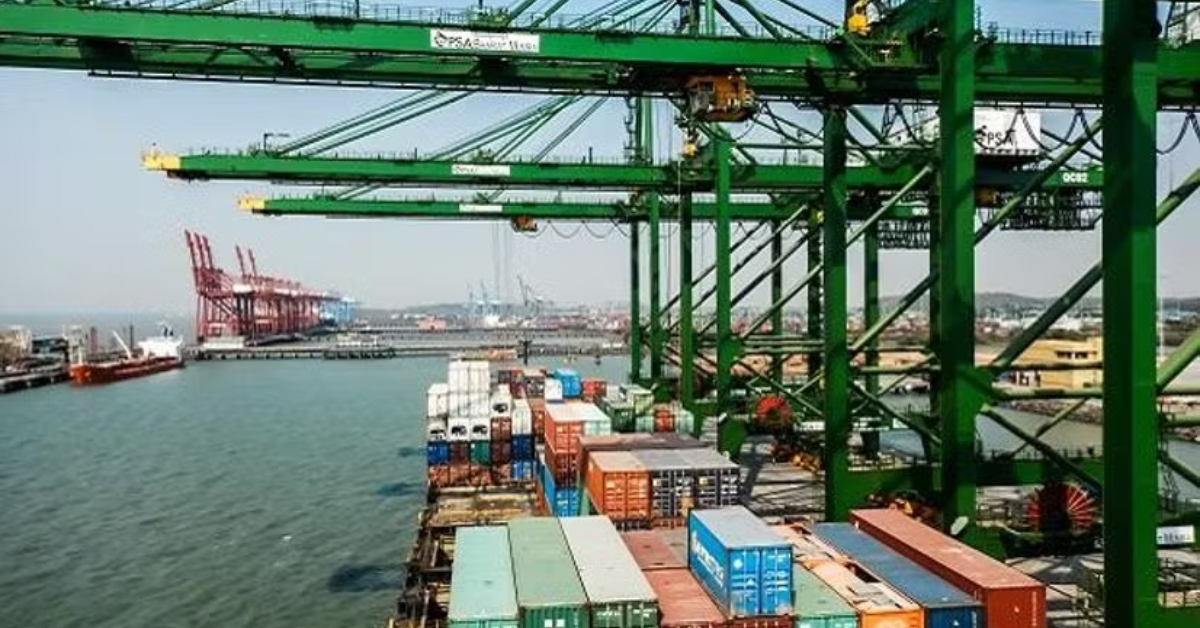

Two of India’s most critical logistics infrastructure bodies — Jawaharlal Nehru Port Authority (JNPA) and Container Corporation of India (CONCOR) — have announced a coordinated package of relief measures to help Indian exporters and importers manage the mounting cost and operational burden of the ongoing Strait of Hormuz crisis.
The measures, introduced as shipping lines cancel sailings and suspend bookings to Gulf destinations, are designed to prevent the cost of stranded or delayed cargo from compounding the already severe disruption to trade flows on India’s most important maritime corridor.
Nhava Sheva’s Relief Package
Jawaharlal Nehru Port — commonly known as Nhava Sheva — has introduced a temporary waiver of ground rent and storage charges for cargo affected by the Middle East disruption. In addition, the port has announced significant concessions on reefer container plug-in fees, a critical relief measure for exporters of perishable goods such as fresh fruits, vegetables, seafood, and processed foods, where every additional day of storage at a port incurs both plug-in electricity charges and the risk of cargo deterioration.
Port officials acknowledged that the Hormuz crisis has created congestion at JNPA, with stranded export containers accumulating as shipping lines reroute vessels or suspend Gulf services. The storage waiver is intended to ensure that exporters are not doubly penalised — first by the disruption itself, and then by escalating port charges on cargo they are unable to move.
CONCOR’s ICD Relief Measures
CONCOR has separately announced a set of relief measures applicable to its national network of Inland Container Depots (ICDs). Factory-stuffed export containers will receive an additional 30 days of free storage beyond the standard free period, providing significant breathing room for exporters who have had shipments booked but not yet loaded on vessels. Cargo stored in customs-notified warehouses will receive a 15-day waiver on wharfage charges. Both concessions apply to cargo arriving at CONCOR facilities between March 1 and March 31, 2026.
To support temperature-sensitive export consignments, CONCOR is also offering a 30 per cent discount on plug-in charges for reefer containers during the relief period — mirroring JNPA’s approach and providing an end-to-end relief chain from inland origin to port.
Container Rail Sector Seeks Force Majeure Relief
The relief measures from JNPA and CONCOR come as India’s container rail sector — which plays a critical role in moving EXIM cargo between ports and inland origins — has separately sought government support, citing a ‘force majeure-like’ situation caused by the Iran crisis. Container train operators report a sharp decline in volumes as West Asia-bound cargo dries up, with many services struggling to achieve minimum viable load factors. The sector has requested targeted relief including temporary reductions in haulage tariffs and extended payment timelines.
Government’s Coordinated Response
The port and logistics relief measures add to the broader government response to the Hormuz crisis, which includes the ₹497-crore RELIEF scheme for exporters announced by the Commerce Ministry, the reinstatement of full RoDTEP benefits for affected exporters, and diplomatic efforts to secure safe passage for Indian-flagged vessels through the strait. Together, these measures reflect a whole-of-government approach to managing the most severe disruption to India’s maritime trade in recent memory.
 Join our WhatsApp channel for more updates:
 Subscribe to our YouTube channel for more updates: