



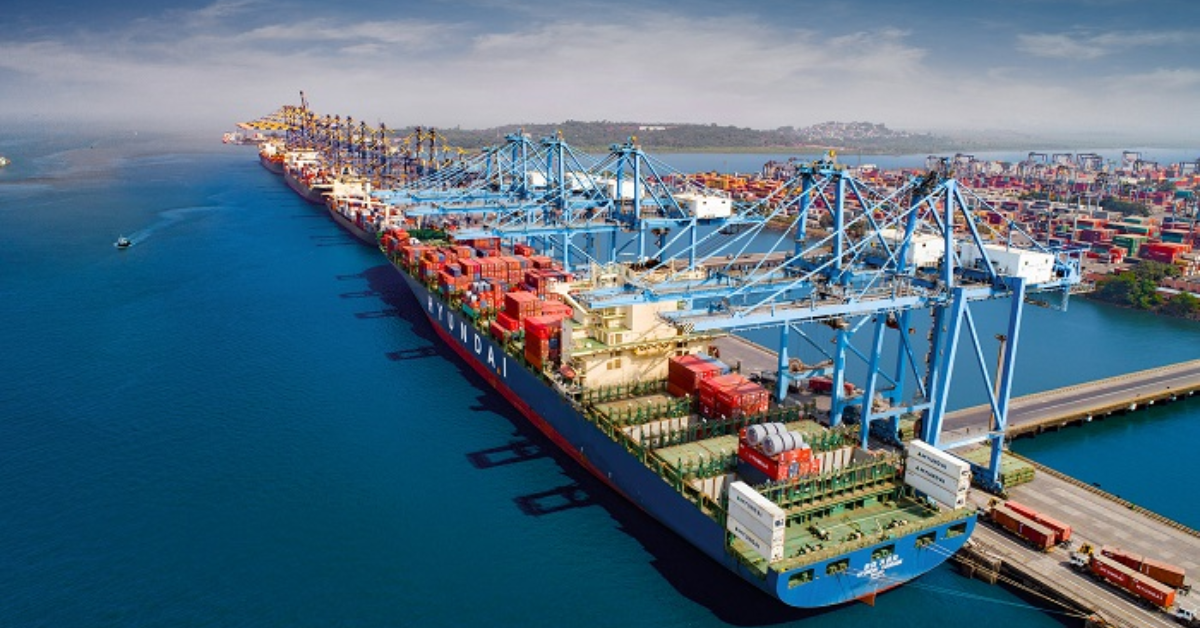

The Jawaharlal Nehru Port Authority and Gateway Terminals India Private Limited — the container terminal operator in which APM Terminals holds a 74 per cent stake and CONCOR holds the remaining 26 per cent — have agreed to settle a tariff dispute that has been unresolved for 14 years, creating a ₹286.55 crore infrastructure development fund and refunding ₹18.1 crore to port users as part of a comprehensive settlement formula brokered by a Conciliation and Settlement Committee chaired by former Ports Secretary Gopal Krishna. The settlement agreement is expected to be formally executed before the May 21 deadline set by the Bombay High Court in its April 10 order.
The dispute originated in disagreements over the applicable tariff structure and revenue-sharing framework under GTI’s 30-year concession at JNPA, which began in 2006. Both the settlement fund allocation and the user refund will be split between JNPA and GTI in a 65:35 ratio, aligned to their existing revenue-sharing agreement. The ₹286.55 crore infrastructure fund will be deployed for port infrastructure enhancement — creating a commercial positive from what has been a protracted legal negative, by directing the settlement proceeds back into capacity and capability improvements at India’s largest container port.
Why Resolution Matters for JNPA’s Commercial Future
The settlement removes a source of legal and commercial uncertainty from JNPA’s concession management framework that has persisted for more than a decade, during which both JNPA and GTI have been operating under the cloud of unresolved claims, potential liability, and the inhibition of commercial relationship development that active litigation creates. With the dispute resolved, GTI — which operates one of JNPA’s five container terminals and processed a significant share of the port’s record 8.17 million TEU FY26 throughput — can plan infrastructure investment and commercial strategy with the certainty that a clear, settled tariff and revenue framework provides.
The Bombay High Court’s April 10 order had been unusually pointed in its criticism of the Ministry of Ports, Shipping and Waterways for ‘refusing to take a stand’ and allowing the matter to ‘go round and round without finality’ — a judicial rebuke that appears to have concentrated ministerial attention on enabling the settlement. The court’s ruling that no government no-objection certificate was required for the settlement to proceed removed the blocking mechanism that had previously stalled the process, and the CSC-facilitated resolution demonstrates that when a clear legal pathway exists, complex port concession disputes can be resolved relatively quickly when all parties are motivated to conclude.
The ₹286.55 Crore Infra Fund: What It Will Build
The infrastructure fund created by the settlement is earmarked for improvements at JNPA — though the specific projects have not yet been publicly detailed. In the context of JNPA’s current infrastructure agenda — which includes the ongoing DFC rail connectivity enhancement, the PSA Mumbai Super Panamax crane inauguration, and the preparation for Vadhvan Port’s development as a complementary west coast hub — the ₹286.55 crore provides a meaningful additional capital allocation. Likely deployment areas include quay infrastructure, yard modernisation, digital logistics integration, or the berth connectivity improvements that will be needed as JNPA’s throughput continues to grow toward and beyond the 10 million TEU threshold in FY27 and beyond.
 Join our WhatsApp channel for more updates:
 Subscribe to our YouTube channel for more updates: