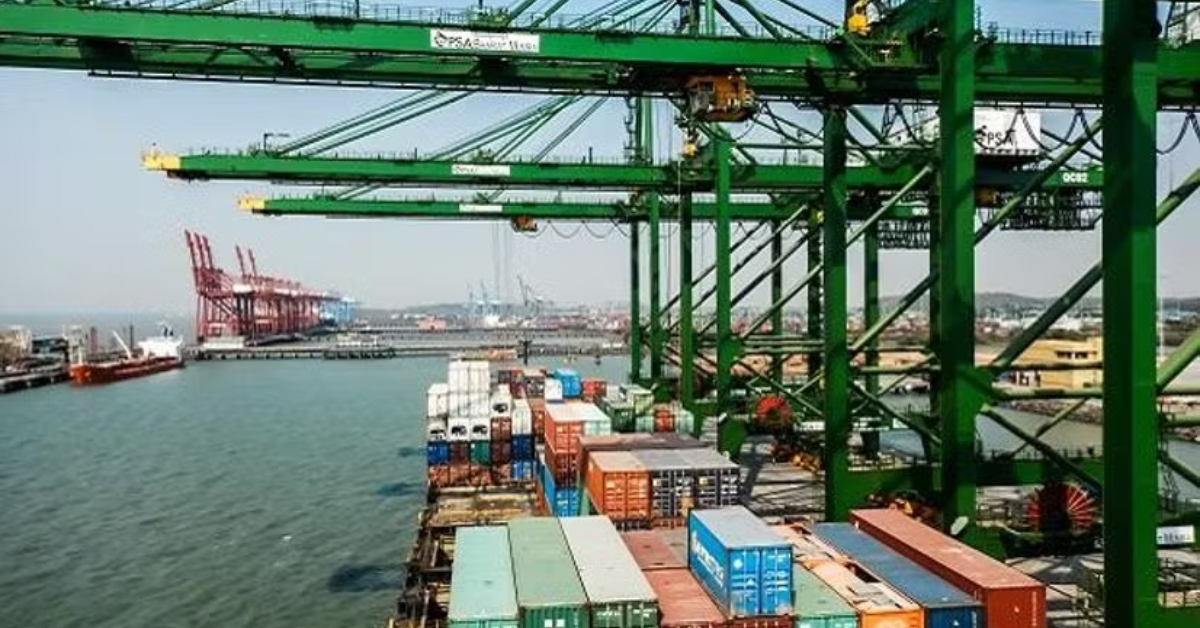

Jawaharlal Nehru Port Authority (JNPA) and Nhava Sheva Freeport Terminal (NSFT) — a joint venture between JM Baxi Ports & Logistics and CMA Terminals — have emerged as critical nodes in India’s efforts to maintain cargo flows and absorb the operational shock caused by the ongoing Middle East shipping crisis.
JNPA has activated a dedicated task force led by Chief General Manager Girish Thomas, who is serving as the Single Point of Contact (SPOC) for all Middle East crisis-related cargo issues at the port. Since early March, the task force has reportedly reduced stranded container volumes from approximately 5,000 to 3,200 TEUs through a combination of targeted measures. These include temporary transshipment storage arrangements, priority processing for perishable cargo, ad-hoc berthing arrangements at nearby alternative ports such as Fujairah and Muscat, and expedited Back to Town (BTT) processes for export containers that need to be retrieved without the usual Export General Manifest (EGM) filings.
NSFT, which handles significant CMA CGM-linked cargo volumes at JNPA, has separately reported a landmark operational milestone: the port received a record 8,736 TEUs handled in a single vessel call from the M.V. CSCL Star — a new benchmark for the terminal and a signal of the port’s growing operational capacity.
Congestion data from market analysts reflects the mounting pressure. On-time vessel arrivals at Nhava Sheva dropped from 50 per cent to 33 per cent in recent weeks, with more than one in three vessels arriving significantly behind schedule. The port is running well above its normal congestion range, though improvements in the most recent period suggest some stabilisation as carriers reroute services and omit Gulf calls.
Shipping lines are increasingly treating Nhava Sheva and Mundra as decentralised alternatives to Gulf ports. According to one intelligence report, the number of vessels broadcasting Nhava Sheva as their arrival point grew from 21 to 36 in a short window, underscoring the port’s new centrality in India’s disrupted logistics network. Port authorities have reaffirmed their commitment to maintaining supply chain stability through the crisis.
 Join our WhatsApp channel for more updates:
 Subscribe to our YouTube channel for more updates: