


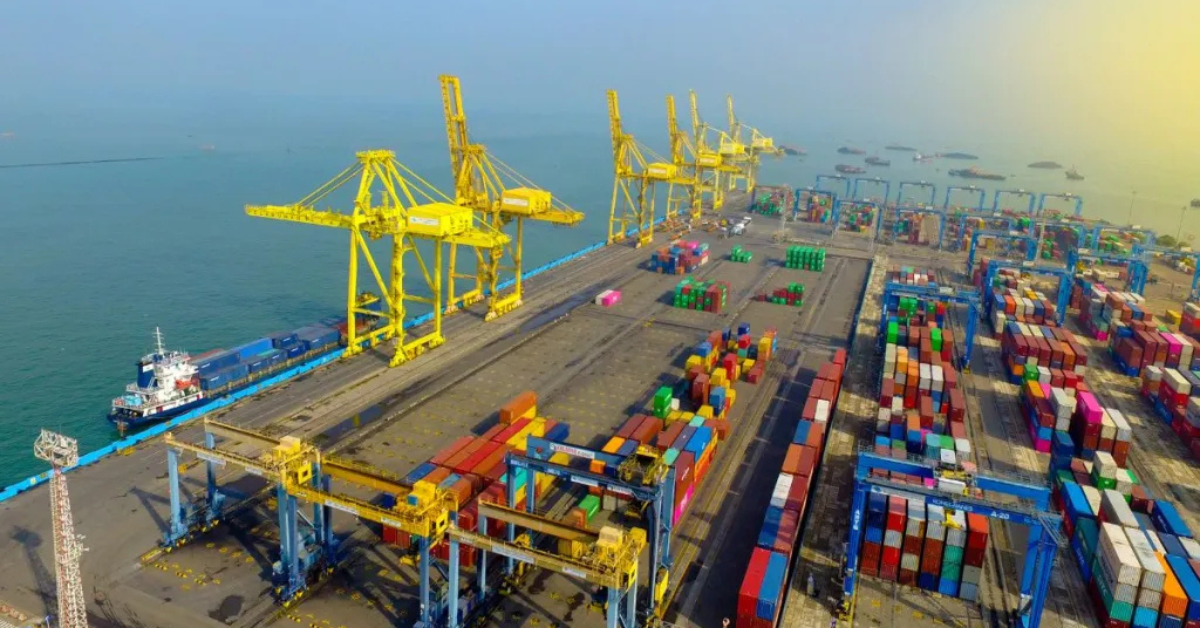

Deendayal Port in Kandla is set to handle a sharp spike in vessel calls, with 22 ships scheduled to dock over the next three days as regional shipping routes are reshuffled amid the ongoing Israel–Iran conflict. The line-up includes several foreign-flagged, Gulf-bound vessels that are unable to proceed directly to conflict-hit West Asian ports and are instead diverting to Kandla for transhipment and voyage reconfiguration.
According to the Deendayal Port Authority, systems and marine infrastructure are being optimised to accommodate the surge and ensure smooth berthing, cargo operations and turnaround. In a recent post on X, the port authority said it is “going to handle 22 vessels in the next 72 hours” and highlighted that port systems are operating efficiently to manage reconfigured voyages, including vessels arriving for “change of voyage” – a term that refers to an intentional alteration of a ship’s agreed route or destination after sailing.
The strategic location of Kandla on India’s western coast, coupled with the availability of extensive back-up areas, has made it a natural diversion point for ships seeking a safe and operationally flexible port of call. Port officials and trade stakeholders note that large land parcels in and around the port are being mobilised to temporarily store diverted cargoes and to support onward coastal or feeder movements to their ultimate destinations. This enables shipping lines and cargo owners to maintain some continuity in supply chains, even as direct calls to certain Gulf and West Asian ports face uncertainty.
The current build-up in vessel traffic comes at a time when the Centre has already directed major state-owned ports to activate standard operating procedures (SOPs) to address issues arising from the crisis. Shipping authorities have asked ports to stay prepared for increased enquiries related to anchorage, berthing windows, storage, documentation changes and cargo redirection, as carriers and exporters seek alternative routing options. Special secretary in the shipping ministry Rajesh Sinha has also reiterated that port operations across India remain stable, with SOPs issued for both major and non-major ports to streamline responses to the evolving situation.
Kandla’s role in this contingency framework is underpinned by its long-standing position as one of India’s busiest cargo gateways and a key link to West Asia. Established in the 1950s after the loss of Karachi port, Kandla has developed into a major outlet for the vast north-western hinterland, serving Gujarat, Rajasthan, Punjab, Haryana, Delhi and parts of Madhya Pradesh and Uttar Pradesh. It handles a broad mix of commodities, including crude oil and petroleum products, fertilizers, chemicals, machinery, Basmati rice, textiles, salt and other agricultural cargoes, supported by strong rail, road and pipeline connectivity.
The current cluster of 22 incoming vessels highlights both the immediate operational challenge and the broader strategic importance of Kandla in cushioning India’s trade links from external shocks. By acting as a transhipment and reconfiguration hub for vessels unable to call directly at Gulf ports, Deendayal Port is helping preserve cargo flows, protect exporter commitments and provide shipping lines with a viable safety valve during a period of heightened geopolitical risk.
 Join our WhatsApp channel for more updates:
 Subscribe to our YouTube channel for more updates: