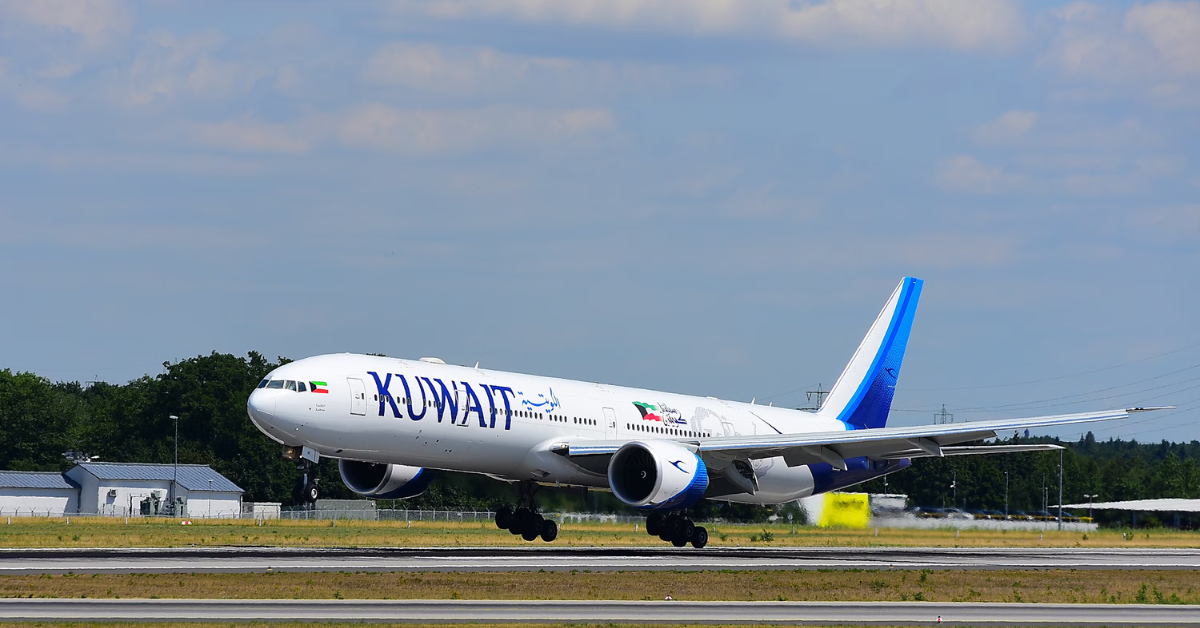

Kuwait Airways has operated two special charter flights to move over 80 tonnes of Indian perishables from Kochi and Delhi to Kuwait, reinforcing the resilience of agri-food export corridors amid ongoing regional disruptions. The dedicated freighter-style operations were arranged by Lulu Group through its export arm Fair Exports (India) Pvt Ltd, ensuring uninterrupted supplies of fresh food for its retail network in Kuwait. The move underscores how Gulf retailers and carriers are increasingly turning to bespoke air cargo solutions to safeguard food security and inventory continuity.
On March 12, an Airbus A330 aircraft deployed by Kuwait Airways uplifted around 32 tonnes of fresh fruits and vegetables from Cochin International Airport. The widebody passenger aircraft arrived in Kochi from Kuwait without passengers or cargo the previous evening, before being converted for outbound export uplift on the return leg. The shipment comprised assorted farm produce bound for Lulu Hypermarkets in Kuwait, representing a critical outlet for growers and aggregators in Kerala at a time when regular Gulf services have been curtailed.
A parallel operation out of Delhi saw a Kuwait Airways Boeing 777 carry around 50 tonnes of fresh meat and other food products to Kuwait on the same day. The Delhi–Kuwait charter, also executed under Lulu Group’s programme, enabled the swift movement of temperature-sensitive protein cargoes that rely heavily on predictable capacity and tightly controlled transit times. Together, the Kochi and Delhi flights lifted more than 80 tonnes of perishables into the Kuwaiti market within a narrow operating window, illustrating the scale at which dedicated charters can support regional food supply chains.
These missions come against the backdrop of severe disruption to normal air traffic in the Gulf, triggered by heightened tensions and conflict in West Asia that have affected both passenger and cargo operations. Industry reports indicate that air freight volumes out of Kochi have fallen sharply from pre-crisis levels of around 150 tonnes per day to nearly 60 tonnes, with perishables among the hardest hit export segments. In this context, Lulu Group’s decision to underwrite special cargo flights with Kuwait Airways is offering a vital lifeline to exporters of fruits, vegetables and meat across key Indian gateways.
The group has already operated similar special flights in recent days to move essential products from Kochi, Delhi, Mumbai and Bengaluru to the UAE, and is planning additional rotations from multiple Indian origins to Kuwait and other Gulf destinations. By aggregating volumes across its hypermarket network and leveraging strong airline partnerships, Lulu is able to maintain shelf availability in its Gulf stores while keeping sourcing channels open for Indian producers. For Kuwait Airways, the charters not only provide high-yield cargo business during a period of network volatility but also reinforce its positioning as a regional connector for time-critical food shipments.
From a maritime and logistics perspective, these developments highlight how air cargo is increasingly complementing seaborne trade in sustaining the Gulf’s food supply chains, especially for high-value, short-shelf-life commodities. While reefer sea freight remains the backbone for bulk shipments, the current geopolitical environment is prompting retailers and logistics providers to diversify modes, origins and routings to hedge risk. The Kuwait Airways–Lulu Group charters from Kochi and Delhi exemplify this adaptive strategy, using targeted airlift to bridge temporary gaps in regular schedules and ensure continuity of Indian agri and meat exports into a strategically important Gulf market.
 Join our WhatsApp channel for more updates:
 Subscribe to our YouTube channel for more updates: