


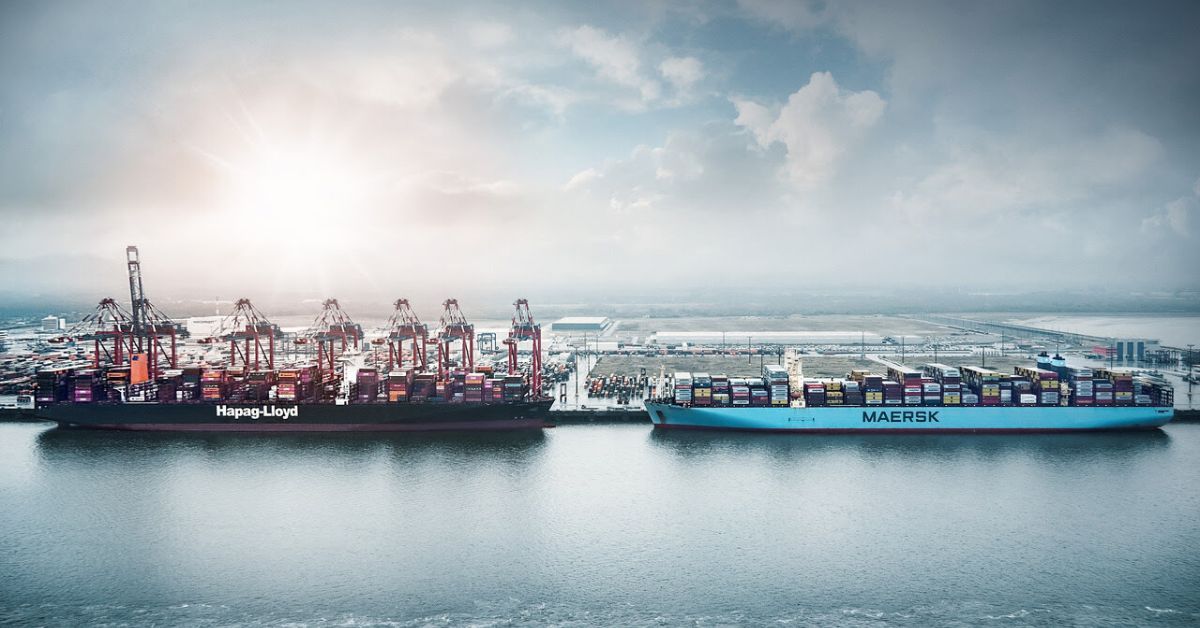

Two of the world’s largest container shipping lines — Maersk and Hapag-Lloyd — have rolled out a series of contingency measures to manage the growing operational disruptions triggered by instability in the Gulf region, signalling that the situation remains far from stable despite some signs of de-escalation.
Maersk has temporarily suspended standard empty container returns across several key Middle Eastern markets, including the United Arab Emirates, Qatar, Saudi Arabia, Iraq, and Oman. The move is designed to reduce congestion at ports and depots that are struggling to manage irregular container flows arising from route changes and scheduling disruptions. The shipping giant has assured customers that it is working to coordinate alternative return options and minimise supply chain impact.
In parallel, Maersk has updated its emergency contingency surcharges (ECS) to reflect higher operational costs on trade lanes affected by the Gulf crisis. The revised charges, described as targeted and temporary, are intended to offset expenses related to port congestion, rerouted container flows, and modified service patterns. The company has urged customers to review updated ECS levels for shipments to impacted ports.
Hapag-Lloyd has similarly introduced interim container flow arrangements for its Gulf operations, including alternative return points for empty containers, adjusted sailing schedules, and optimised routing for laden shipments. The carrier emphasised that these measures are temporary and will be reviewed as conditions in the region stabilise.
Meanwhile, Hapag-Lloyd’s proposed $4.2 billion acquisition of ZIM Integrated Shipping Services continues to face regulatory review, with competition authorities examining potential market concentration concerns. Rival Maersk is reportedly monitoring the situation closely, ready to capitalise should the deal face significant obstacles. The outcome of the regulatory process is expected to have broader implications for alliance structures and freight rate dynamics across Asia, Europe, and the Americas. Separately, Jeddah Islamic Port has emerged as a critical alternative logistics hub as disruptions around the Strait of Hormuz force carriers to reroute container trade. With its strategic Red Sea location and strong infrastructure, Jeddah is increasingly functioning as a transshipment and distribution gateway for cargo originally destined for Gulf ports.
 Join our WhatsApp channel for more updates:
 Subscribe to our YouTube channel for more updates: