



A.P. Moller–Maersk has carried out its first Red Sea transit in almost two years, signalling a tentative reassessment of the disrupted Asia–Europe shipping route as a ceasefire in Gaza raises hopes of improved security conditions.
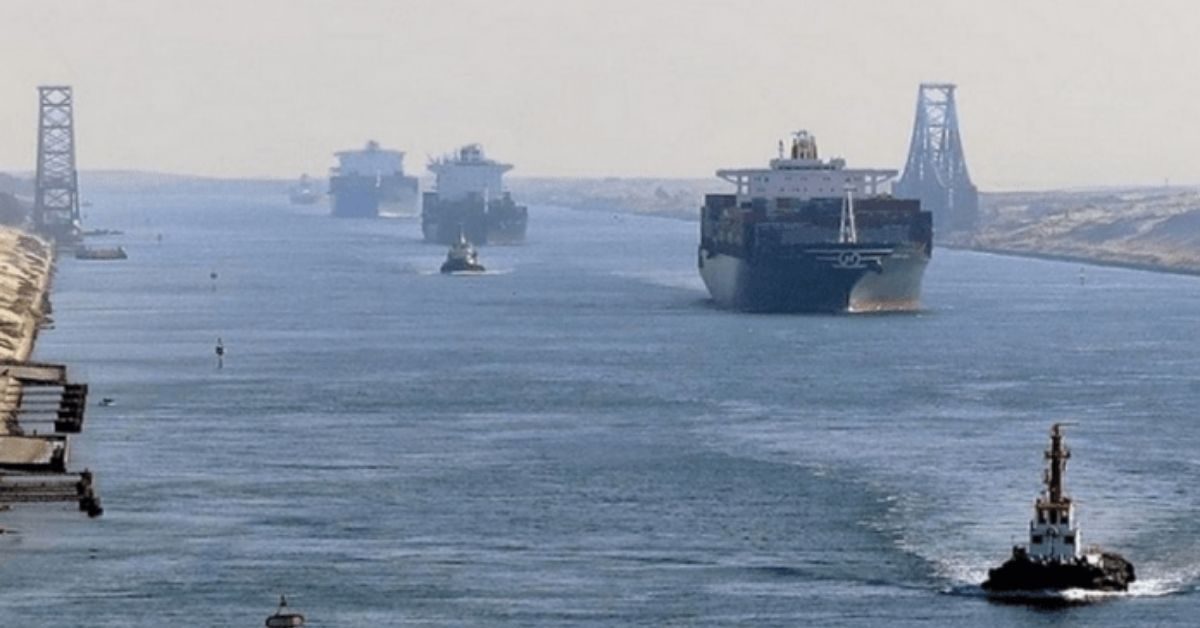
The Danish container shipping major confirmed that one of its vessels successfully sailed through the Red Sea and the Bab el-Mandeb Strait late last week. The passage marks Maersk’s first operational test of the corridor since late 2023, when repeated attacks by Yemen’s Houthi movement forced major carriers to abandon the route.
Maersk emphasised that the voyage does not indicate an immediate return to regular Suez Canal operations. Instead, the company said it is adopting a cautious, incremental approach to evaluating whether transits through the Red Sea can be safely resumed.
Since December 2023, Maersk and other global carriers — including Germany’s Hapag-Lloyd — have diverted vessels around the Cape of Good Hope, adding significant time and cost to Asia–Europe services. Prior to the security crisis, the Suez Canal handled roughly 10% of global seaborne trade, making it one of the world’s most strategically important maritime chokepoints.
Some operators have already begun limited experimentation. France’s CMA CGM has undertaken selective transits when conditions permitted, while other shipping lines are similarly reviewing their options as geopolitical risks evolve.
A broader return to the Suez route could have far-reaching implications for the container market. The longer African diversion has tightened vessel supply and supported higher freight rates by extending voyage durations by several weeks.
Maersk confirmed that the test transit was conducted by one of its smaller vessels, Maersk Sebarok, and stressed that no further Red Sea sailings are currently scheduled. The company reiterated that it is not yet considering a wider restructuring of its east-west network back to the trans-Suez corridor.
From a market perspective, any sustained resumption could significantly alter capacity dynamics. BIMCO’s chief shipping analyst, Niels Rasmussen, noted that a large-scale return to Suez Canal routings could reduce effective ship demand by around 10%.
While the recent ceasefire has revived optimism, industry participants remain wary, viewing Maersk’s transit as a measured test rather than a signal of full normalisation.
 Join our WhatsApp channel for more updates:
 Subscribe to our YouTube channel for more updates: