


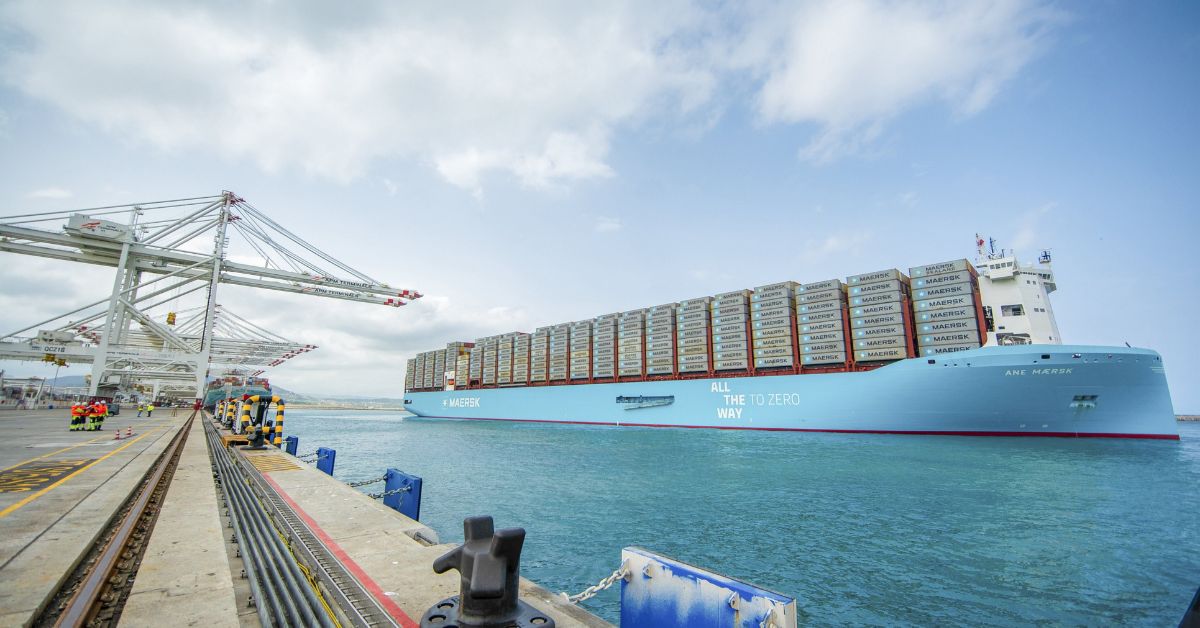

Maersk and Hapag-Lloyd have confirmed that one of their joint Gemini Cooperation services, the ME11 loop, will be structurally rerouted via the Red Sea and Suez Canal from mid-February 2026, marking the first systematic return of a Gemini string to the Suez corridor since attacks in the region forced widespread diversions around the Cape of Good Hope. The move is aimed at restoring faster, more competitive transit times between India, the Middle East and the Mediterranean, while testing whether secured Red Sea crossings can be scaled without compromising vessel and crew safety.
According to Maersk’s latest customer advisory, the change will apply westbound from the vessel Albert Maersk (voyage 605W), which is scheduled to sail from Jebel Ali to India and depart Mundra on 4 February 2026 before heading via the Red Sea into the Mediterranean. Eastbound, the shift begins with Astrid Maersk (voyage 605E), departing Valencia on 3 February 2026 and transiting Suez on the return leg toward the Indian subcontinent and Gulf ports. All transits on the revised ME11 corridor will be conducted under enhanced security protocols coordinated with relevant naval forces and regional authorities, the carriers said.
The decision currently applies only to ME11 and does not amount to a full-scale reopening of the Gemini network through Suez, which has been operating largely via the Cape since the Red Sea crisis escalated more than two years ago. Both lines continue to stress that crew and cargo safety remain paramount and that any broader migration of Gemini’s 29 mainline and 29 shuttle services back to Suez will depend on continued improvement in security conditions, including sustainable ceasefire progress in the Gaza and Red Sea theatres.
For shippers, the partial return offers earlier relief on transit times and fuel-related surcharges on the ME11 trade, which links India and the Middle East with key Mediterranean gateways. However, industry analysts caution that this is best viewed as a tightly controlled pilot rather than a definitive normalisation, with Maersk and Hapag-Lloyd likely to expand or roll back Suez usage depending on how the security situation and operational performance evolve over the next few months.
 Join our WhatsApp channel for more updates:
 Subscribe to our YouTube channel for more updates: