


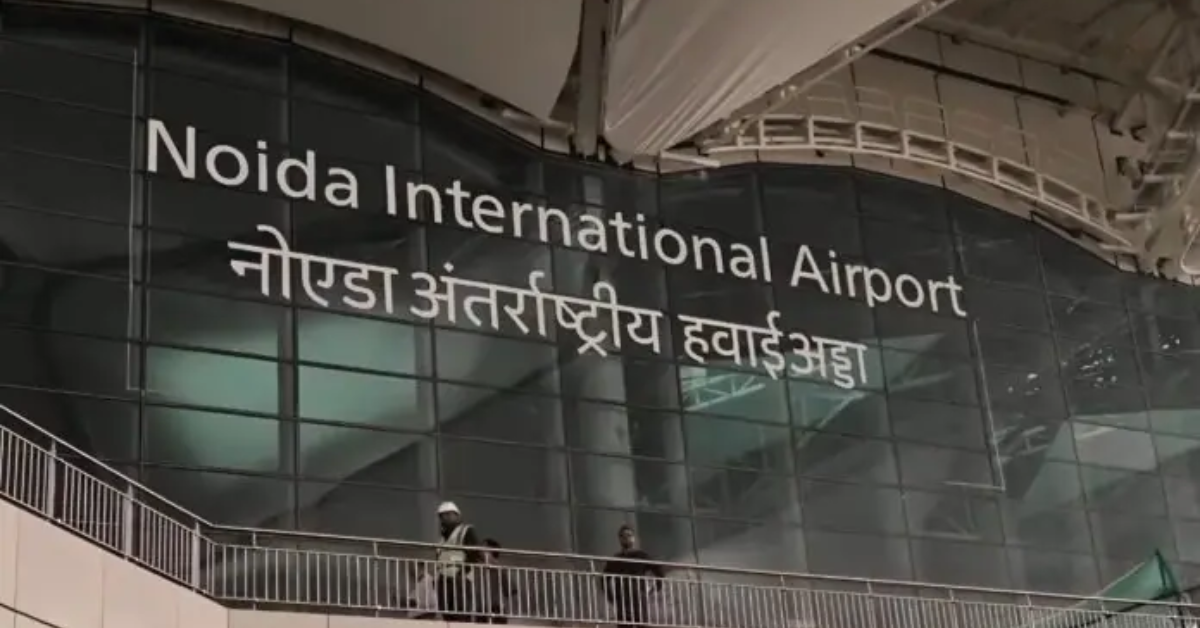

Prime Minister Narendra Modi inaugurated Phase I of the Noida International Airport at Jewar in Gautam Buddha Nagar, Uttar Pradesh, on March 28 — a landmark moment for Indian aviation and logistics infrastructure that will reshape the cargo and supply chain landscape of northern India for decades to come.
Built at an investment of approximately ₹11,200 crore through a Public-Private Partnership with Yamuna International Airport Private Limited (YIAPL), a wholly-owned subsidiary of Zurich Airport International AG, the airport is India’s largest new greenfield aviation facility. Its Phase I infrastructure includes a single 3,900-metre runway, a terminal building of approximately 138,000 square metres with capacity for 12 million passengers per annum, and critically for the maritime and logistics sector, a comprehensive cargo ecosystem designed to handle over 2.5 lakh metric tonnes of freight annually — with expansion potential to approximately 18 lakh metric tonnes at full build-out.
Multi-Modal Cargo Hub at the Heart of the Project
The airport’s cargo infrastructure is built around a Multi-Modal Cargo Hub comprising an Integrated Cargo Terminal and logistics zones designed for efficient intermodal handling. The hub benefits from an exceptionally strategic location: the airport sits at the convergence of India’s Eastern and Western Dedicated Freight Corridors at Dadri — a geographic advantage that Prime Minister Modi specifically highlighted at the inauguration, noting that whatever farmers grow and industries produce in western UP can now reach every corner of the world swiftly by land and by air.
A dedicated 40-acre Maintenance, Repair, and Overhaul (MRO) facility is also part of the Phase I development, aimed at reducing India’s dependence on overseas maintenance services for its rapidly expanding commercial aviation fleet. The MRO zone positions the airport as both a traffic hub and a centre of aviation services excellence for the northern India region.
Multimodal Connectivity and Net-Zero Ambitions
The airport is being developed as a multi-modal transport hub with planned rail, metro, and Yamuna Expressway connectivity — integrating air cargo flows with the national rail freight network in a model that is intended to maximise the speed and cost-effectiveness of moving goods from the UP industrial and agricultural hinterland to global markets. The facility is designed to operate as a net-zero emissions facility, incorporating energy-efficient systems and sustainable building practices aligned with India’s Maritime India Vision 2030 and broader decarbonisation commitments.
Modi also used the inauguration to address the West Asia crisis, noting that India is managing the burden of oil supply disruptions without passing the full impact to ordinary households and farmers, citing ethanol blending and energy import diversification as tools being deployed. The confluence of a major logistics infrastructure launch with ongoing supply chain crisis management underscores the government’s push to simultaneously address immediate disruptions and build long-term resilience.
 Join our WhatsApp channel for more updates:
 Subscribe to our YouTube channel for more updates: