



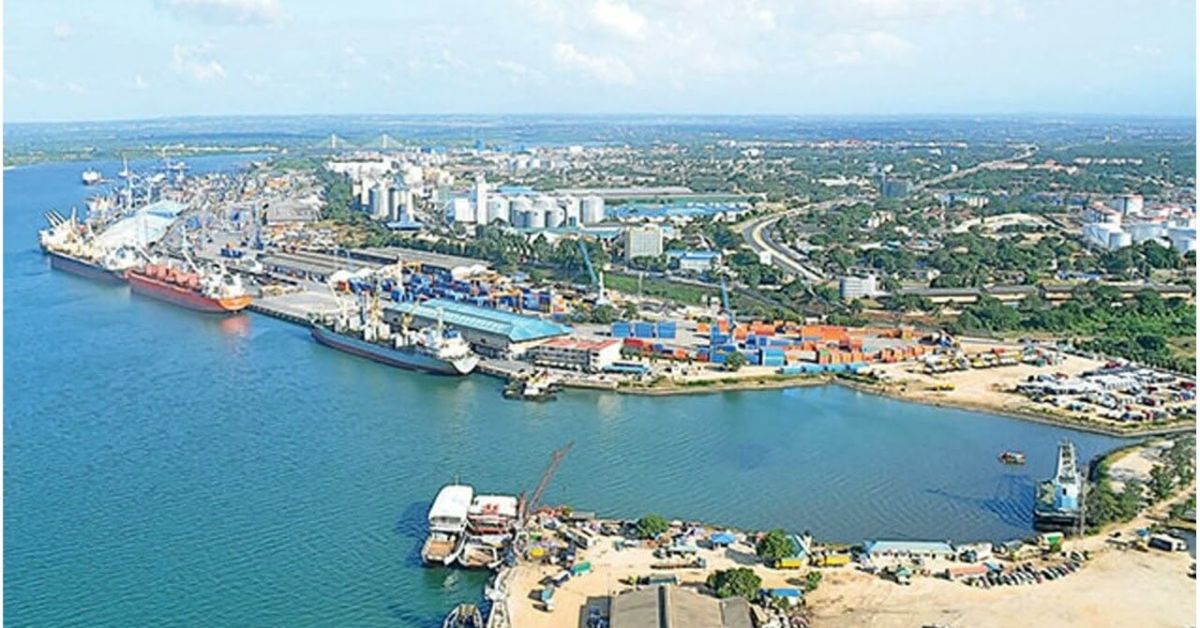

After more than a decade of uncertainty, Tanzania’s ambitious Bagamoyo Port project is finally set to move forward. The Tanzania Ports Authority (TPA) has named Africa Global Logistics (AGL), a subsidiary of Mediterranean Shipping Company (MSC), as the strategic partner for the development of the port, marking a decisive turning point for the long-delayed initiative.
Under a newly signed agreement, TPA has awarded AGL the mandate to design, construct and operate the first phase of the port, comprising three berths. According to TPA Director General Plasduce Mbossa, construction work on the initial berths is expected to commence in early January. He added that the authority remains open to additional local and international investors as the project progresses, underlining its potential to transform Tanzania’s port and logistics landscape.
The agreement represents a major revival for a project first announced in 2013 and once positioned as a flagship under China’s Belt and Road Initiative. Progress stalled in 2019 when the government of then President John Magufuli scrapped the original deal, citing unfavourable and exploitative terms, including extensive tax concessions sought by Chinese partners.
Since assuming office in 2021, President Samia Suluhu Hassan has revived the Bagamoyo project, describing it as a national priority. The selection of AGL signals a clear shift away from Chinese involvement toward a European-led consortium, aligned with MSC’s expanding footprint across Africa through its terminals arm, Terminal Investment Limited (TIL), and logistics subsidiary, AGL.
AGL has been actively involved in port and logistics projects across several African countries, including the Republic of Congo, Angola, Namibia and Côte d’Ivoire. The Bagamoyo investment is expected to further strengthen its access to regional markets, leveraging the port’s strategic position on the Indian Ocean.
Once fully developed, the proposed $10 billion Bagamoyo Port is planned to feature 28 berths, a vast special economic zone and capacity to handle up to 20 million TEUs annually—far exceeding the throughput of Dar es Salaam Port. Located about 42 miles north of Dar es Salaam, the new port is intended to ease congestion and capacity constraints at Tanzania’s main maritime gateway.
Bagamoyo is also expected to intensify regional competition, particularly with Kenya’s Lamu Port, which has recently begun attracting increased vessel calls after years of underutilisation.
 Join our WhatsApp channel for more updates:
 Subscribe to our YouTube channel for more updates: