



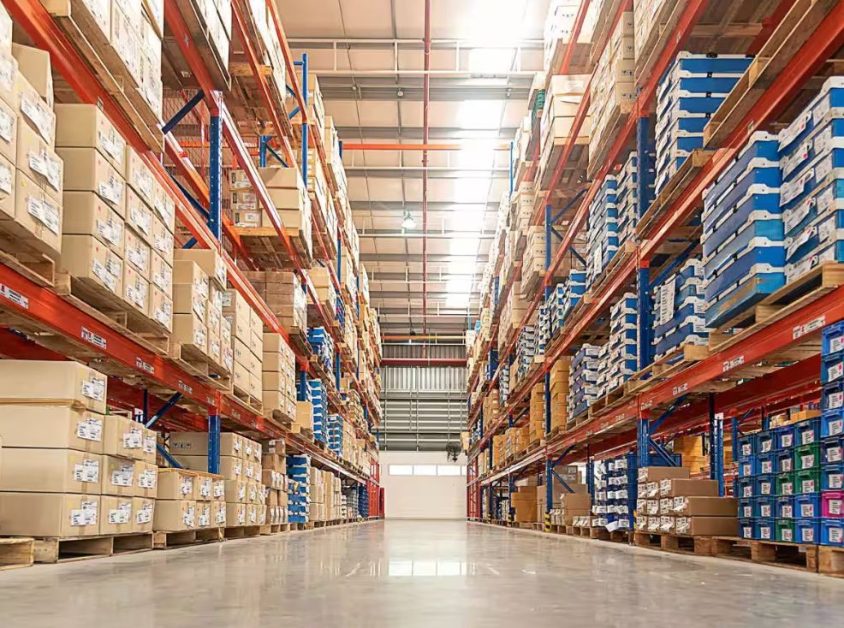

Mumbai registered a 459 percent annual surge in India’s warehousing and logistics sector absorption during the second quarter of 2026, leading key industrial hubs across the country, according to a report by Vestian.
How much warehousing space did Mumbai absorb?
Mumbai led all individual markets with 5.04 million square feet of space absorbed, supported by concentrated leasing activity in its Bhiwandi corridor, which generated nearly 69 percent of the city’s total volume.
How did the top seven cities perform overall?
Overall absorption across the top seven cities reached 10.56 million square feet in Q2 2026, pushing the first-half total to 22.0 million square feet, the highest first-half leasing volume in a year, up 16 percent year-on-year and 11 percent over the second half of 2025 despite persistent global headwinds. Mumbai and Pune together commanded 65 percent of total national absorption, up sharply from 33 percent in the same quarter last year.
How did other cities fare in warehousing demand?
Pune followed as the second-largest contributor at 1.78 million square feet, though its sequential share moderated to 17 percent after strong transaction closures in the preceding quarter. NCR recorded 1.24 million square feet, up 70 percent quarter-on-quarter and 75 percent year-on-year, while Bengaluru posted a recovery with 0.97 million square feet. Chennai reached 0.69 million square feet, reflecting a 17 percent sequential gain and 52 percent annual rise. Kolkata grew to 0.38 million square feet, rebounding sharply from a slow Q1 with a 212 percent annual increase, while Hyderabad recorded 0.46 million square feet, down 34 percent sequentially but steady year-on-year.
Which sectors are driving warehousing demand?
Third-party logistics providers maintained dominant occupier interest, accounting for 41 percent of total leasing activity, followed by Consumer Goods & Services at 12 percent and Engineering & Manufacturing at 11 percent, together contributing 64 percent of absorbed space. Energy, Automobiles & Auto Components, and Chemicals & Petrochemicals collectively held a 22 percent share, while institutional investments totalled USD 27 million in Q2 2026.
What does this mean for India’s warehousing sector outlook?
Vestian CEO Shrinivas Rao said India’s warehousing sector is undergoing a structural transformation, moving beyond traditional priorities such as supply chain optimisation and proximity to demand centres, with sustainability emerging as a key differentiator as occupiers increasingly seek Grade-A green warehouses aligned with ESG goals. The report noted that demand from 3PL, Engineering & Manufacturing and Consumer Goods & Services is expected to remain the primary driver of leasing activity going forward, supported by continued investment in multimodal infrastructure and technology-enabled warehousing.
 Join our WhatsApp channel for more updates:
 Subscribe to our YouTube channel for more updates: