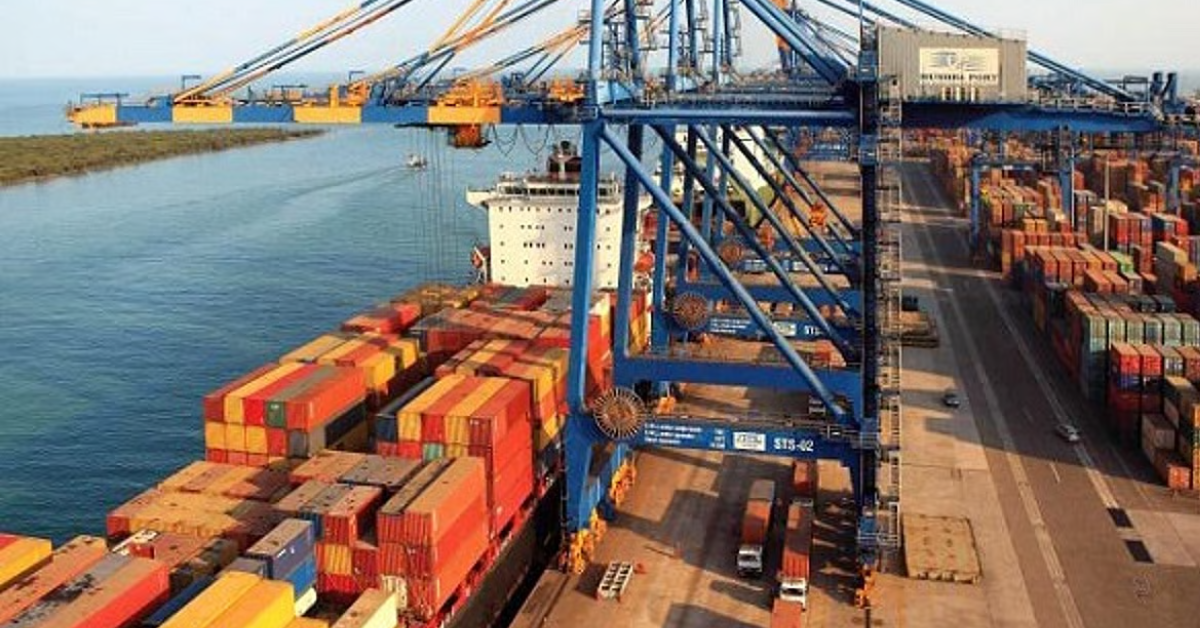

Adani’s Mundra Port has clocked record throughput in January 2026, underlining its growing role as a key gateway for India’s export‑import trade and reinforcing the dominant position of Adani Ports and Special Economic Zone Ltd (APSEZ) in the country’s port sector.
Record month for autos and liquids
Mundra posted its highest‑ever monthly automobile export volumes in January, dispatching 25,762 vehicles through its dedicated RoRo terminal and surpassing its previous peak set in May 2024. Major OEMs including Maruti Suzuki and Toyota are increasingly using Mundra as a hub for shipments to Africa, Europe, East Asia, Australia and the Middle East, reflecting firm overseas demand for India‑built vehicles. The port also set a new single‑call benchmark by loading 5,701 vehicles on one vessel at a gross rate of 145 units per hour, a performance that hinged on tightly coordinated yard, planning and ship operations while maintaining safety standards.
On the liquid side, Mundra’s terminal handled a record 1.120 million tonnes of cargo in January, beating its earlier high recorded in December 2025 and underscoring its ability to manage energy products, chemicals and industrial liquids in parallel with other cargo streams. Across its network, APSEZ handled 44.8 million tonnes during the month, up 12% year‑on‑year, driven by a 16% rise in container volumes and a 21% jump in liquids.
Scale, strategy and sector tailwinds
APSEZ, India’s largest private port operator, runs 15 domestic ports with a combined capacity of 633 million tonnes a year, giving it a significant scale advantage in the national logistics system. Mundra alone can handle 338 million tonnes annually, making it India’s largest port by capacity and positioning it ahead of other gateways even as public‑sector majors such as JNPA set their own container records.
The company’s recent performance is closely tied to strong momentum in India’s auto industry, where manufacturers have reported healthy January 2026 sales and export growth that increasingly funnels through private ports. Policy support via the Union Budget 2026‑27, which prioritises infrastructure and logistics, is seen as broadly supportive for APSEZ’s expansion pipeline, while international rating agencies including S&P, Moody’s, Fitch and JCR have assigned or affirmed ratings that signal confidence in its business and balance sheet; JCR currently rates the company at A‑/Stable, a notch above India’s sovereign. As of early February 2026, APSEZ’s market capitalisation is around ₹3.57 lakh crore and its trailing P/E multiple is about 28.6.
Valuation questions and external headwinds
The strong operational narrative is tempered by concerns around valuation, with some analysts flagging the port operator’s P/E of roughly 28.6 times and price‑to‑book of 4.8 times as demanding given the current earnings base. MarketsMOJO, for instance, shifted its stance on Adani Ports from “Hold” to “Sell” on 2 February 2026, citing stretched valuations and technical indicators despite acknowledging the underlying strength of the franchise.
Macro‑level challenges also hang over the outlook: higher interest costs, pressure on working capital metrics and a softer global trade environment shaped by cooling demand and geopolitical disruptions. Red Sea route diversions are adding an estimated two to three weeks to transit times and increasing costs for India–Europe trades, while concentration risks remain given Mundra’s heavy exposure to large auto clients such as Maruti Suzuki. Even with a net debt‑to‑EBITDA ratio of 1.9x and cash of about ₹11,807 crore, APSEZ’s debt‑to‑equity of around 0.85 and a medium‑term ROCE of roughly 11.1% are being scrutinised in the context of its premium market valuations.
Growth pipeline and long‑term ambition
APSEZ has revised its FY26 EBITDA guidance upward by ₹800 crore to ₹22,800 crore on the back of stronger organic growth and contributions from acquisitions such as the NQXT terminal in Australia. The group is also pushing ahead with Phase 2 development at Vizhinjam, aimed at sharply expanding its container handling capacity and strengthening its position in the transhipment and mainline call market.
In automotive logistics, APSEZ’s tie‑up with the Motherson Group to build a dedicated export hub at Dighi Port is expected to complement Mundra’s RoRo strengths and deepen its presence in the finished vehicles segment. Longer term, the company is targeting management of one billion tonnes of cargo annually and has set its sights on becoming the world’s largest port operator by 2030, even as analyst views remain split between those cautious on valuation and those backing its integrated transport‑utility model and India’s expanding trade base.
 Join our WhatsApp channel for more updates:
 Subscribe to our YouTube channel for more updates: