




The National Green Tribunal (NGT) has upheld the environmental clearance for the ₹80,000-crore Great Nicobar Island mega infrastructure project, ruling that the initiative’s strategic significance for India outweighs the environmental objections raised by petitioners.
A bench led by NGT Chairperson Justice Prakash Shrivastava dismissed multiple appeals challenging the project’s green nod, while directing the authorities to implement additional safeguards and tighter monitoring to minimise ecological damage.
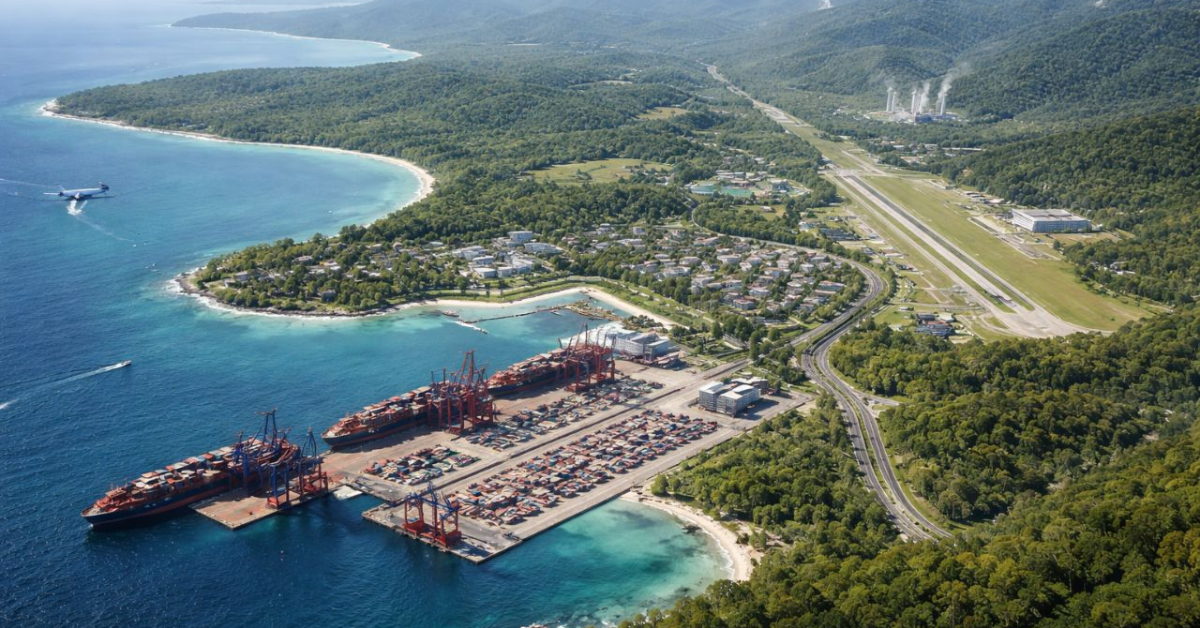
The integrated development plan for Great Nicobar includes a deep-draft international transshipment port at Galathea Bay, a greenfield international airport, a township and tourism infrastructure, along with associated road and utility networks.
The project, to be executed in phases over the next 30 years, aims to position Great Nicobar as a key maritime and logistics hub near the Malacca Strait, one of the world’s busiest shipping lanes.
The tribunal noted that the island’s strategic location and the project’s national security and economic value justify going ahead, provided robust mitigation measures are followed.
It recorded that the Expert Appraisal Committee and the Ministry of Environment, Forest and Climate Change had imposed several conditions, including compensatory afforestation, mangrove conservation, coastal regulation safeguards, and protection measures for endemic and endangered species.
The NGT ordered periodic compliance reviews and empowered a monitoring committee to track implementation of environmental safeguards, ensuring that project authorities adhere strictly to approved norms.
Petitioners had flagged large-scale diversion of forest land, the felling of over 8–9 lakh trees, threats to coral reefs, turtle nesting sites at Galathea Bay, and impacts on the Shompen and Nicobarese indigenous communities.
They argued that the environmental impact assessment was inadequate and that climate and biodiversity risks had been understated, but the tribunal held that the appraisal process and safeguards were sufficient in law.
With the NGT’s clearance, project proponents can move ahead with land acquisition, detailed design, and initial site works, though the order may still be tested in the Supreme Court if appellants seek further review.
The ruling effectively allows the government to push forward with a flagship maritime and infrastructure initiative at India’s southernmost island, even as debates over its ecological cost are set to continue.
 Join our WhatsApp channel for more updates:
 Subscribe to our YouTube channel for more updates: