



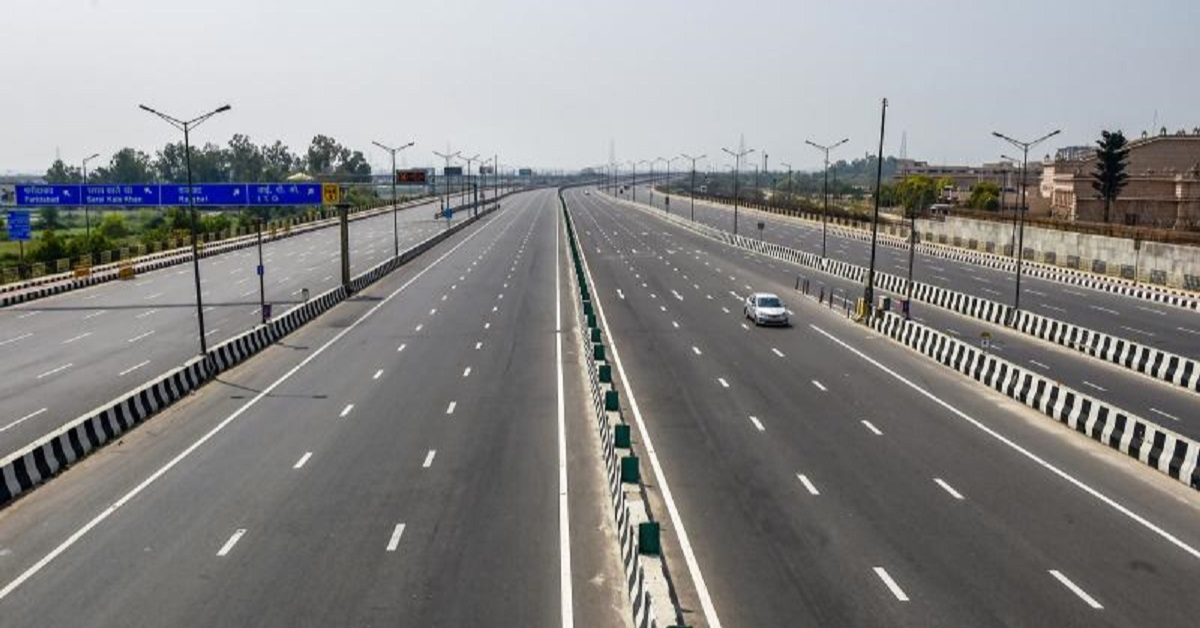

Prime Minister Narendra Modi has inaugurated the 594‑kilometre Ganga Expressway, a greenfield, access‑controlled corridor connecting Meerut in western Uttar Pradesh with Prayagraj in the east, marking a major boost to the state’s transport infrastructure. The six‑lane expressway, which can be expanded to eight lanes, is designed for a speed of 120 kmph and is aimed at sharply cutting travel time while providing a seamless, high‑speed link across key districts.
Launched at a ceremony in Hardoi in the presence of Governor Anandiben Patel and Chief Minister Yogi Adityanath, the project is being positioned as a new “lifeline” for Uttar Pradesh’s economy by improving connectivity for villages, farmers, small businesses and youth along the route. The corridor traverses 12 districts—Meerut, Hapur, Bulandshahr, Amroha, Sambhal, Badaun, Shahjahanpur, Hardoi, Unnao, Rae Bareli, Pratapgarh and Prayagraj—substantially reducing end‑to‑end journey times and ensuring faster, safer movement of people and goods.
Developed under a public‑private partnership model at an estimated cost of over ₹36,000 crore, the Ganga Expressway is expected to catalyse industrial investment, strengthen logistics networks and support agricultural marketing across one of India’s largest consumer markets. Integrated manufacturing and logistics clusters are planned along the corridor, with warehousing, cold‑chain and food‑processing facilities aimed at attracting capital and generating new employment opportunities.
The expressway features a 3.2‑km emergency airstrip near Shahjahanpur for Indian Air Force aircraft, as well as an Intelligent Traffic Management System, CCTV coverage, emergency call boxes, ambulances and highway patrol units to enhance operational safety. It will also plug into other major corridors—including the Purvanchal, Agra–Lucknow, Bundelkhand and Gorakhpur Link expressways—creating an integrated high‑speed road network intended to reshape passenger and freight mobility across Uttar Pradesh.
 Join our WhatsApp channel for more updates:
 Subscribe to our YouTube channel for more updates: