



Qatar’s Ministry of Transport announced on April 12 the full restoration of maritime navigation for all vessel types in Qatari territorial waters, with operations permitted between 6 a.m. and 6 p.m. daily — a watershed moment for Gulf energy flows that has been anxiously awaited by LNG importers across Asia, Europe, and South Asia for more than a month. Licensed fishing vessels may operate around the clock under the new framework. The announcement, posted directly on X by the Ministry, was accompanied by a safety advisory from Qatar’s Interior Ministry urging operators to ensure all navigation systems and life-saving equipment are fully functional before departure.
The significance of this announcement can scarcely be overstated. Qatar is responsible for approximately 20 per cent of global LNG supply through its Ras Laffan terminal — the world’s largest LNG export facility — and the effective closure of Qatari maritime traffic over the past six weeks has been one of the most disruptive single events in global energy markets since the 1973 oil embargo. Iran’s strikes on Ras Laffan infrastructure in early March took an estimated 17 per cent of export capacity offline, and no loaded Qatari LNG tanker has successfully transited the Strait of Hormuz since February 28 — including the aborted Al Daayen and Rasheeda attempt on April 6.
What ‘Full Restoration’ Means in Practice
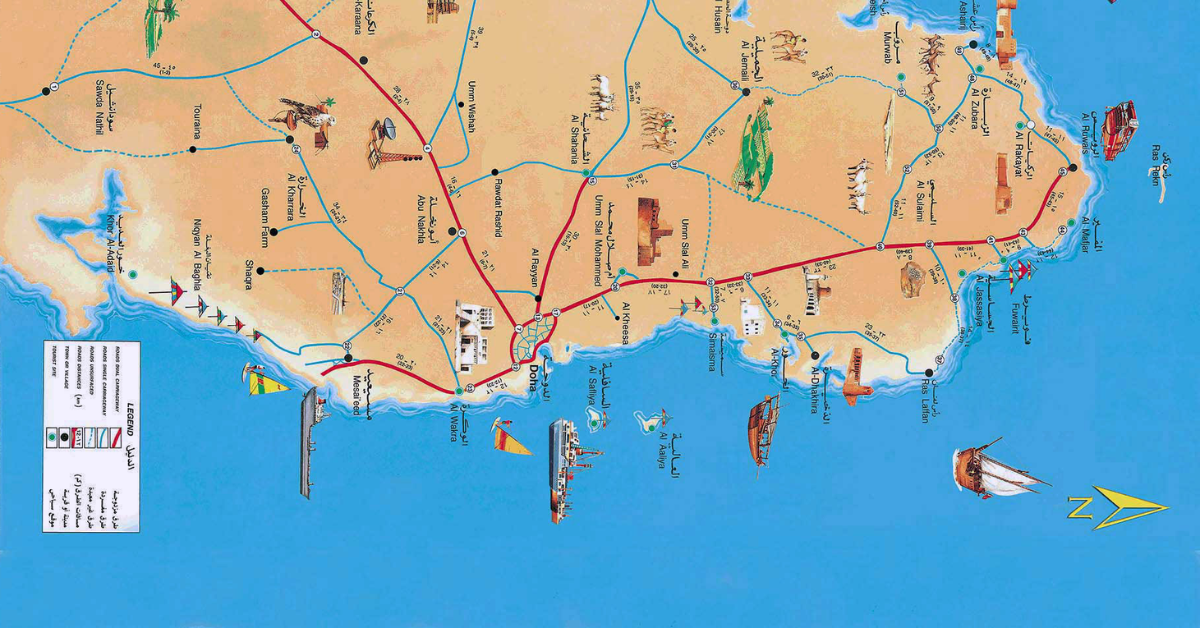
The ministry’s announcement applies to navigation within Qatar’s territorial waters — the internal sea routes, anchorages, and port approaches around Doha and Ras Laffan. It does not directly reopen the Strait of Hormuz, which remains under Iranian military control, and the practical ability of Qatari LNG tankers to exit via Hormuz for deliveries to Asia and Europe depends on Iranian transit clearance arrangements that remain in flux — particularly now that the Islamabad talks have collapsed and the CENTCOM blockade has been activated.
Nevertheless, the resumption of Qatari port operations is commercially meaningful for several reasons. It enables repositioning of vessels within Qatari waters, berthing at Ras Laffan for maintenance, and preparation of LNG cargoes that have been sitting loaded since late February. India’s Petronet LNG — which receives approximately 7.5 million tonnes of Qatari LNG annually under long-term contracts — has been among the most affected buyers, and any resumption of Qatari exports through whatever routing eventually becomes viable will directly ease the pressure on India’s gas distribution network, which has been imposing 10-20 per cent consumption cuts on industrial gas users since the crisis began.
India’s LPG Import Projection: 20.82 Million Tonnes in FY27
Against this supply backdrop, India’s LPG import requirement for FY 2026-27 has been projected at 20.82 million tonnes — reflecting the structural growth in household cooking gas demand driven by government schemes promoting clean fuel adoption in rural and semi-urban areas. Domestic production capacity cannot meet this demand, making import sourcing a strategic priority. The crisis has forced India to diversify its LPG supply sources well beyond its traditional Gulf and Middle Eastern suppliers, and the restoration of Qatar’s maritime operations — even partially — represents the first positive signal for LPG supply restoration in weeks.
 Join our WhatsApp channel for more updates:
 Subscribe to our YouTube channel for more updates: