




How Quantum’s closed-loop HSE system is ending the spreadsheet era in terminal safety management
In Sanskrit, Qavach means armour — a shield, protection invoked against forces that ordinary means cannot repel. It is a word weighted with intent, and it is precisely the right name for what Quantum has brought to port and terminal safety management.
Terminal HSE has, for decades, operated through a combination of manual checklists, siloed databases, and — most ubiquitously — Microsoft Excel. The result is a system that is reactive by design: incidents are recorded after they occur, root causes are rarely traced with rigour, and the one intervention that might have prevented the incident in the first place — genuine predictive action — remains out of reach. Qavach was built to end that era entirely.
About the Founder
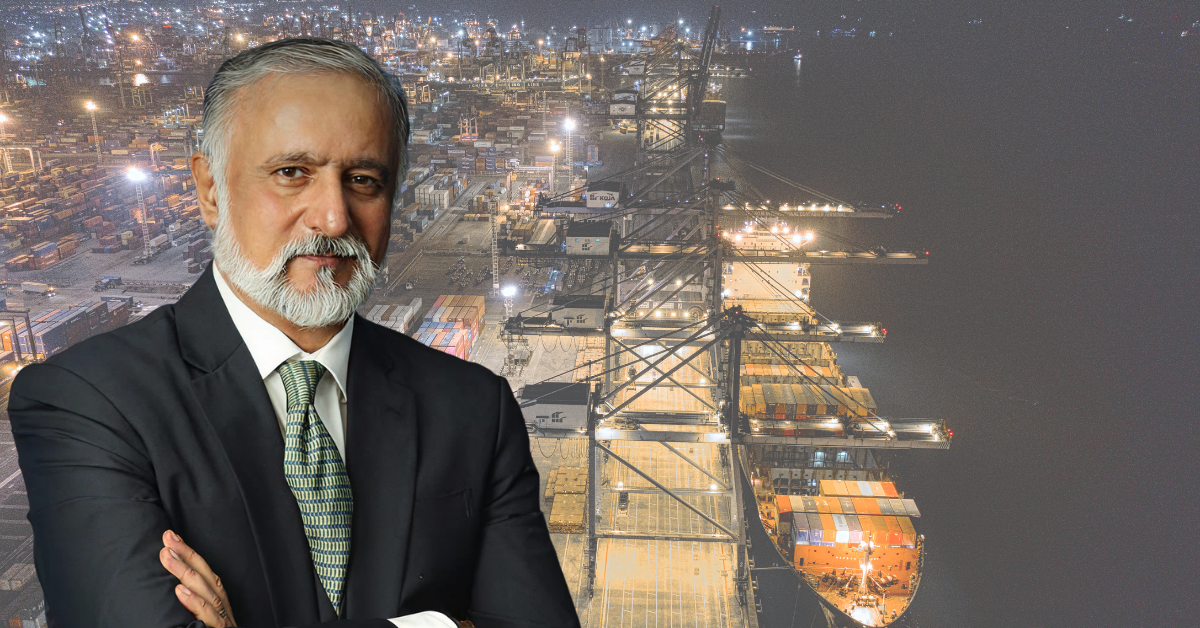
Arjun Vikram Singh, Founder and CEO of Quantum BSO, began his journey to building Qavach far from boardrooms and software labs. He went to sea at just 17 and became one of the youngest captains before turning 28. After the excitement of command wore off, he became deeply interested in improving systems, processes, and operational efficiency. That curiosity led him ashore to join Norasia, an innovative container shipping line known for running a multi-million-dollar business with a lean, multinational team. At Norasia, Arjun joined a re-engineering team and later headed the Asia Pacific region. After the company was acquired by Chile’s CSAV, he moved to Chile as Group COO, where he worked on global transformation, cost management, IT systems, and strategy across India and China.
During this period, he identified a striking gap: despite being a $7 trillion global industry, transport and logistics lacked world-class enterprise software players. Determined to change that, he launched his own company. The early years were difficult — he lacked capital, was not a technical founder, and wanted to build real-time web-based software before the technology ecosystem was ready. Starting with solutions for liner shipping, freight forwarding, and business intelligence, the breakthrough came when PSA International sought a digital safety system for terminals still relying on spreadsheets. That moment became the origin of Qavach.
The Scale of the Problem
Container terminals are among the most complex and hazardous industrial environments in operation anywhere. The convergence of heavy machinery, dense vehicle-pedestrian interfaces, high-speed throughput pressure, and chemical exposure creates a compound risk profile that demands sophisticated, real-time safety management. What most terminals actually deploy falls far short of that standard.
The picture across global terminal HSE practice is consistent and concerning. Incident reports are entered manually, often hours after the event. Risk registers are static spreadsheets — frequently unchanged since the last external audit. Root cause analysis, where it exists at all, produces a filed document rather than a dynamic process that drives change. And live safety status across a terminal is, in most cases, essentially unknown.
The consequences of this deficit are not abstract. They manifest in injury rates, regulatory exposure, reputational damage, and — increasingly — commercial disadvantage, as shipping lines, port authorities, and institutional investors scrutinise safety records as a proxy for operational quality.
What Qavach Is
Qavach is the maritime industry’s first purpose-built, AI-driven, closed-loop HSE platform designed specifically for port and terminal environments. It does not merely record what has gone wrong. It actively works to ensure that things do not go wrong in the first place.
The platform spans 52 integrated modules covering core safety management, quality and compliance, environmental stewardship, training, and infrastructure. It is delivered entirely via the cloud, requires no on-site hardware investment, and is deployable — from contract to live operations — in 42 days.
At the architectural centre of Qavach is a mechanism that distinguishes it from every competing product in the market: the Unified Incident Number (UIN). Every event that enters the system — a near miss, an unsafe observation, an equipment damage report, a permit request — is assigned a UIN that binds it into a continuous process chain from initial report through investigation, root cause analysis, corrective action, and preventive measure.
This is not a conventional workflow. It is an AI-enabled process string that activates the moment an event is logged, cross-references past incidents with a matching profile, identifies probable root causes, and suggests corrective actions before a human investigator has even read the initial report.
MyQavach: Safety in Every Worker’s Pocket
The single greatest limitation of traditional terminal HSE systems is reach. A dedicated safety team of five or ten professionals cannot maintain meaningful coverage across a 24/7 terminal operation. Qavach extends the safety network to every individual on site through MyQavach — an iOS and Android application that allows any terminal worker to report observations, near misses, and incidents the moment they occur, with images, GPS location, and AI-assisted data entry.
The philosophy is straightforward: eliminate the friction between witnessing a hazard and reporting it. Workers are incentivised to participate through gamification and reward mechanisms embedded in the application, transforming safety from a management obligation into a shared organisational culture.
A particularly significant innovation within MyQavach is its AI image scanning capability. When a worker uploads a photograph or video of a hazard, Qavach’s AI analyses the visual content, identifies risk conditions or violations, and automatically populates the relevant incident report fields. Manual entry — historically the primary source of reporting errors and the primary reason workers avoid reporting altogether — is effectively eliminated.
Predictive Intelligence and Management Reporting
Perhaps the most consequential capability in Qavach’s architecture is its predictive risk engine. The system continuously monitors all live events through the UIN engine, analyses patterns across incident types, locations, times, and frequencies, and generates alerts identifying areas of heightened risk before an incident occurs.
Through 2026, this capability is being substantially extended with an advanced AI engine running continuous predictive risk assessment and mitigation recommendations. Terminals adopting Qavach today are investing not only in the platform as it stands, but in a system whose intelligence compounds over time as machine learning models train on their specific operational data.
At the management layer, Qavach’s reporting module draws in real time from every module across the system, generates AI-rationalised commentary and recommendations, and publishes on a configurable schedule to any stakeholder group. The HSE team is freed from the compilation burden — and from the risk of producing a report that is already partially obsolete by the time it is distributed.
The Commercial and ESG Case
The financial return from Qavach extends beyond direct cost avoidance. Terminals with demonstrably strong, data-backed HSE records gain competitive advantage in a market where shipping line procurement is paying increasing attention to safety performance. The ESG dimension is particularly significant: Qavach’s integrated environment, waste management, and emissions modules allow terminals to produce the documented, auditable environmental performance data that institutional investors and ESG reporting frameworks demand. As port selection decisions increasingly factor in sustainability credentials, the ability to produce this data with confidence becomes a commercial asset in its own right.
Qavach’s SaaS delivery model eliminates the capital expenditure that has made enterprise HSE systems inaccessible to all but the largest operators. Pricing is based on user roles, with quarterly releases included in the maintenance contract, ensuring continuous improvement without the disruption of major version upgrades.
The Inflection Point
The maritime industry is at a decisive moment in its approach to terminal safety. The regulatory environment is tightening. Workforce expectations are rising. And the technology now exists to manage safety with a sophistication that was not available a decade ago.
The question for terminal operators is no longer whether AI-driven safety management represents the future. It clearly does. The question is whether they lead that future — or follow it, and at what cost the delay comes.
Qavach offers something no spreadsheet, manual process, or conventional software system has ever delivered: a genuine shield. The name, in every sense, fits.
 Join our WhatsApp channel for more updates:
 Subscribe to our YouTube channel for more updates: